
Understanding quantum computing basics can feel confusing at first, but the idea becomes clearer when broken down simply. Quantum computing is a type of computing that uses principles of quantum physics to process information in new ways. Unlike traditional computers, which use bits, quantum computers use quantum bits known as qubits.
This guide explains quantum tech explained in plain language, focusing on what it is, how it works, and why it matters — without technical jargon.
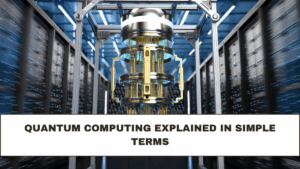
What Is Quantum Computing?
At its core, quantum computing is a method of computation that uses the behavior of particles at very small scales. While classical computers store data as 0s or 1s, quantum computers use qubits that can exist in multiple states.
This difference is central to quantum computing basics and allows quantum systems to process certain problems more efficiently than classical machines.
What Makes Qubits Different From Regular Bits
Traditional computers rely on bits that can only be in one state at a time. In contrast, qubits use properties of quantum physics.
Key characteristics include:
• Superposition, where a qubit can represent more than one state
• Entanglement, where qubits become linked
• Interference, which helps amplify correct outcomes
These properties are essential to understanding quantum tech explained in simple terms.
How Quantum Computers Work
Quantum computers operate by manipulating qubits using controlled physical systems such as superconducting circuits or trapped particles. These systems are carefully isolated to reduce interference.
Basic steps involved include:
• Initializing qubits
• Applying quantum operations
• Allowing interactions between qubits
• Measuring outcomes
The process enables calculations that would be difficult or time-consuming for classical computers.
What Quantum Computers Are Good At
While quantum computers are not designed to replace everyday computers, they excel at specific types of tasks.
Areas where quantum computing basics apply include:
• Complex mathematical simulations
• Optimization problems
• Material science modeling
• Cryptography research
• Chemical and molecular analysis
These tasks benefit from the parallel nature of quantum computation.
What Quantum Computers Are Not Used For
It’s important to understand the limits of quantum tech explained clearly. Quantum computers are not faster at everything and are not used for routine activities like browsing the internet or running apps.
They are also:
• Expensive to build
• Difficult to maintain
• Sensitive to environmental noise
• Still in early development
This makes them specialized tools rather than general-purpose devices.
Why Quantum Computing Matters
The importance of quantum computing basics lies in their potential to solve problems that are currently too complex for classical computers.
Potential benefits include:
• Faster scientific discovery
• Improved material research
• Better optimization systems
• Advanced cryptography methods
• Improved simulations in science
These areas could influence future technological progress.
Quantum Computing vs Classical Computing
Understanding the difference between classical and quantum computing helps clarify expectations.
Key differences include:
• Bits vs qubits
• Sequential vs parallel processing
• Deterministic vs probabilistic outcomes
• Conventional logic vs quantum behavior
This contrast explains why quantum computing is seen as a complementary technology rather than a replacement.
Current State of Quantum Technology
Today’s quantum computers are mostly used in research environments. Scientists and engineers continue to improve hardware stability, error correction, and scalability.
Current progress includes:
• Experimental quantum processors
• Cloud access to quantum systems
• Academic and industrial research
• Development of quantum algorithms
This shows that quantum tech explained is an active and evolving field.
Challenges Facing Quantum Computing
Despite its promise, several challenges remain:
• Error correction complexity
• Hardware instability
• Cooling requirements
• High operational costs
• Limited practical applications
These challenges explain why widespread adoption will take time.
Why Learning Quantum Computing Basics Matters
Understanding quantum computing basics helps people stay informed about future technologies. Even without technical expertise, basic awareness supports better understanding of scientific discussions and technological trends.
As quantum research continues, foundational knowledge becomes increasingly useful for students, professionals, and technology enthusiasts.
Conclusion
Quantum computing basics introduce a new way of thinking about computation. By using quantum principles, these systems can solve certain problems more efficiently than classical computers. While still in development, quantum computing represents an important direction in future technology.
With continued research and innovation, quantum tech explained will gradually move from laboratories to broader applications, shaping how complex problems are approached in science and industry.
FAQs
What is quantum computing in simple words?
Quantum computing uses special particles called qubits to process information in ways that classical computers cannot.
Is quantum computing available for everyday use?
No, it is mainly used in research and experimental settings.
Are quantum computers faster than normal computers?
They are faster only for certain types of problems, not everyday tasks.
Why are qubits important?
Qubits can represent multiple states at once, allowing more complex calculations.
Will quantum computers replace classical computers?
No, they are designed to complement, not replace, traditional computers.
Click here to know more.