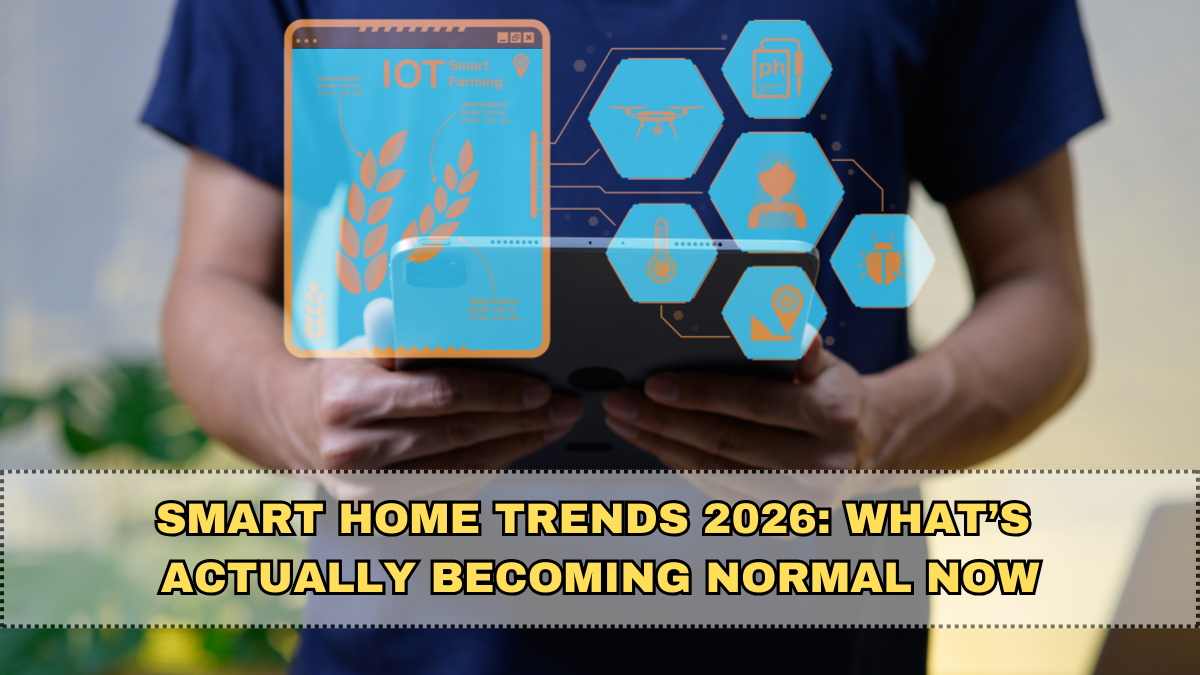
The conversation around smart home trends 2026 has finally grown up. This isn’t about flashy bulbs or yelling commands anymore. In 2026, smart homes are becoming quieter, more autonomous, and less demanding of attention. The goal has shifted from control to delegation—letting systems handle routine decisions without constant input.
If your idea of a smart home is still app-switching and voice commands, you’re already behind. Here’s what’s actually becoming normal now—and what’s quietly fading out.
Why Smart Homes Are Changing Direction in 2026
Early smart homes failed for one core reason: they added work.
What changed in smart home trends 2026:
• Better local processing
• More reliable device standards
• Automation that runs without prompts
• Fewer apps, more background logic
Smart homes are finally learning to shut up and work.
Automation Over Control: The Big Shift
Control-based homes required effort. Automation-based homes remove it.
What automation now handles:
• Temperature adjustments by time and presence
• Lighting based on activity, not commands
• Security arming/disarming automatically
• Energy optimisation without dashboards
The system decides first—you override only when needed.
AI Assistants Are Becoming Invisible
Voice assistants haven’t disappeared—but they’ve changed roles.
In 2026:
• Less voice, more prediction
• Fewer “Hey” wake words
• More silent triggers
• Context-based responses
Assistants tied to ecosystems like Amazon Alexa and Google Home are moving from interaction to orchestration.
Home Robots: Narrow Jobs, Real Value
Forget humanoids. Robots in smart home trends 2026 are practical.
Robots that are becoming normal:
• Floor-cleaning with room awareness
• Security patrol bots
• Lawn and window maintenance robots
• Elder and pet monitoring helpers
They do boring tasks consistently—which is exactly the point.
Local Processing Is Winning Over the Cloud
Always-on cloud dependence is declining.
Why local processing matters:
• Faster response times
• Better privacy
• Works during internet outages
• Lower subscription dependency
Homes that function offline are no longer niche—they’re expected.
Interoperability Is Finally Improving
The old smart home nightmare: ten brands, ten apps.
What’s better now:
• Devices communicate across brands
• Fewer vendor lock-ins
• Easier replacement and upgrades
• Simplified setup flows
This shift is foundational to smart home trends 2026 becoming mainstream.
Energy Awareness Is Built-In, Not Optional
Energy monitoring is no longer a premium feature.
Homes now:
• Track real-time consumption
• Shift usage to cheaper periods
• Reduce phantom loads automatically
• Optimise EV charging and appliances
Smart homes are becoming financially aware.
Security Without Surveillance Fatigue
Security tech is less intrusive.
What’s changed:
• Event-based alerts instead of constant feeds
• Local video analysis
• Fewer false notifications
• Clearer user control
The goal is safety—not anxiety.
What’s Quietly Dying in Smart Homes
Not everything survived.
Trends fading out:
• App-only control for basics
• Always-on microphones everywhere
• Gimmicky gesture controls
• Subscription-heavy light switches
If it needs daily attention, it won’t last.
Who Smart Homes in 2026 Are Actually For
Smart homes aren’t for tinkerers anymore.
They make sense if you:
• Value time and routine
• Want fewer daily decisions
• Care about energy efficiency
• Prefer systems that adapt silently
They’re less appealing if you enjoy manual control and tweaking.
Common Mistakes People Still Make
Avoid these and your setup will age better:
• Over-automating edge cases
• Ignoring manual override options
• Buying into closed ecosystems
• Chasing novelty over reliability
Smart homes should reduce thinking—not require more of it.
How to Think About Smart Homes Going Forward
The best mental model:
• Set rules once
• Let the system run
• Intervene only when needed
That’s the philosophy behind smart home trends 2026.
Conclusion
Smart homes in 2026 aren’t louder, smarter-looking, or more complicated. They’re calmer. Automation, local intelligence, and reliable interoperability are replacing novelty features and constant interaction. The homes that feel “smart” now are the ones you barely notice—because they simply work.
That’s not hype. That’s maturity.
FAQs
What is the biggest smart home trend in 2026?
Automation that works quietly without constant user input.
Are voice assistants still important in smart homes?
Yes, but they’re used less for commands and more for orchestration.
Do smart homes still need internet access?
Many core functions now work locally, even during outages.
Are home robots practical in 2026?
Yes—for narrow, repetitive tasks like cleaning and monitoring.
What smart home features are becoming obsolete?
App-heavy control, constant notifications, and gimmicky interactions.