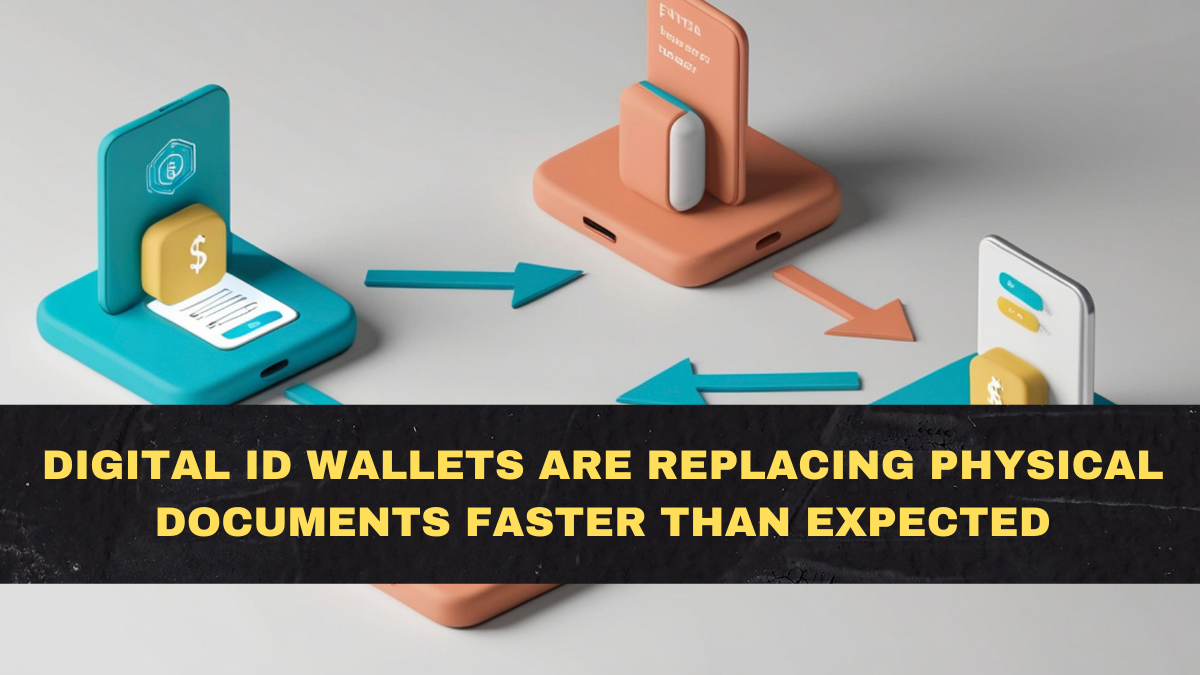
In 2026, carrying a stack of physical documents is starting to feel outdated. Digital ID wallets are rapidly becoming the default way people prove who they are—online and offline. What began as a convenience feature inside government apps has evolved into a full replacement for cards, papers, and photocopies that once defined identity verification.
This shift is not just technological. It’s structural. As national digital ID systems mature and identity verification moves into real-time, governments, banks, airlines, hospitals, and employers are aligning around a single idea: identity should be portable, verifiable, and instant.
What Digital ID Wallets Actually Are
Digital ID wallets are secure applications that store verified identity credentials on a phone or device. These credentials are issued by trusted authorities and can be presented digitally when required.
Typical documents stored include:
• National ID credentials
• Driving license equivalents
• Health records or insurance proofs
• Educational certificates
• Travel or residency permissions
Unlike scanned PDFs, these credentials are cryptographically verifiable and harder to forge.
Why Governments Are Pushing National Digital ID
Governments see digital ID wallets as infrastructure, not apps. The goal is efficiency, fraud reduction, and interoperability.
Key motivations include:
• Reducing identity fraud and duplication
• Faster service delivery
• Lower administrative costs
• Real-time verification across agencies
• Easier cross-border validation
A unified national digital ID allows systems to talk to each other without repeated paperwork.
How Identity Verification Is Changing
Traditional identity verification relied on visual checks and manual validation. In 2026, that process is increasingly automated.
Modern identity verification now involves:
• QR-based credential sharing
• Time-bound access permissions
• Selective data disclosure
• Backend verification against issuing authority
• Audit trails for every check
You don’t “hand over” your ID anymore—you grant limited, revocable access.
Why Physical Documents Are Being Phased Out
Physical documents were never designed for a digital world. They are slow, fragile, and easy to misuse.
Limitations of physical IDs include:
• Easy loss or damage
• Manual verification errors
• Photocopy misuse
• Long replacement cycles
• Poor fraud detection
Digital ID wallets solve many of these problems by design.
Where Digital ID Wallets Are Already Being Used
Adoption is broader than most people realize. In many regions, digital ID wallets are already accepted for everyday tasks.
Common use cases include:
• Airport check-ins and boarding
• Banking and KYC processes
• Healthcare registrations
• Government service access
• Employer onboarding
As acceptance grows, physical documents become backup—not primary.
Privacy Concerns Around Digital Identity
The biggest resistance to digital ID wallets is privacy—and not without reason.
Common concerns include:
• Centralized data misuse
• Surveillance risks
• Data breaches
• Function creep beyond original purpose
Modern systems attempt to address this through minimal disclosure and user-controlled sharing, but trust varies widely.
How Security Is Being Handled
Security is where digital ID wallets either succeed or fail.
Typical protections include:
• Device-level encryption
• Biometric authentication
• Hardware-backed key storage
• Revocable credentials
• Tamper-evident logs
The irony is that well-designed digital IDs can be safer than physical ones—if implemented correctly.
What Happens If You Lose Your Phone
This is one of the most common fears—and a valid one.
Most systems handle loss by:
• Disabling credentials remotely
• Reissuing IDs on a new device
• Verifying identity through secondary checks
• Maintaining server-side trust anchors
Losing a phone does not mean losing your identity—but recovery processes must be robust.
Why Adoption Is Accelerating in 2026
Several forces are converging to speed adoption.
Acceleration drivers include:
• Increased digital service usage
• Cross-border travel normalization
• Financial inclusion initiatives
• Pandemic-era digitization momentum
• Public fatigue with paperwork
Once a critical mass adopts digital ID wallets, opting out becomes inconvenient.
Who Benefits Most From Digital ID Wallets
The biggest gains are often for those who struggled most with physical systems.
Key beneficiaries include:
• Remote or rural populations
• Migrant workers and travelers
• Small businesses
• Individuals without document storage
• Service providers handling verification at scale
Efficiency compounds across the system.
What This Means for the Future of Identity
Identity is shifting from something you carry to something you control.
By late 2026:
• Identity checks become instantaneous
• Physical IDs become secondary
• Consent-based sharing becomes standard
• Verification happens invisibly in the background
The focus moves from possession to permission.
Conclusion
Digital ID wallets are not a futuristic experiment—they are fast becoming the backbone of identity systems worldwide. Powered by national digital ID frameworks and modern identity verification, they promise speed, security, and convenience that physical documents can’t match.
The real question for 2026 isn’t whether digital IDs will replace physical ones. It’s how well privacy, security, and user control will be protected as they do.
FAQs
What are digital ID wallets?
They are secure apps that store verified identity credentials digitally for instant use.
Are digital ID wallets mandatory?
In most places, they are optional—but increasingly preferred.
Are digital IDs safe from hacking?
Well-designed systems use encryption and hardware security, often making them safer than physical IDs.
What if my phone is lost or stolen?
Credentials can usually be revoked and reissued on a new device.
Will physical IDs disappear completely?
Not immediately, but they are becoming backups rather than primary identity tools.