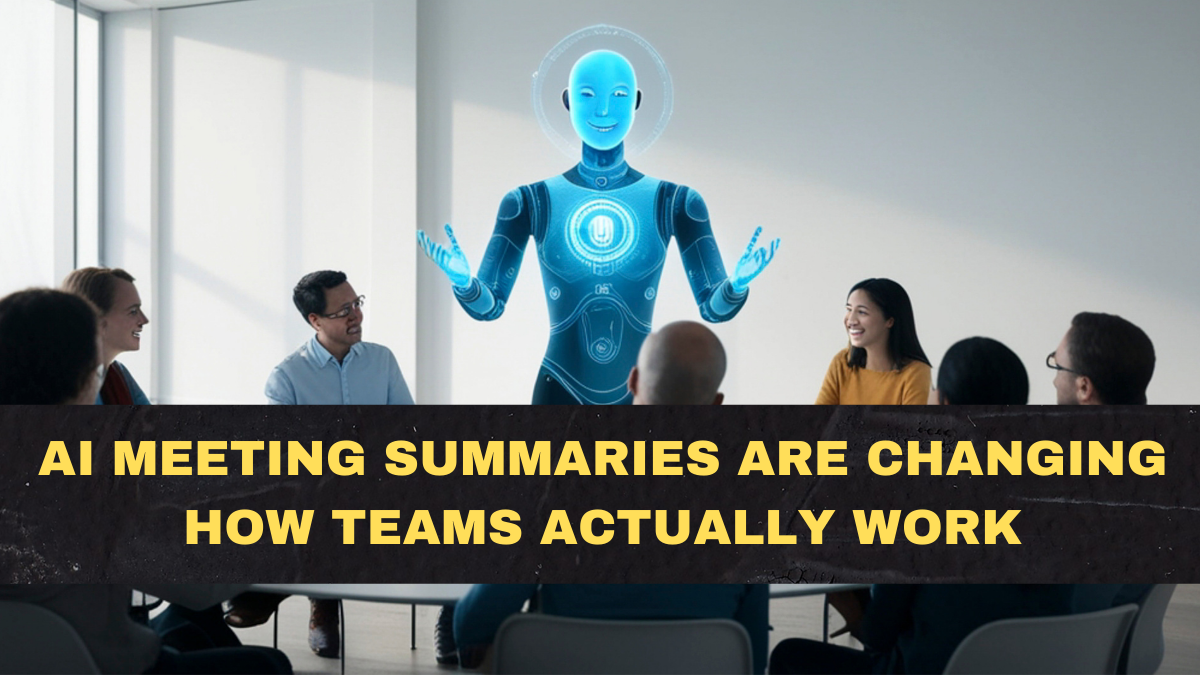
Meetings used to end with confusion, forgotten action items, and someone quietly tasked with taking notes. In 2026, that role is disappearing. AI meeting summaries are now embedded into calendars, video calls, and collaboration platforms, automatically capturing what was said, what matters, and what happens next. What looks like a small productivity upgrade is actually reshaping how teams function—and who is still needed in the room.
This change isn’t loud or controversial. It’s quiet, efficient, and widely accepted. As workplace AI tools mature and productivity software becomes more autonomous, teams are relying less on memory and more on machine-generated clarity.

What AI Meeting Summaries Actually Do
AI meeting summaries go far beyond basic transcription. They interpret, prioritize, and structure information in ways humans often don’t have time for.
Core capabilities include:
• Identifying key discussion points
• Extracting decisions and action items
• Assigning tasks to participants
• Highlighting deadlines and follow-ups
• Producing concise post-meeting briefs
Instead of raw notes, teams receive usable outcomes.
Why Teams Adopted Them So Quickly
The adoption curve was steep because the pain point was universal. Meetings waste time when outcomes are unclear.
Teams adopted AI meeting summaries because they:
• Reduce post-meeting confusion
• Eliminate manual note-taking
• Save time for participants
• Improve accountability
• Create consistent records
Once teams experience a few clean summaries, going back feels inefficient.
How Workplace AI Tools Changed Meeting Culture
Meetings themselves are changing because people know everything is being captured.
Behavior shifts include:
• More focused discussions
• Fewer repeated explanations
• Clearer decision-making
• Less reliance on “meeting memory”
• Faster follow-up execution
AI doesn’t just summarize meetings—it disciplines them.
The Productivity Software Effect
Productivity software in 2026 is no longer passive. It acts.
When AI meeting summaries integrate with task managers and calendars, they:
• Auto-create tasks
• Set reminders without prompts
• Update project timelines
• Notify stakeholders
• Reduce manual coordination
Meetings become inputs to systems, not just conversations.
What Roles Are Being Quietly Replaced
No one announces it, but the impact is real.
Roles most affected include:
• Junior note-takers
• Meeting coordinators
• Project assistants handling follow-ups
• Manual documentation roles
These tasks aren’t eliminated—they’re absorbed by AI.
Why Managers Love AI Meeting Summaries
From a management perspective, clarity equals control.
Managers benefit because:
• Outcomes are documented automatically
• Accountability is visible
• Fewer follow-up meetings are needed
• Progress tracking improves
Meetings become measurable, not just talk-heavy.
Where AI Meeting Summaries Fall Short
Despite their usefulness, these tools aren’t perfect.
Current limitations include:
• Missing emotional nuance
• Misinterpreting sarcasm or debate
• Over-simplifying complex discussions
• Bias toward louder speakers
Human review still matters—especially for sensitive topics.
Privacy and Trust Concerns
Recording and summarizing meetings raises legitimate concerns.
Common worries include:
• Consent from participants
• Storage of sensitive discussions
• Internal surveillance fears
• Misuse of summaries
Trust depends on clear policies and transparency around usage.
How Teams Are Adapting Their Behavior
As AI meeting summaries become standard, teams adapt.
New habits include:
• Speaking more deliberately
• Avoiding off-record remarks
• Clarifying decisions verbally
• Treating meetings as permanent records
The presence of AI changes social dynamics subtly but permanently.
Will Meetings Increase or Decrease Because of AI
Counterintuitively, many teams report fewer meetings.
Why:
• Summaries reduce the need for recap meetings
• Decisions are clearer the first time
• Async updates replace sync calls
• Follow-ups happen automatically
Efficiency reduces meeting volume—when used well.
What This Means for the Future of Work
Meetings are no longer ephemeral. They are structured inputs into work systems.
By late 2026:
• Meetings become shorter and sharper
• Documentation happens automatically
• Fewer people attend “just in case”
• Work becomes more asynchronous
The meeting is no longer the work. The output is.
Conclusion
AI meeting summaries are not just productivity add-ons—they are changing how teams communicate, decide, and execute. As workplace AI tools integrate deeper into productivity software, the role of meetings shifts from conversation-heavy to outcome-driven.
In 2026, the most effective teams aren’t meeting more. They’re remembering better—without trying.
FAQs
What are AI meeting summaries?
They are AI-generated briefs that capture decisions, action items, and key points from meetings.
Do AI meeting summaries replace human note-takers?
In many cases, yes—especially for routine meetings.
Are AI meeting summaries accurate?
They are generally reliable, but complex or emotional discussions may need human review.
Do participants need to consent to AI summaries?
Policies vary, but transparency and consent are increasingly expected.
Will AI reduce the number of meetings?
Often yes, by eliminating unnecessary follow-ups and recap calls.