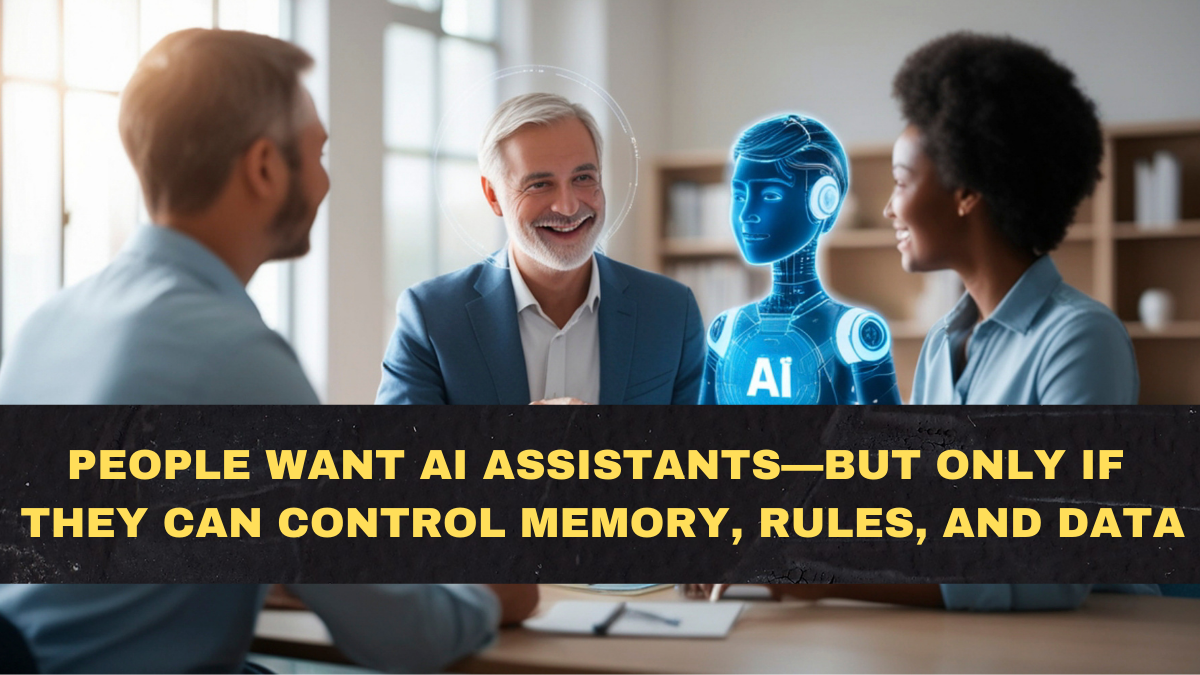
AI assistants are becoming part of everyday life. They draft emails, summarize meetings, plan schedules, manage shopping lists, and even handle payments. Adoption is rising fast—but so is resistance. In 2026, the biggest barrier to AI assistant growth is no longer capability. It is control.
Users want helpful assistants, but they are increasingly uncomfortable with invisible memory, unclear rules, and unrestricted personal data access. The expectation is shifting rapidly: AI assistants are welcome only if users control what is remembered, what is allowed, and what is shared.
This is creating a new design battlefield where privacy controls matter as much as intelligence.
Why AI Assistant Privacy Controls Suddenly Matter So Much
Early assistants focused on convenience. Memory and personalization were treated as features, not risks. That approach no longer works.
Users are now worried about:
• What the assistant remembers permanently
• Which conversations are stored
• How personal data is reused
• Whether memory can influence decisions
• Who can access that data later
As assistants become more autonomous, privacy failures stop being cosmetic. They become trust-breaking.
That is why AI assistant privacy controls are now a core adoption requirement, not an optional setting.
What AI Memory Really Means Behind the Scenes
AI memory is not just chat history. It includes persistent context that influences future behavior.
This may include:
• Past conversations
• Preferences and habits
• Personal routines
• Purchase behavior
• Work patterns
• Health or family references
Once stored, this memory shapes responses automatically.
Without clear controls, users lose visibility into what the system “knows” about them—and that is deeply unsettling.
Why Personal Data Access Is the New Red Line
AI assistants increasingly integrate with:
• Email
• Calendars
• Photos
• Files
• Browsing history
• Payment data
This gives assistants enormous context—but also enormous power.
The main fears users express:
• Private emails being analyzed
• Sensitive files influencing answers
• Photos being used for profiling
• Watch history shaping decisions
• Data being reused for training
Without strict personal data access rules, assistants stop feeling like helpers and start feeling like surveillance systems.
How Control Expectations Are Changing in 2026
In 2026, users no longer accept “trust us” privacy models.
They now expect:
• Memory visibility dashboards
• Per-topic memory toggles
• Temporary conversation modes
• One-click memory deletion
• Fine-grained permission controls
• Transparent data usage logs
The default expectation is opt-in, not opt-out.
This is forcing assistant platforms to redesign memory and data layers completely.
Rule-Based Assistants Are Becoming the Standard
The most important trend is not smarter AI. It is rule-driven AI.
Users want to define:
• What the assistant can remember
• Which apps it can access
• When it can act autonomously
• Spending and action limits
• Topics that must never be stored
Instead of assistants deciding behavior dynamically, users want explicit boundaries.
This shifts assistants from “intelligent agents” to “rule-following systems with intelligence.”
That distinction matters enormously for trust.
Why Transparency Beats Raw Intelligence
Highly intelligent assistants without transparency now perform worse than slightly weaker but controllable ones.
Users prefer systems that:
• Explain what they remember
• Show why they accessed data
• Allow instant revocation
• Display decision sources
• Separate temporary vs permanent memory
In practice, transparency now drives:
• Higher retention
• More daily usage
• More integrations enabled
• More sensitive tasks delegated
Trust unlocks capability. Intelligence alone does not.
What Companies Are Changing in Response
Assistant providers are redesigning architecture around control layers.
Major changes include:
• Memory compartmentalization
• Per-app data permissions
• Ephemeral conversation modes
• Local-device memory storage
• Encrypted memory vaults
• User-controlled training opt-outs
In 2026, “privacy-first assistants” become a market category, not a niche.
The Business Risk of Ignoring Privacy Controls
Platforms that ignore privacy backlash face real consequences.
Risks include:
• User churn after data scandals
• Regulatory investigations
• Feature adoption stagnation
• Enterprise rejection
• Brand trust collapse
The fastest-growing assistants in 2026 are not the smartest.
They are the most controllable.
Why This Becomes a Competitive Differentiator
In the next phase of the assistant market, differentiation will come from:
• Memory management tools
• Rule configuration UX
• Permission clarity
• Data residency guarantees
• Auditability features
Two assistants may have similar intelligence. The one with better AI assistant privacy controls will win.
That is already visible in enterprise deployments, healthcare assistants, and financial planning tools.
Conclusion
AI assistants are becoming indispensable—but only under one condition: control.
In 2026, users no longer accept invisible memory, unrestricted data access, or unclear autonomy. They want assistants that follow rules, respect boundaries, and explain themselves.
The future of assistants is not about replacing humans.
It is about earning human trust.
And trust begins with memory controls, data permissions, and transparent rules.
FAQs
What are AI assistant privacy controls?
They are settings that let users manage memory, data access, permissions, and autonomy in AI assistants.
Why is AI memory a concern?
Because persistent memory can store sensitive habits, preferences, and personal details that influence future behavior invisibly.
Can users delete AI assistant memory?
In modern systems, yes. Many platforms now allow viewing, editing, and deleting stored memories.
Do AI assistants access emails and files?
Some do, with permission. That is why fine-grained personal data access controls are critical.
Click here to know more.