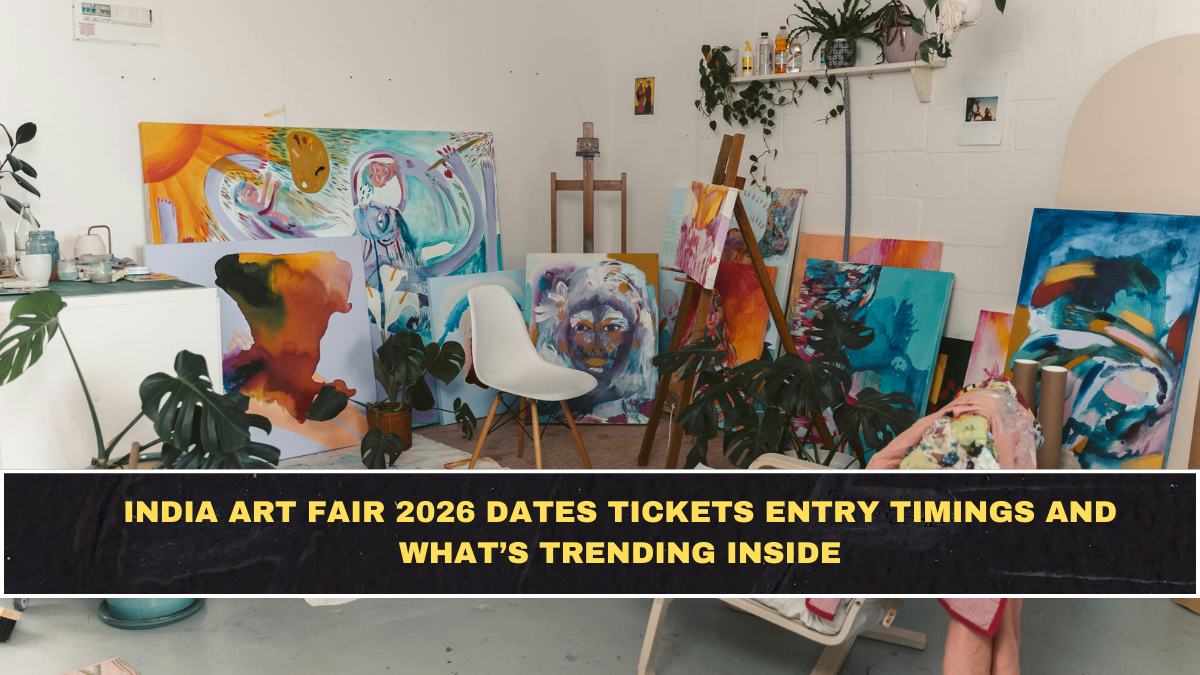
The India Art Fair 2026 has once again turned Delhi into the center of the global art conversation, drawing collectors, students, curators, and first-time visitors into a space where contemporary art feels both serious and accessible. Unlike gallery openings that cater to narrow circles, this fair has become a mass-culture event, with thousands of visitors walking in simply to experience what modern art looks like in 2026.
What makes this edition stand out is not just scale, but mood. The fair feels more international, more experimental, and far more social-media driven than earlier years. From immersive installations to cross-cultural showcases, the experience is designed to be walked, photographed, discussed, and shared. For anyone planning to visit, knowing the dates, entry rules, and what’s trending inside helps turn a crowded event into a smooth, rewarding day.
India Art Fair 2026 Dates and Venue Details
India Art Fair 2026 runs over four days and is hosted at NSIC Exhibition Grounds, a venue now closely associated with large cultural events in the city. The location offers ample space for galleries, installations, talks, and outdoor exhibits, which is crucial given the size of the fair.
Each day follows a structured schedule, with public entry slots designed to manage crowd flow. While VIP previews and early access hours exist for invited guests, general visitors have broad access across the main exhibition hours. Knowing your entry window in advance helps avoid long queues, especially during peak afternoon hours.
Entry Timings and How the Day Is Structured
The fair operates on fixed daily timings, with gates opening in the late morning and closing by evening. Entry is regulated to prevent overcrowding inside gallery halls, which means late arrivals during busy hours may experience short waiting periods.
Mornings are typically calmer and better suited for visitors who want to engage deeply with artworks or speak with gallery representatives. Evenings tend to be more energetic, with larger crowds, influencer activity, and social engagement around major installations. Choosing your time depends on whether your priority is quiet viewing or vibrant atmosphere.
Ticket Types, Pricing, and Entry Rules
Tickets for India Art Fair 2026 are available in multiple categories, including single-day passes and multi-day access. Digital tickets are encouraged, with QR-based entry speeding up the check-in process at gates.
On-ground ticket counters are available, but they tend to be slower during peak hours. Entry rules are clearly defined, with security checks similar to other large public events. Visitors are advised to carry valid identification and avoid restricted items to ensure smooth access.
What’s Trending Inside the Fair This Year
This year’s fair has a strong focus on cross-border dialogue and immersive experiences. Large-scale installations dominate social media feeds, with visitors drawn to works that blur the line between visual art, sound, and space.
Contemporary Asian art has a visible presence, alongside experimental Indian galleries pushing materials, textures, and political themes. Interactive booths, digital art zones, and performance-based exhibits are also drawing steady crowds, reflecting how art consumption itself has evolved.
Galleries, Installations, and Crowd Favorites
Well-known galleries anchor the fair, but many of the most talked-about pieces come from emerging artists and collaborative spaces. These areas often feel less formal and more conversational, which resonates strongly with younger visitors.
Photo-friendly installations have become unofficial landmarks within the fair. Visitors often plan their route around these highlights, making it easier to navigate the large venue without feeling overwhelmed.
Food, Facilities, and Visitor Comfort
Food courts and pop-up cafés are strategically placed across the venue, offering quick meals and beverages without forcing visitors to exit and re-enter. Seating zones provide short breaks between gallery halls, which is important given the amount of walking involved.
Restrooms, information desks, and accessibility features are clearly marked. First-time visitors benefit from picking up a venue map early, as it helps manage time efficiently inside the fair.
Who Should Visit and How to Get the Most Out of It
India Art Fair 2026 is not limited to art experts or collectors. Students, casual visitors, families, and tourists all find entry points that match their interest level. The key is not to rush through everything.
Choosing a few sections to explore deeply often leads to a more satisfying experience than trying to see everything. Talks, walkthroughs, and curated zones add context and are especially valuable for visitors new to contemporary art.
Conclusion: Why India Art Fair 2026 Feels Bigger Than an Art Event
India Art Fair 2026 is less about static viewing and more about participation. It reflects how art in 2026 is consumed as experience, conversation, and cultural signal rather than just object. The scale, diversity, and energy make it feel closer to a cultural festival than a traditional fair.
For visitors, preparation transforms the day. Knowing entry timings, planning ticket access, and understanding what’s trending inside helps avoid fatigue and maximize engagement. Whether you go for serious art appreciation or visual discovery, the fair rewards curiosity and time.
FAQs
Where is India Art Fair 2026 held?
It is held at NSIC Exhibition Grounds in Okhla, Delhi, a large venue designed for major cultural events.
Do I need to book tickets in advance?
Advance booking is recommended as it speeds up entry and reduces waiting time during busy hours.
What is the best time of day to visit?
Mornings are calmer for focused viewing, while evenings are livelier and more social.
Is the fair suitable for first-time art visitors?
Yes, the fair is designed for a wide audience, including beginners and casual visitors.
Are food and rest facilities available inside?
Yes, food courts, cafés, seating areas, and basic facilities are available across the venue.
Can I take photos inside the fair?
Photography is generally allowed in common areas, but some galleries may restrict it for specific artworks.