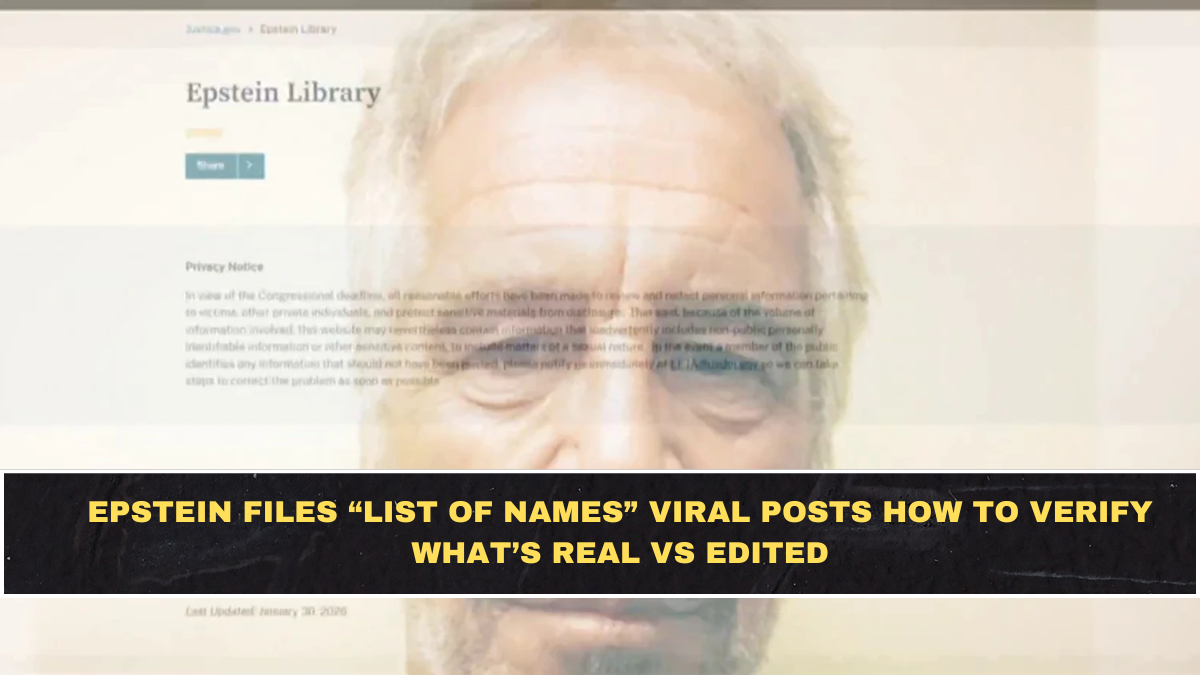
Viral posts claiming to reveal a definitive “names list” from the Epstein files resurface regularly, and each wave looks convincing enough to mislead well-meaning readers. Screenshots circulate with official-looking headers, cropped stamps, and confident captions that imply finality. The problem is not curiosity; it is speed. In 2026, the gap between a claim appearing and being shared has shrunk to seconds, while the work of verification still takes minutes. Those minutes matter.
Understanding how to verify what is real versus edited is not about defending institutions or dismissing accountability. It is about preventing false certainty from causing real harm. Names can appear in records for many reasons that have nothing to do with wrongdoing, and edited compilations often strip away the context that courts insist upon. A short, disciplined checklist can stop misinformation before it spreads.
Why “Names List” Claims Keep Going Viral
The phrase “list of names” suggests completeness and authority, which is why it travels so fast. People assume a list implies vetting, confirmation, and legal weight, even when none of that exists. Platforms reward certainty, not nuance, so posts that promise a clean answer outperform explanations that insist on context.
Another driver is visual persuasion. A single page with bold names looks conclusive, especially when framed as newly “unredacted.” But virality does not equal validity. Most viral lists are stitched together from partial records, secondary reporting, or outright fabrication, then repackaged to look official.
What Official Records Actually Look Like
Authentic court records and filings follow predictable structures. They include docket numbers, filing dates, case captions, pagination, and consistent formatting throughout the document. When names appear, they are embedded in paragraphs that explain why the name is present, such as scheduling references, testimony summaries, or correspondence logs.
Crucially, official records rarely present names as a standalone roster. They provide context first, because context determines meaning. A document that isolates names without surrounding explanation should immediately raise skepticism.
The Five-Minute Verification Checklist
Start with document structure. Check whether the page shows a complete header, docket reference, and consistent fonts across sections. Edited lists often mix fonts, spacing, or margins because they are assembled from multiple sources.
Next, assess sourcing. A credible claim points to a specific filing, court, or agency release, not just “recently unsealed documents.” Vague sourcing is a red flag because it prevents independent confirmation.
Then look for context markers. Real documents explain why a name appears. Lists that present names without explanation are usually summaries or interpretations, not primary records.
Check for internal consistency. Dates, page numbers, and references should align logically. Mismatched timelines or page counts suggest compilation rather than origin.
Finally, examine distribution behavior. Authentic releases are reported simultaneously by multiple reputable outlets with similar descriptions. If a claim exists only as screenshots passed between accounts, caution is warranted.
Common Editing Tricks Used in Fake Lists
One common trick is selective cropping, where a screenshot removes headers or footers that would identify the document’s origin. Another is reordering names to imply hierarchy or importance that does not exist in the source material.
Some lists insert names from unrelated cases or civil filings to inflate scope. Others rely on visual emphasis, such as bolding or color, to suggest confirmation. These techniques exploit how readers interpret design cues as signals of authenticity.
What a Name in a Record Does and Does Not Mean
A name appearing in a record does not establish guilt, involvement, or allegation. Records capture interactions, references, and administrative details. Without context, a name is simply a data point, not a conclusion.
This distinction is foundational to due process. Treating appearance as implication collapses legal safeguards and turns documentation into accusation. That is why courts are cautious about public release and why responsible reporting insists on explanation.
Why Screenshots Are Especially Unreliable
Screenshots strip away metadata that helps verify authenticity, such as page counts, links to filings, and document history. They also make manipulation easy, allowing edits that are hard to detect at a glance.
In contrast, authentic documents are accessed through structured portals or releases that preserve formatting and traceability. If a claim depends entirely on screenshots, verification becomes harder and skepticism more appropriate.
How to Share Responsibly Without Going Silent
Responsible sharing does not mean ignoring the topic. It means framing uncertainty honestly. If you discuss a document, explain what it is, what it is not, and what remains unverified. Avoid declarative captions that outrun the evidence.
When in doubt, slow down. Waiting for corroboration is not censorship; it is care. The goal is to inform without amplifying claims that cannot yet be substantiated.
Conclusion: Verification Is a Civic Skill Now
In 2026, verification is no longer optional for readers who share information. The tools used to fabricate convincing documents are widely available, while the consequences of false claims are immediate and lasting. A simple checklist can protect both the public conversation and the individuals unfairly implicated by edited lists.
Before sharing a “names list,” take five minutes. Check structure, sourcing, context, consistency, and distribution. Those minutes turn curiosity into responsibility and prevent misinformation from becoming memory.
FAQs
Is there an official Epstein “names list” released publicly?
No. Official records are released as documents with context, not as a standalone, definitive list of names.
Does unredacted access mean names are confirmed?
No. Unredacted access allows review without black bars but does not change the meaning or implications of names appearing in records.
Why do fake lists look so convincing?
They borrow visual elements from real documents and remove context, which creates an illusion of authority.
How can I quickly spot an edited list?
Look for missing headers, vague sourcing, inconsistent formatting, and names presented without explanation.
Should I share a list if it comes from a screenshot?
Screenshots are unreliable for verification. It is safer to wait for full documents and corroborated reporting.
What is the safest way to discuss viral claims?
Explain what is verified, what is unverified, and why context matters, without making definitive claims.