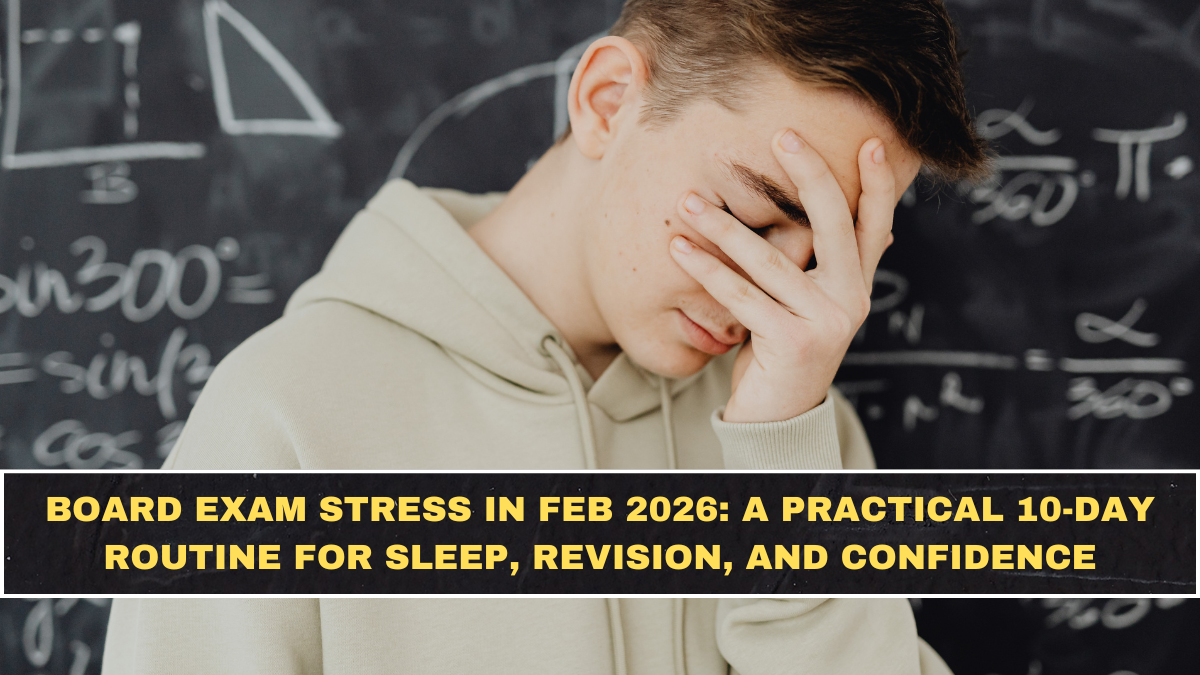
Board exams bring intense academic pressure, and in 2026, searches around board exam stress tips are rising as students struggle to balance revision, anxiety, and performance expectations. The final days before exams often create emotional overload, not because students lack preparation, but because they lack a structured routine. Without proper stress management, even well-prepared students experience memory blocks, poor concentration, and reduced confidence during exams.
The demand for board exam stress tips reflects a real challenge faced by students across different boards and subjects. Stress affects sleep quality, decision-making ability, and recall speed, all of which directly influence exam performance. Instead of relying on motivational advice or unrealistic study schedules, students benefit from practical routines that stabilize their mind and improve productivity during the final days.

Why Board Exam Stress Peaks Before Exams
Stress increases sharply as exam dates approach because uncertainty about performance becomes more intense. Students often compare preparation levels with peers, worry about results, and fear unexpected questions. This constant mental pressure affects focus and reduces effective study time.
Another reason board exam stress tips become essential during this phase is information overload. Students attempt to revise large portions of the syllabus quickly, which creates fatigue and confusion rather than clarity. The brain performs better when information is processed gradually, but last-minute pressure forces rushed revision.
Sleep disruption also plays a major role. Many students stay awake late for revision, which reduces cognitive efficiency the next day. Poor sleep directly affects concentration, memory retention, and emotional stability.
A Practical 10-Day Routine to Reduce Stress
The final ten days before exams should focus on stability rather than aggressive learning. The most effective board exam stress tips involve building a predictable daily routine that balances study, rest, and mental recovery.
A structured daily approach should include:
-
Fixed wake-up and sleep time to stabilize the body clock
-
Short revision sessions instead of long study blocks
-
Breaks after every focused study period
-
Light physical movement or stretching
-
Time for relaxation without screens
Consistency reduces anxiety because the mind responds positively to predictable patterns. A calm routine improves retention and reduces panic.
Sleep Management Is the Most Important Factor
Many students underestimate the role of sleep in academic performance. Among all board exam stress tips, proper sleep management has the strongest impact on concentration and memory. When students sleep adequately, their ability to recall information improves significantly.
Students should aim for consistent sleep duration rather than irregular late-night study sessions. Going to bed at the same time every day helps the brain enter deep sleep cycles faster. Avoiding heavy meals, excessive caffeine, and prolonged screen exposure before bedtime improves sleep quality.
A well-rested mind processes questions faster and reduces exam-day anxiety. Sleep is not lost study time; it is preparation for effective performance.
Smart Revision Strategy Instead of Overloading
The biggest mistake students make is attempting to revise everything repeatedly. Effective board exam stress tipsTips involve prioritizing important topics, reviewing weak areas, and strengthening conceptual clarity rather than memorizing large volumes of content.
A practical revision approach includes:
-
Reviewing key formulas and definitions daily
-
Solving sample papers for pattern familiarity
-
Revising summary notes instead of full chapters
-
Practicing time-bound question solving
-
Focusing on accuracy rather than speed initially
This approach builds confidence gradually and reduces fear of unexpected questions.
Managing Anxiety and Negative Thoughts
Exam stress is often driven by negative thinking rather than actual difficulty. Students worry about failure, compare themselves to others, and imagine worst-case outcomes. These thought patterns reduce concentration and increase emotional pressure.
Among the most effective board exam stress tips is learning to control internal dialogue. Students should focus on preparation progress rather than outcome fears. Simple breathing exercises and short relaxation techniques help calm the nervous system.
Avoiding constant discussion about exams with peers also reduces anxiety. Excessive comparison creates unnecessary pressure and distracts from personal preparation.
Diet and Physical Activity Impact Performance
Physical health directly influences mental performance. Students under stress often skip meals or rely on unhealthy snacks, which leads to fatigue and reduced focus. Balanced meals help maintain energy levels and concentration.
Light physical activity, such as walking or stretching, improves blood circulation and reduces tension. Even short movement breaks refresh the mind and improve productivity.
The best board exam stress tips always include attention to physical well-being because mental performance depends on overall health.
Common Mistakes That Increase Exam Stress
Students often create avoidable stress through poor habits. Studying continuously without breaks leads to mental exhaustion. Ignoring weak areas increases fear during exams. Changing study strategies suddenly creates confusion.
Another common mistake is relying heavily on social media discussions about exams. Exposure to rumors, predictions, and panic messages increases anxiety without improving preparation.
Avoiding these habits allows students to maintain emotional stability during the final preparation phase.
Conclusion: Stability Leads to Confidence
The growing search for board exam stress tips shows that students are looking for practical ways to manage pressure during exams. Success in board exams depends not only on knowledge but also on emotional control, physical health, and disciplined routines.
A balanced schedule, proper sleep, focused revision, and controlled thinking create a strong foundation for performance. Students who maintain stability during the final days approach exams with clarity and confidence.
In 2026, managing stress is not separate from preparation—it is part of preparation. A calm mind performs better, recalls faster, and makes fewer mistakes, which ultimately leads to better results.
FAQs
Why do students experience high stress during board exams?
Stress increases due to performance pressure, syllabus load, peer comparison, and uncertainty about results.
How much sleep should students take during exams?
Students should maintain consistent sleep schedules and get adequate rest to improve memory and concentration.
What is the best revision strategy in the last days before exams?
Students should focus on important topics, revise summary notes, practice sample papers, and avoid learning new content.
Can physical activity help reduce exam stress?
Yes, light physical activity improves focus, reduces anxiety, and increases mental clarity.
What should students avoid during exam preparation?
Students should avoid irregular sleep, excessive social media use, last-minute strategy changes, and constant comparison with others.