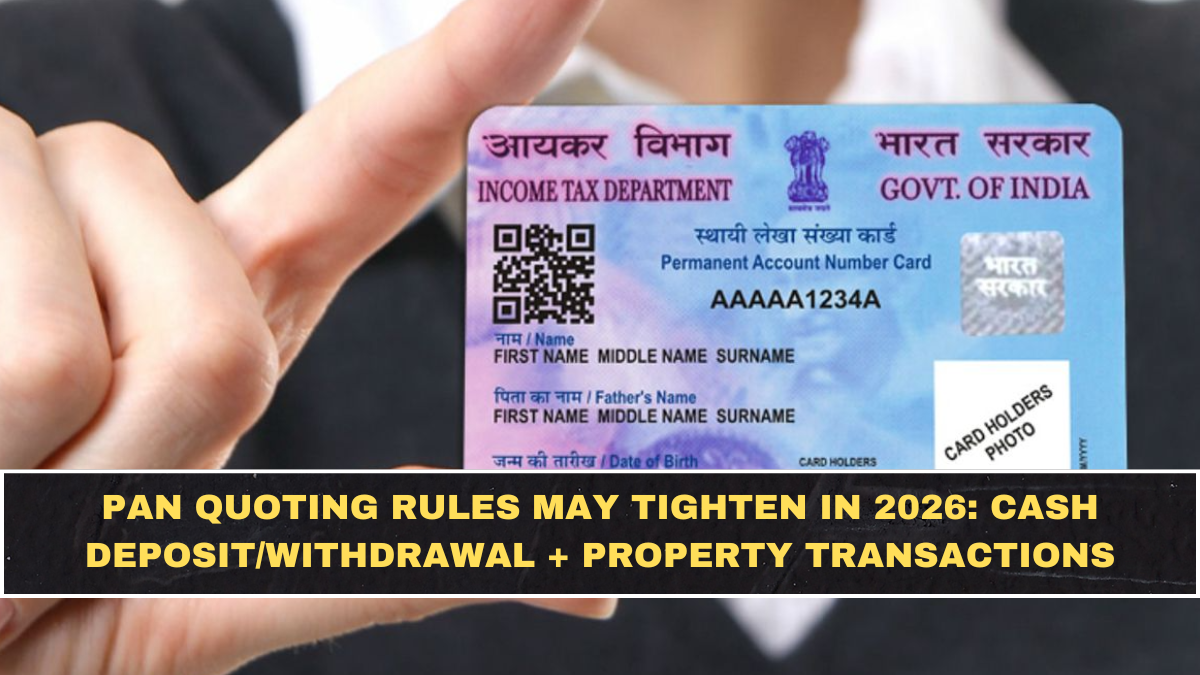
India’s financial compliance framework is becoming increasingly data-driven, and PAN quoting changes 2026 signal tighter monitoring of high-value financial activity. The proposed updates expand when taxpayers must provide PAN details for transactions such as cash deposits, withdrawals, and property dealings. The objective is to strengthen reporting, reduce unaccounted transactions, and ensure financial activity aligns with declared income.
For individuals, businesses, and investors, this shift means that routine financial actions may now trigger additional documentation or reporting requirements. Understanding which transactions require PAN and how reporting thresholds work is essential to avoid compliance issues or transaction delays.
Here is a clear explanation of the new PAN quoting proposals and what they mean for everyday financial activity.

Why PAN Quoting Rules Are Tightening in 2026
The push for expanded PAN reporting reflects a broader effort to improve tax transparency and reduce informal cash transactions. Financial authorities are increasingly integrating banking, property, and investment data with tax records.
The key goals behind PAN quoting changes 2026 include:
-
Tracking high-value financial activity
-
Reducing tax evasion risks
-
Strengthening audit trails across transactions
-
Improving income verification systems
-
Aligning financial transactions with tax reporting
PAN is becoming the central identity that connects multiple financial activities under one compliance framework.
Cash Deposits That May Trigger PAN Reporting
Cash deposits are a major focus area because they are harder to track than digital transactions. The new proposals expand situations where PAN details must be quoted.
Transactions likely to require PAN include:
-
Large cash deposits in savings accounts
-
High-value deposits in current accounts
-
Structured deposits split into multiple smaller transactions
-
Business cash handling above reporting thresholds
Banks may verify PAN before processing such transactions. In some cases, failure to provide PAN can result in:
-
Transaction rejection
-
Higher tax deduction at source
-
Mandatory reporting to tax authorities
The emphasis is on linking large cash movement with verified taxpayer identity.
Cash Withdrawals Under Increased Monitoring
The proposed rules also tighten monitoring of large cash withdrawals. While withdrawals remain permitted, reporting requirements increase for high-value transactions.
Situations that may trigger PAN quoting include:
-
Large single withdrawals from bank accounts
-
Frequent high-value withdrawals within a short period
-
Business cash withdrawals beyond specified limits
-
Transactions inconsistent with declared income patterns
The objective is not to restrict withdrawals but to ensure traceability of large cash usage.
Property Transactions Face Stricter PAN Requirements
Real estate transactions involve substantial financial value and therefore fall under stricter reporting rules.
Under the new framework:
-
Buyers must quote PAN for eligible property purchases
-
Sellers must provide PAN details for transaction reporting
-
Registrars may report property transaction values to tax authorities
-
Cash components in property deals face enhanced scrutiny
This reduces the possibility of under-reporting property values or conducting large cash-based deals without documentation.
High-Value Transactions Beyond Cash and Property
The expanded PAN quoting proposals also apply to various high-value financial activities.
These may include:
-
Large investment transactions
-
High-value purchases using cash
-
Significant financial transfers
-
Certain business transactions involving large payments
The aim is to create consistent reporting standards across financial sectors.
Impact on Individuals and Salaried Taxpayers
For salaried individuals, the impact may appear limited but still important. Even if income is fully reported, failing to provide PAN during qualifying transactions can create compliance issues.
Common situations requiring attention include:
-
Depositing large cash savings
-
Purchasing property
-
Handling high-value payments
-
Conducting financial transactions beyond regular income levels
Maintaining updated PAN linkage with bank accounts and financial records becomes essential.
What Businesses Must Do to Stay Compliant
Businesses dealing in cash-intensive operations face greater compliance responsibility under PAN quoting changes 2026.
Organizations should:
-
Collect PAN details for high-value transactions
-
Maintain proper transaction documentation
-
Monitor structured transactions
-
Update compliance procedures
-
Train staff handling financial transactions
Failure to follow reporting rules may trigger audits or penalties.
Risks of Non-Compliance and Reporting Failure
The new framework strengthens enforcement capability. Non-compliance may lead to:
-
Penalties for non-reporting
-
Higher tax deductions
-
Transaction delays or rejection
-
Increased audit scrutiny
-
Legal consequences in serious cases
Compliance is becoming proactive rather than corrective.
How to Stay Compliant Under PAN Quoting Changes 2026
Taxpayers can avoid complications by following simple financial discipline.
Practical steps include:
-
Keep PAN details updated and active
-
Link PAN with bank accounts and financial services
-
Maintain records of major transactions
-
Avoid undocumented cash dealings
-
Verify reporting requirements before large transactions
These habits reduce compliance risk and ensure smooth financial activity.
Why These Changes Reflect a Larger Financial Shift
The tightening of PAN quoting rules represents a broader transformation in India’s financial ecosystem. The system is moving toward:
-
Complete transaction traceability
-
Real-time compliance monitoring
-
Reduced cash-based informal activity
-
Data-driven tax administration
-
Greater financial accountability
Tax compliance is increasingly becoming part of everyday financial behavior.
Conclusion
The PAN quoting changes 2026 proposals expand reporting requirements for cash deposits, withdrawals, and property transactions. The goal is to strengthen financial transparency and ensure high-value transactions align with declared income.
For taxpayers, the key takeaway is simple — maintain proper documentation, provide PAN when required, and ensure financial activity remains consistent with reported income. The compliance environment is becoming more structured, and awareness is the best protection against penalties or transaction disruption.
FAQs
What are PAN quoting changes 2026 mainly about?
They expand situations where PAN must be provided for high-value financial transactions such as cash deposits, withdrawals, and property deals.
Is PAN required for all cash transactions?
No. PAN is required only when transactions cross specified thresholds or fall under reporting categories.
Do property buyers and sellers both need PAN?
Yes. Both parties must provide PAN details for eligible property transactions.
What happens if PAN is not provided when required?
Transactions may be rejected, taxed at higher rates, or reported to tax authorities.
How can individuals stay compliant with new PAN rules?
Keep PAN details updated, maintain transaction records, and follow reporting requirements for high-value financial activity.