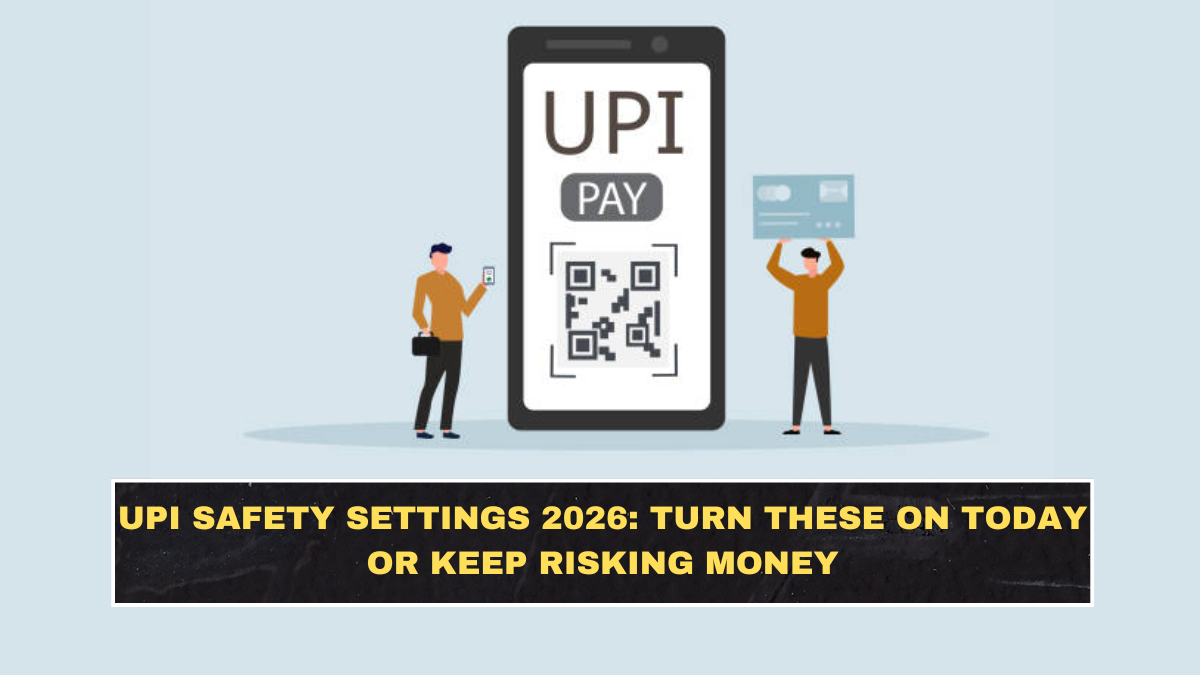
Unified Payments Interface (UPI) has become one of the most widely used digital payment systems in India. Millions of people use UPI daily for payments, transfers, and bill settlements through apps such as Google Pay, PhonePe, Paytm, and bank UPI apps.
While UPI is designed to be secure, fraudsters often target users through fake collect requests, phishing links, and social engineering scams. Many of these scams succeed because users are unaware of basic safety settings that can reduce risk.
By enabling a few key security settings and following safe payment practices, users can significantly reduce the chances of financial fraud.
Common UPI Fraud Techniques
Cybercriminals use various tricks to convince victims to approve fraudulent transactions.
| Fraud Method | How It Works |
|---|---|
| Collect request scam | Victim approves payment request thinking it is a refund |
| Fake payment screenshot | Scammers send edited payment proof |
| Phishing links | Fake websites collect login details |
| Customer care scams | Fraudsters pose as bank or app support |
Most scams rely on tricking users into authorizing transactions themselves.
Important UPI Safety Settings to Enable
Several built-in security features can help protect users from unauthorized transactions.
| Security Setting | Purpose |
|---|---|
| App lock or biometric authentication | Prevent unauthorized access |
| UPI PIN protection | Required for transaction approval |
| Transaction alerts | Instant notification for every payment |
| Device verification | Restricts account use to registered device |
Enabling these settings helps ensure that only the account holder can authorize payments.
How to Identify Fake UPI Collect Requests
A collect request allows someone to request money from another user. Fraudsters often misuse this feature.
| Warning Sign | Explanation |
|---|---|
| Unexpected payment request | Sender claims it is for refund or verification |
| Unknown sender ID | Request from unfamiliar UPI ID |
| Urgent approval request | Scammer creates pressure to accept quickly |
| Message asking for OTP | OTP should never be shared |
Users should remember that approving a collect request means sending money, not receiving it.
Safe Practices for UPI Transactions
Following simple precautions can prevent most digital payment fraud attempts.
| Safety Tip | Why It Matters |
|---|---|
| Verify recipient UPI ID | Prevent sending money to wrong account |
| Avoid unknown links | Protect against phishing attacks |
| Do not share OTP or PIN | Protect account security |
| Use official apps only | Reduce malware risk |
Being cautious during digital transactions is the most effective defense against fraud.
What to Do If You Become a Victim of UPI Fraud
Immediate action increases the chances of stopping fraudulent transactions.
| Action | Purpose |
|---|---|
| Contact bank immediately | Block further transactions |
| Call cybercrime helpline | Report incident quickly |
| File complaint online | Provide transaction details |
| Preserve evidence | Screenshots help investigation |
Reporting quickly can sometimes help freeze the fraudulent transaction before funds are withdrawn.
UPI Transaction Limits
Understanding transaction limits can help users manage payments safely.
| UPI Feature | Limit (Typical) |
|---|---|
| Per transaction limit | Up to ₹1 lakh (varies by bank) |
| Daily transaction limit | Bank-specific |
| Number of transactions | Limited per day |
These limits may vary depending on the bank and payment application used.
Benefits of Using UPI Safely
When used responsibly, UPI provides a fast and efficient payment experience.
| Benefit | Explanation |
|---|---|
| Instant payments | Money transferred within seconds |
| 24/7 availability | Payments anytime |
| Easy bill payments | Utility and service payments |
| No need for bank details | Payments using UPI ID |
With proper security awareness, users can enjoy the convenience of digital payments without unnecessary risk.
Conclusion
UPI has transformed digital payments in India, but rising usage has also attracted cybercriminals attempting to exploit unaware users. By enabling important security settings, verifying payment requests carefully, and avoiding suspicious links, users can significantly reduce the risk of fraud.
Staying informed about common scam tactics and following safe digital payment practices is essential for protecting personal finances.
FAQs
What is the safest way to use UPI?
The safest approach is to verify the recipient before sending money and never share your UPI PIN or OTP with anyone.
Can someone hack my UPI account?
Direct hacking is rare, but scammers may trick users into approving transactions or sharing sensitive information.
What should I do if I receive a suspicious collect request?
Do not approve the request and verify the sender before taking any action.
Is it safe to share my UPI ID?
Yes, sharing your UPI ID is generally safe, but never share your UPI PIN or OTP.
How can I report UPI fraud in India?
You can report fraud through the cybercrime helpline (1930) or the National Cyber Crime Reporting Portal.
Click here to know more.