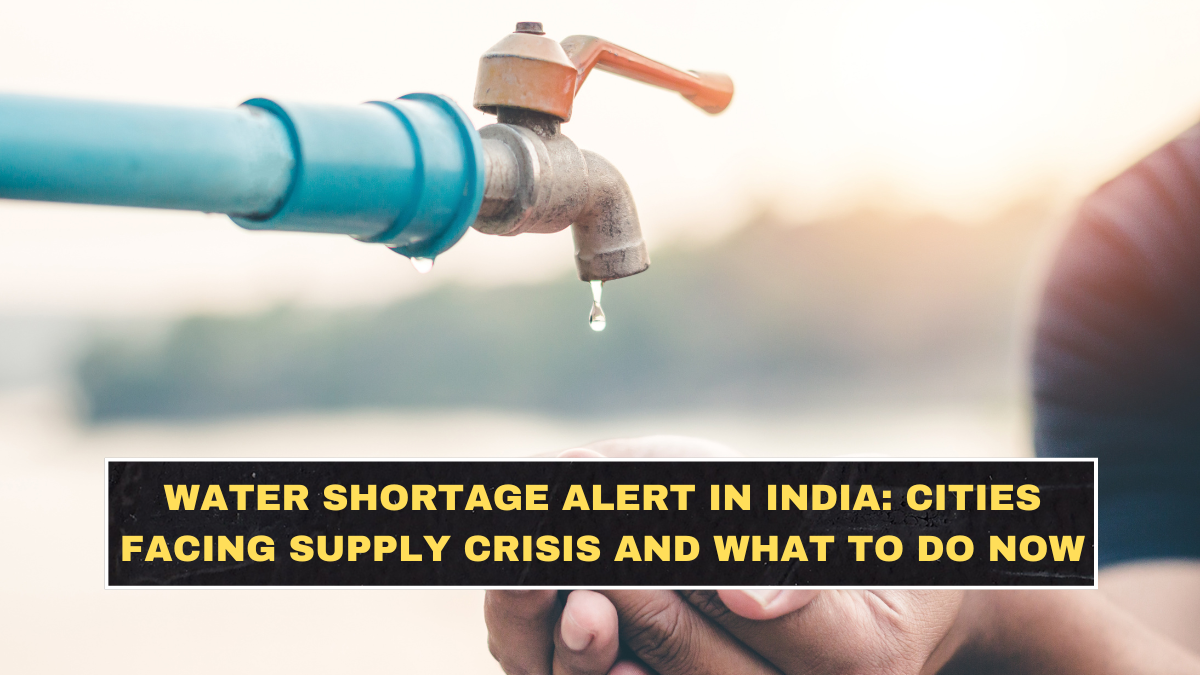
You turn on the tap expecting normal supply, and suddenly the pressure is low or water isn’t coming at all. This is not a one-off issue — multiple cities across India are entering early-stage water stress, and the situation usually worsens as summer peaks.
The reality is simple but uncomfortable: cities are using water faster than they can replenish it. When demand rises and supply drops at the same time, shortages are not just possible — they become inevitable.
Why Does This Matter More Than You Think?
Water is not like electricity or internet — you cannot “delay” using it. From drinking and cooking to cleaning and sanitation, water is essential every single day.
When shortages begin, daily routines get disrupted immediately. Families start depending on tankers, storage, and irregular supply timings, which increases both stress and cost.
What Are the Real Reasons Behind Water Shortage in India?
Most people blame summer heat, but the problem is much deeper and data-driven.
Here are the main reasons:
- Groundwater depletion due to over-extraction in urban areas
- Low rainfall in previous seasons affecting reservoir levels
- Increasing population and urban demand
- Poor water management and leakage in supply systems
- Rising tanker dependency due to uneven distribution
For example, many major cities rely heavily on groundwater, and in some areas, water tables have dropped significantly over the past decade.
How Does Water Supply Actually Work in Cities?
Understanding this helps you see why shortages happen.
Cities depend on a mix of sources — reservoirs, rivers, and groundwater. When one source weakens, the entire system gets stressed.
Urban Water Supply Breakdown
| Source Type | Contribution Level | Risk During Summer |
|---|---|---|
| Reservoirs | High | Drops if rainfall is low |
| Groundwater | Moderate to High | Depletes quickly |
| Rivers | Moderate | Depends on upstream flow |
| Tankers | Backup | Expensive and unreliable |
This shows why cities start depending more on tankers when natural sources decline.
What’s Happening in India Right Now?
Several cities are already reporting lower reservoir levels and rising tanker demand. Early heat conditions are increasing water consumption faster than expected.
At the same time, groundwater levels are dropping in many urban areas due to continuous extraction. This creates a double problem — less supply and higher demand.
What Should You Do Before Water Supply Gets Worse?
Waiting for a crisis is the biggest mistake.
Here are practical steps you should take now:
- Store water safely for essential daily use
- Fix leaks immediately to avoid wastage
- Use water-efficient appliances and methods
- Avoid unnecessary water usage like excessive washing
- Plan usage based on supply timing
Even small conservation habits can make a big difference when supply becomes limited.
What Mistakes Are Making Water Shortage Worse?
Most people don’t change habits until the problem becomes serious.
Common mistakes include:
- Wasting water during normal supply periods
- Ignoring small leaks and continuous dripping
- Overusing groundwater without recharge
- Relying completely on tankers without planning
These behaviors increase pressure on already stressed water systems.
What Should You Watch Next?
Water availability depends heavily on weather patterns and reservoir levels. If temperatures continue to rise and rainfall remains low, shortages may intensify.
Tracking local supply updates and planning accordingly is crucial in the coming weeks.
Reality Check: Is This a Temporary Problem?
No — and this is where most people are ignoring the bigger picture.
Water shortages in India are becoming more frequent due to population growth, urban expansion, and climate variability. This is not just a seasonal issue — it is a long-term challenge.
Conclusion: What Should You Take Seriously Right Now?
Water shortage is not something you can ignore until it hits your home.
The smarter approach is to prepare early, use water responsibly, and understand that supply is not unlimited. Small actions today can prevent bigger problems tomorrow.
FAQs
Why are cities facing water shortages in India?
Due to groundwater depletion, low rainfall, rising demand, and poor water management.
How can I prepare for water shortage?
Store water, reduce wastage, fix leaks, and plan usage based on supply timing.
Why is tanker water becoming common?
Because regular supply is not enough to meet demand during peak summer.
Is groundwater reliable during shortages?
No, overuse can deplete groundwater quickly, making it unreliable.
Will water shortages increase in the future?
Yes, due to increasing demand and environmental factors.
Click here to know more.