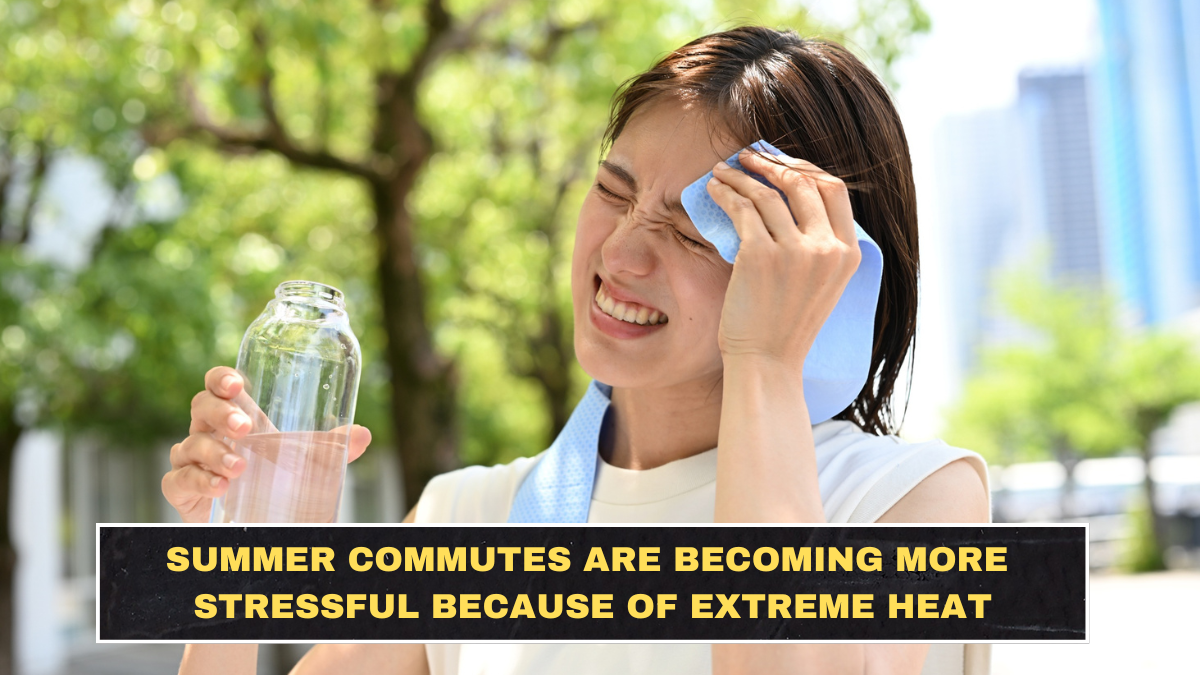
Most people still treat commuting heat as a minor inconvenience. That is wrong. Heat stress is a real health risk, and the World Health Organization says it is the leading cause of weather-related deaths, while also increasing the risk of accidents and worsening existing health conditions. During a summer commute, that risk builds through walking to bus stops, waiting in exposed areas, riding in crowded transport, and then walking again at the destination.
This matters even more in India in 2026 because warm nights and repeated heat episodes are reducing recovery between days. Recent India-focused reporting and research point to hotter cities, warmer nights, and stronger urban heat effects, which means commuters are starting their day already less recovered than before.
Why the summer commute feels more exhausting now
A commute combines movement, sun exposure, concrete heat, traffic pollution, and time pressure. That mix is brutal. Research on travel behavior during extreme heat found that hot days change how people move and use time, which shows heat is not just background weather. It directly alters mobility patterns and makes routine movement harder.
There is also a body-level effect. A 2025 study on walking under sunlight found that even short-term sun exposure increased heart rate and heat storage compared with non-exposed walking. In practical terms, that means the same short walk to a station or bus stop can place noticeably more strain on the body during hot conditions.
What makes commuting heat stress worse
- walking on roads with no tree cover
- waiting at bus stops with little or no shade
- overcrowded public transport
- long first-mile and last-mile exposure
- dehydration before leaving home
- poor sleep from hot nights the day before
These are not small annoyances. WHO’s 2026 policy work on extreme heat in cities says heat raises risks such as kidney injury, cardiovascular strain, occupational hazards, and productivity losses, especially in dense urban environments.
How heat stress shows up during a commute
| Commute condition | What happens | Why it matters |
|---|---|---|
| Walking in direct sun | Faster dehydration and body heating | Fatigue starts early |
| Waiting without shade | Heat builds before travel even starts | Higher discomfort and stress |
| Crowded transport | Less ventilation and more strain | Recovery becomes harder |
| Hot nights before commute | Lower sleep quality | Reduced focus and patience |
| Repeated daily exposure | Cumulative heat load | Health risk rises |
Who is hit the hardest
Not all commuters face the same risk. Outdoor workers, delivery riders, street vendors, construction workers, and low-income urban residents often have the least protection and the highest exposure. A recent article on India’s informal workers reported evidence from Ahmedabad and Surat showing heat stress can reduce worker productivity by around 10%, especially among migrant construction workers. That gives a blunt clue about commuting too: when people arrive already heat-stressed, the workday begins with a disadvantage.
Urban design makes this worse. Indian cities with more concrete, traffic, and less greenery trap more heat, especially at night. Chennai reporting based on NIT Trichy research found dense built-up areas had much hotter night-time land surface temperatures than greener zones. So the commute problem is not just “summer being summer.” It is also a city-design failure.
What commuters and cities should do
People can reduce some risk with basic steps, but not all of it. Useful personal actions include:
- carrying water before thirst starts
- choosing shaded walking routes when possible
- avoiding dark, heat-trapping clothing
- leaving slightly earlier to reduce rushing under heat
- using an umbrella or cap during exposed walking
But let’s be honest: personal hacks are not enough. Transit systems also need shaded stops, cooler first-mile and last-mile routes, drinking water access, and heat-aware planning. Guidance on extreme heat management for transit systems specifically recommends reducing heat exposure in first- and last-mile transport connections to support safer urban mobility.
Conclusion
Summer commutes are becoming more stressful because extreme heat is adding physical strain, dehydration risk, fatigue, and lower recovery to everyday travel. The biggest blind spot is that commuting heat is often ignored because each part seems small on its own. But the body experiences it cumulatively: hot room, hot street, hot stop, hot vehicle, hot arrival. That is why routine urban travel now feels more draining than many people expect.
FAQs
Why does commuting feel harder during heatwaves?
Because heat exposure during walking, waiting, and riding increases body strain, dehydration risk, and fatigue.
Are hot nights connected to commute stress?
Yes. Poor sleep from warm nights reduces recovery, making people more tired and less heat-tolerant during the next day’s commute.
Who faces the most commute-related heat stress?
Outdoor workers, riders, low-income commuters, and people with long exposed walking routes face higher risk.
Can cities reduce commuting heat stress?
Yes. Shaded stops, cooler walking routes, water access, and heat-aware transport planning can reduce exposure.