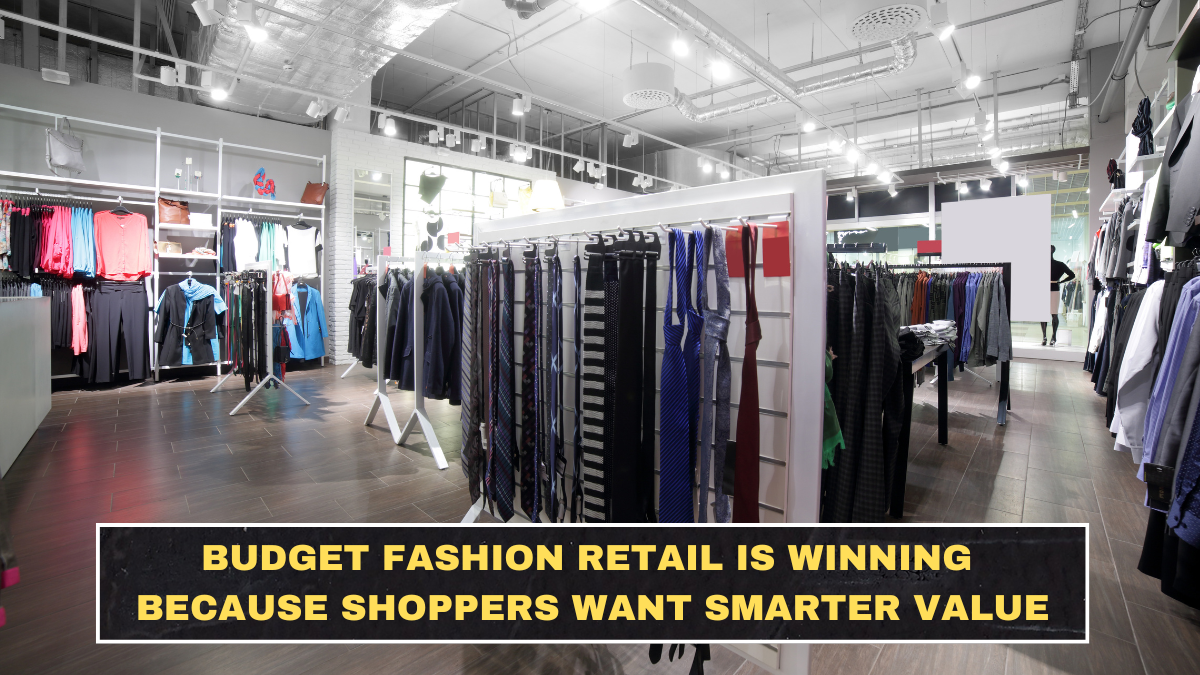
Budget fashion in India is winning, but not because shoppers suddenly stopped caring about quality or style. That lazy explanation misses the real shift. Consumers still want trend-led clothing and branded experiences, but they now want them at prices that feel justified. In other words, budget fashion is no longer just about buying cheap. It is about buying smart. That is why value-led apparel retail is gaining ground faster than many legacy fashion models.
The market is growing, and value fashion is taking a bigger share
CareEdge Ratings estimates India’s apparel retail market at about Rs 9.30 lakh crore in FY25 and projects it to reach around Rs 16 lakh crore by FY30. Inside that, the value fashion segment was estimated at Rs 3.5 lakh crore in FY24 and is expected to reach Rs 5 lakh crore by FY30. That is not a side trend. It means budget and value-led fashion are becoming a central part of how India’s apparel growth is happening.
| Budget fashion indicators in India | Latest figure |
|---|---|
| India apparel retail market, FY25 | Rs 9.30 lakh crore |
| Projected apparel retail market, FY30 | Rs 16 lakh crore |
| Value fashion market, FY24 | Rs 3.5 lakh crore |
| Projected value fashion market, FY30 | Rs 5.0 lakh crore |
| Organised apparel retail e-commerce share | 22% |
| Projected organised apparel e-commerce by FY30 | Rs 5.0 lakh crore |
Why shoppers are choosing budget fashion more often
The answer is not just inflation or price pressure. It is a combination of price sensitivity, rising brand awareness, wider access, and better retail execution. KPMG’s India CX Report says the key attributes driving both apparel brand ambassadors and switchers are “value for money” and “range of offerings.” That tells you something blunt: consumers are not simply hunting the lowest price. They want a good deal on something they actually like. They want affordable fashion that still gives them enough choice, acceptable quality, and an easier shopping experience.
Wazir Advisors made the same point more directly, saying value fashion is winning at scale and that price-sensitive consumers are driving disproportionate growth, especially in Tier 2 and Tier 3 cities. That matters because it shows this shift is structural, not temporary. Budget fashion is benefiting from where the real mass demand sits.
| What shoppers want from budget fashion | Why it matters |
|---|---|
| Value for money | Shoppers want price and utility to match |
| More choices | Low price alone is not enough anymore |
| Easier returns and exchanges | Reduces risk in affordable purchases |
| Reach beyond metros | Growth comes from wider geographic demand |
Budget fashion is becoming more strategic than cheap
This is the part many people still misunderstand. The most successful budget fashion retailers are not winning by dumping random low-grade inventory into stores. They are winning by being disciplined on pricing, store rollout, inventory turns, and trend response. Reuters reported that Trent’s standalone revenue rose 20% in Q4 FY26, helped by consumer spending and continued expansion of Zudio and Westside, with total store count rising to 1,286 by March 31, 2026 from about 1,043 a year earlier. Economic Times also described Zudio-led growth as a major reason behind Trent’s quarter.
That is not what a weak retail model looks like. It is what a highly structured value-fashion model looks like. Budget fashion retailers that are winning are the ones making low-cost fashion feel organized, current, and accessible. That is why this trend is stronger than the old idea of “discount retail.”
Tier 2 and Tier 3 cities are driving much of the momentum
The growth is not limited to metro shoppers. CareEdge says Tier 2 and Tier 3 cities are becoming major growth hubs for apparel retailers, and Reuters noted Trent plans further expansion into smaller cities and towns. That makes complete sense. Consumers in these markets are becoming more brand-aware and fashion-aware, but they still care deeply about practical pricing. Budget fashion sits exactly in that sweet spot.
This also explains why value fashion is not just surviving online competition. It is using scale, access, and local expansion to strengthen its position. Anyone still assuming fashion growth will be led mainly by premium urban shoppers is ignoring where the broad base of demand actually is.
Online shopping is strengthening the value-fashion model
CareEdge says e-commerce already accounts for 22% of organised apparel retail and could reach around Rs 5 lakh crore by FY30, roughly 25% of the organised market. That is a major advantage for budget fashion because online channels make price comparison, offer discovery, and assortment visibility much easier. In affordable fashion, convenience and comparison are part of the product. Shoppers do not just buy what they see first. They compare, judge, and then choose what feels smartest.
KPMG’s apparel findings also show that customers care strongly about smooth returns and exchanges. That is critical in budget fashion, where reducing buying risk matters almost as much as keeping prices low. Cheap without trust does not scale. Affordable with convenience does.
What this says about Indian retail behavior
Indian shoppers are not becoming blindly frugal. They are becoming more rational. They still want fashion, but they want it without waste, regret, or inflated pricing. That is why budget fashion is winning. It offers enough style, enough trust, and enough affordability to meet how people actually buy. The retailers that understand this are growing. The ones still confusing “low cost” with “low thought” will keep losing share.
Conclusion
Budget fashion retail is winning in India because shoppers want smarter value, not just cheaper clothing. The market data shows value fashion is growing into a much bigger part of apparel retail, while customer-behavior data shows value for money and wider choice are major decision drivers. Add easier online comparison and aggressive expansion into smaller cities, and the result is clear: budget fashion is not a weak corner of retail. It is one of the strongest expressions of where Indian apparel demand is heading.
FAQs
Is budget fashion growing in India?
Yes. CareEdge estimates the value fashion market at Rs 3.5 lakh crore in FY24 and projects it to reach Rs 5 lakh crore by FY30.
Why are shoppers choosing budget fashion more often?
Because they want value for money, more options, and lower buying risk. KPMG says “value for money” and “range of offerings” are key apparel decision drivers.
Is this trend mainly about smaller cities?
A lot of the growth is coming from Tier 2 and Tier 3 cities. CareEdge and Wazir both point to strong value-fashion momentum in these markets.
Which retailers are benefiting from this trend?
Value-led retailers such as Trent’s Zudio are benefiting strongly. Reuters reported Trent’s Q4 FY26 standalone revenue rose 20% and its store network expanded significantly over the year.
Click here to know more