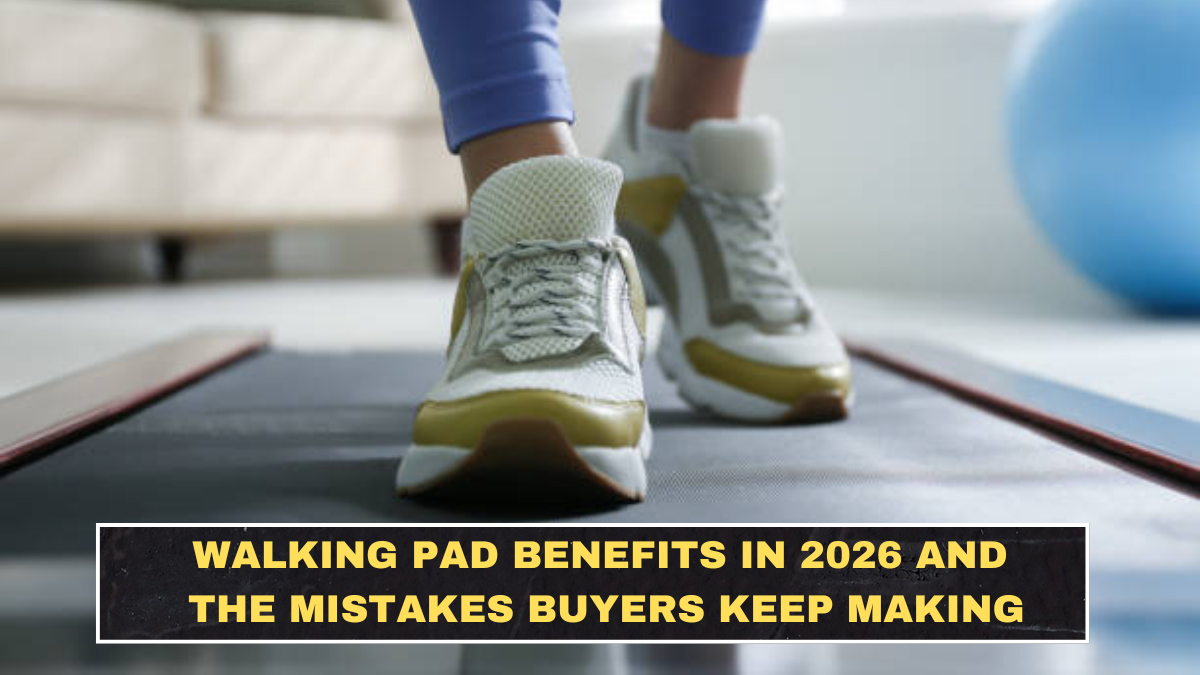
Walking pads are growing because they fit real life better than full treadmills do. Most people are not trying to become runners in their spare room. They are trying to sit less, move more, and avoid feeling physically useless after hours at a desk. Market trackers now expect the treadmill desk market to grow at about 8.2% annually from 2025 to 2031, and the under-desk treadmill market is projected to rise from about $0.14 billion in 2025 to $0.22 billion by 2031. That is not just social media hype. It reflects real consumer demand for compact, low-speed walking equipment that fits home offices and smaller living spaces.
The trend also makes sense because public health guidance has been pushing the same basic message for years: adults need more physical activity and less sedentary time. The CDC says adults should get at least 150 minutes of moderate-intensity activity each week plus muscle-strengthening activity on two days a week, and WHO continues to warn that inadequate physical activity and too much sedentary behavior harm health and quality of life. A walking pad is attractive because it turns some dead sitting time into light movement without demanding a separate gym session.

What are the real benefits of a walking pad?
The biggest benefit is not dramatic fat loss or athletic conditioning. It is reducing long, uninterrupted sitting time. That matters more than people want to admit. WHO’s guidance explicitly recommends limiting sedentary time, and CDC says adults who sit less and do any amount of moderate-to-vigorous activity gain some health benefits. Walking pads help mainly because they make movement easier to insert into a normal day instead of relying on motivation later.
There is also evidence that treadmill-desk style setups can reduce sitting time and increase energy expenditure. A 2021 systematic review and meta-analysis found treadmill desk interventions increased energy expenditure and reduced sitting time, though effects on cardiometabolic markers were less clear. Another cluster randomized trial found active workstation users had short-term improvements in standing and stepping and fewer sedentary bouts. That is the honest pitch: walking pads are good for moving more and sitting less, not for transforming your health overnight.
A practical side benefit is adherence. Shorter movement bouts are easier for many people to sustain than idealized workout plans. A 2025 review on accumulated short exercise bouts argues that breaking activity into smaller pieces can still be meaningful, which supports the basic logic behind using a walking pad for chunks of the day instead of pretending exercise only counts in one long session.
How does a walking pad compare with a full treadmill?
| Factor | Walking Pad | Full Treadmill |
|---|---|---|
| Best use | Light walking, desk use, step goals | Walking, jogging, running workouts |
| Size | Compact, easier to store | Larger and harder to fit |
| Speed range | Lower | Wider and more demanding |
| Handrails and support | Often minimal or removable | Usually stronger and more stable |
| Best buyer | Desk worker or home user wanting more daily movement | User training for cardio sessions |
This is where buyers get confused. A walking pad is not a cheap treadmill replacement for everyone. It is a different category. If someone wants proper cardio sessions, incline work, or running, a walking pad is usually the wrong machine. If someone wants to break up sedentary work and quietly add steps, a full treadmill is often overkill. The mistake is expecting one product to do both jobs well.
Who gets the most value from a walking pad?
Desk workers, remote workers, and people in small spaces get the most value. The whole point is convenience. If the machine sits under a desk and makes it easier to walk during calls, emails, or light admin work, it solves an actual daily problem. Studies on active workstations and treadmill desks suggest they can reduce sedentary behavior without clearly harming cognitive control, and some evidence even points to maintained or improved cognitive performance in certain settings.
But there is a catch. Walking while working is not ideal for every task. Precision-heavy typing, spreadsheet work, design tasks, or anything that needs high concentration can become annoying. Older workplace reviews also found that encouraging walking at work may reduce performance in some contexts. So the right use is light work, calls, reading, brainstorming, and background tasks, not every task all day long.
What mistakes do buyers keep making?
The first mistake is buying a walking pad to compensate for a bad lifestyle instead of to support a better one. It can help you move more, but it does not erase poor sleep, overeating, zero strength training, or twelve sedentary hours outside the walking time. The second mistake is chasing step counts while ignoring consistency. A machine used 20 to 40 minutes most days is more valuable than an ambitious setup abandoned after two weeks. CDC guidance is clear that activity can be broken into smaller chunks across the week, which is exactly why consistent light movement matters.
The third mistake is ignoring ergonomics. Buyers obsess over motor power and forget desk height, walking speed, noise, and whether they can actually work while moving. The fourth mistake is thinking more speed equals more value. For most under-desk use, slow and sustainable wins. Once the pace starts interfering with posture or task quality, the setup stops being useful and becomes another guilt machine in the corner.
Are walking pads worth buying in 2026?
Yes, for the right user. Walking pads are worth it when the goal is reducing sitting time, adding low-friction daily movement, and making a work-from-home routine less physically stagnant. They are not miracle machines, and they are not substitutes for all other exercise. But they do line up well with what health guidance and workplace research keep showing: sitting less and moving more, even in smaller doses, is worthwhile.
Conclusion
Walking pads are popular in 2026 because they match reality better than fantasy fitness plans do. They are compact, easier to use at home, and genuinely helpful for cutting down long sitting periods. The evidence supports that they can reduce sedentary time and increase movement, which is the real value proposition.
The mistake is expecting them to do more than that. A walking pad is not a serious running machine, not a shortcut to major fat loss, and not a substitute for strength training. Buy one if you want a practical way to sit less and walk more. Skip it if you are pretending a gadget will solve habits you still refuse to fix.
FAQs
Is a walking pad better than a treadmill?
Not better overall, just better for a specific job. A walking pad is better for compact spaces, desk setups, and light daily movement. A full treadmill is better for formal cardio workouts, jogging, and running.
Can a walking pad help with weight loss?
It can support higher daily movement and energy expenditure, but it is not a magic fat-loss device. Results still depend on overall activity, food intake, and consistency.
Can you work properly while using a walking pad?
Sometimes. It works better for calls, reading, and light admin tasks than for intense concentration or precision-heavy work. Research suggests slow walking may not meaningfully harm some cognitive tasks, but it is not ideal for everything.
Who should not buy a walking pad?
People who actually want a running treadmill, expect instant body transformation, or do not have a realistic desk setup should probably skip it. The wrong buyer usually wastes money because they bought aspiration instead of a useful tool.
Click here to know more