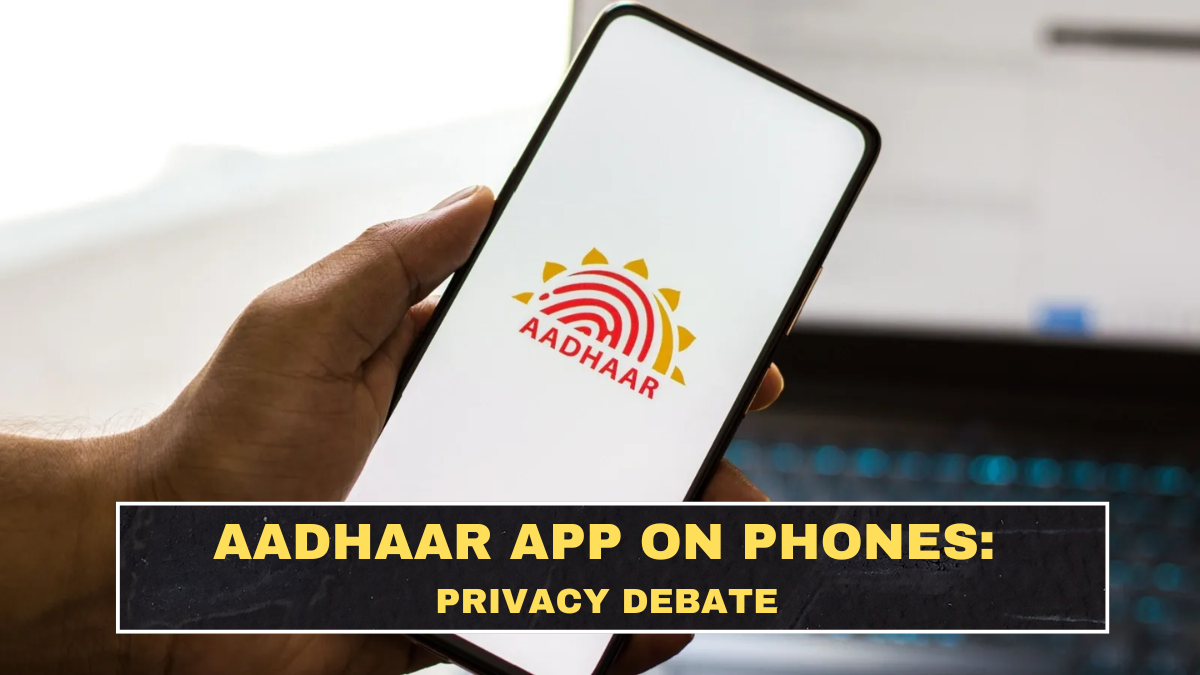
This topic blew up because reports said the government had discussed pre-installing an Aadhaar app on new smartphones in India. Reuters reported that smartphone makers pushed back, citing production cost, functionality, and security concerns, while critics raised privacy and surveillance questions. That is why this is not just a tech story. It is a user-control story.
The first thing to understand is that “Aadhaar app on phones” and “mandatory Aadhaar app for all users” are not the same claim. Recent reporting says there were stakeholder discussions around pre-installation, but it was not presented as a final public mandate. So the sensible view is this: there was a real proposal or consultation, the industry objected, and the privacy concern came from the idea of default installation on personal devices, not from the existence of an Aadhaar app by itself.

What UIDAI officially offers today
UIDAI already has the official mAadhaar app. According to UIDAI, it lets users access Aadhaar services, download Aadhaar, generate a Virtual ID, and use features like lock or unlock options tied to Aadhaar services. The Google Play listing also says users can share password-protected eKYC or QR data for paperless verification.
UIDAI has also been pushing privacy-oriented identity verification tools beyond the basic app. Its paperless offline e-KYC framework is described as a secure sharable document for offline identity verification, and UIDAI says offline verification can work without the service provider collecting or storing the Aadhaar number. That matters because it shows the official design direction is not only “put Aadhaar everywhere,” but also “reduce unnecessary data exposure when verification happens.”
What the new Aadhaar app is trying to do
UIDAI’s January 2026 material on the new Aadhaar app says a major feature is selective credential sharing. In plain English, that means a user can share only the specific identity fields needed for a given use case through customised QR codes, instead of exposing everything by default. UIDAI also said this design helps ensure Aadhaar numbers are not stored by verifiers and that only digitally signed data is shared.
That is the strongest pro-privacy argument in this entire debate. If the app genuinely shifts verification toward selective, consent-based, minimal sharing, that is better than the old habit of photocopying full Aadhaar details everywhere. The problem is that a privacy-friendly feature inside an app does not automatically settle the separate question of whether that app should come preloaded on every phone. Those are different issues, and people keep mixing them up.
What users should actually worry about
The real privacy concern is not “an app exists.” The real concern is user choice, default presence, and how much control people have over identity tools on their own devices. Industry objections reportedly included security, technical feasibility, and unwanted preloaded software concerns. Critics framed it as a broader issue of government influence over smartphone defaults. That is a valid concern because preinstalled apps are harder to ignore and can shape user behaviour even when technically optional.
At the same time, fear-based claims that the app itself automatically means constant tracking are not supported by the official material cited here. UIDAI’s public materials focus on authentication tools, QR-based sharing, offline verification, and user-controlled credential sharing. So the smarter position is neither blind trust nor blind panic. It is to separate verified product features from the political or policy debate around pre-installation.
Simple breakdown for users
| Issue | What it means for users |
|---|---|
| Official Aadhaar app exists | UIDAI already provides mAadhaar with identity-service features |
| New app privacy pitch | UIDAI says it supports selective credential sharing and reduced Aadhaar number storage by verifiers |
| Pre-install debate | Reported discussions triggered objections over privacy, security, and user choice |
| Offline verification tools | UIDAI says offline e-KYC and QR verification can reduce unnecessary data sharing |
What this means in practice
For ordinary users, the practical lesson is simple. An Aadhaar app can be useful when it reduces paper copies, enables offline verification, or lets you share only limited identity fields. But pre-installing any government identity app on all phones is a different privacy question, because it shifts the balance from user choice toward default inclusion. Those are not the same issue, and pretending they are is lazy thinking.
Conclusion
The Aadhaar app privacy debate is really about two separate things: how digital identity should work on phones, and who gets to decide what is installed by default. UIDAI’s official direction includes privacy-positive ideas like selective credential sharing and offline verification. But the reported pre-installation discussions triggered a legitimate argument about user choice, security, and the line between accessibility and overreach.
FAQs
Is the Aadhaar app already official in India?
Yes. UIDAI already offers the official mAadhaar app for Aadhaar-related services.
Why did the Aadhaar app privacy issue become controversial?
Because reports said there were discussions about pre-installing it on new phones, and that raised concerns around privacy, security, and user choice.
Does UIDAI claim the new Aadhaar app has privacy-focused features?
Yes. UIDAI said the new app supports selective credential sharing through customised QR codes and aims to avoid unnecessary storage of Aadhaar numbers by verifiers.
Does an Aadhaar app automatically mean your phone is being tracked?
That is not established by the official material cited here. The documented features focus on identity access, verification, QR sharing, and offline e-KYC, not automatic tracking claims.