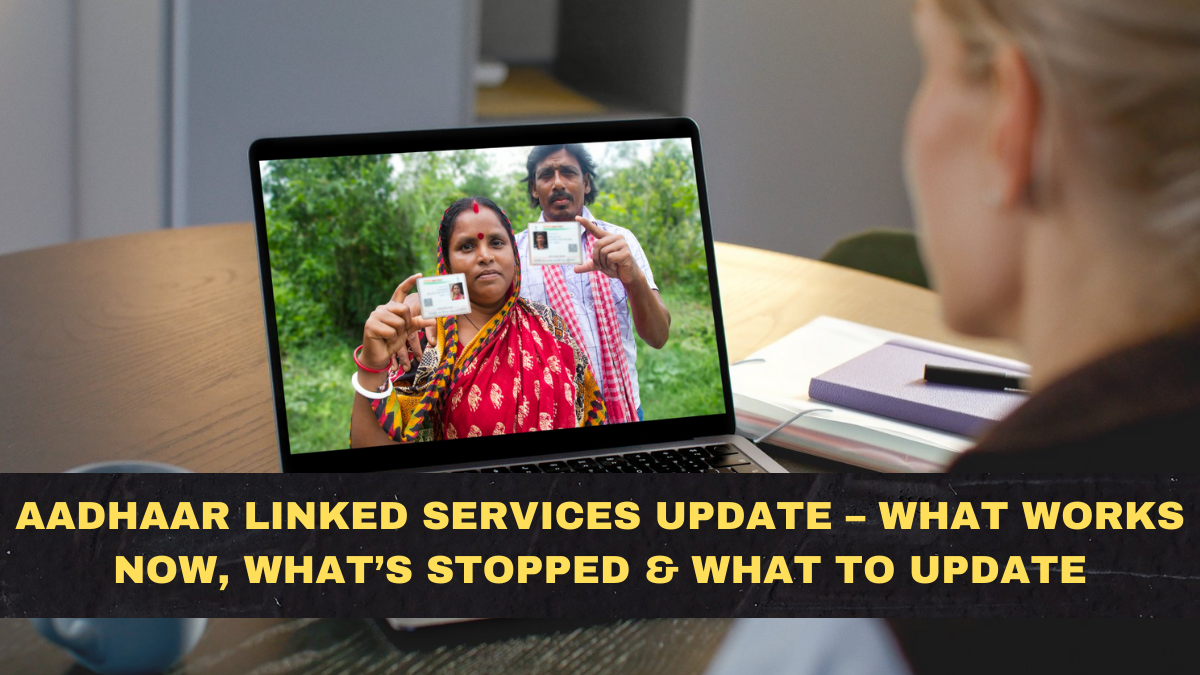
In 2026, Aadhaar has moved beyond being just an identity document and has become a live access key for dozens of essential services. Recent updates to Aadhaar-linked services have changed how verification works, which services remain active, and where additional updates are now mandatory. These changes are not cosmetic. They directly affect whether a service functions smoothly or fails without warning.
What has made this update confusing for many citizens is the lack of a single announcement covering everything. Some services continue to work normally, others have stopped entirely without additional verification, and a few now require fresh linking or data correction. Understanding the Aadhaar linked services update is critical because most disruptions occur silently and only become visible when a service suddenly stops.
Why Aadhaar-Linked Services Were Updated in 2026
The core reason behind these changes is data accuracy and misuse prevention. Over time, mismatched records, outdated details, and partial verification created gaps that were increasingly exploited or caused systemic errors.
In response, authorities tightened verification logic instead of expanding Aadhaar’s scope. Services now rely more heavily on real-time validation rather than stored or previously accepted data.
In 2026, Aadhaar-linked systems are designed to trust only current, verified information. Anything outdated is treated as non-compliant by default.
Services That Continue to Work Without Changes
Some Aadhaar-linked services remain unaffected as long as records are already clean and verified. These typically include basic identity validation where no financial or eligibility decision depends on the data.
Users with updated demographic details and consistent records across systems usually do not notice any change. For them, Aadhaar verification continues in the background without friction.
However, this smooth experience applies only if the system finds no discrepancies. Even one mismatch can push a user into the update-required category.
Services That Have Stopped or Been Restricted
Several services now stop working if Aadhaar data is outdated, partially linked, or inconsistent. This includes services where benefits, permissions, or access rights depend directly on identity validation.
In many cases, the service does not explain what changed. It simply fails verification or displays a generic error. This is not a technical fault but an enforcement response.
In 2026, service stoppage is often the first signal that Aadhaar-linked data needs attention.
What Details Now Require Immediate Updating
The most common trigger for service disruption is outdated demographic information. Changes in name format, address, or date-related inconsistencies often cause validation failure.
Mobile number linkage has also become more critical. Many services now require Aadhaar-linked contact verification to complete transactions or updates.
Biometric validation issues, though less frequent, can also block access if earlier records are incomplete or unreadable.
Why These Changes Affect Some People More Than Others
The impact is uneven because Aadhaar-linked services depend on how frequently a person interacts with government or financial systems. Those who regularly apply, verify, or update services feel the effects faster.
People who rarely use such services may remain unaware until a critical need arises. At that point, the disruption feels sudden and severe.
In 2026, dependency on Aadhaar-linked systems has grown, making passive non-compliance increasingly risky.
Common Mistakes People Make During Aadhaar Updates
One common mistake is assuming that older verification is still valid. Many users believe that once Aadhaar was linked years ago, no further action is needed.
Another mistake is partial updating. Correcting one detail while ignoring others often fails because systems cross-check multiple fields.
Rushing updates without verifying accuracy leads to repeat failures. Precision matters more than speed in Aadhaar-related corrections.
How to Ensure Your Aadhaar-Linked Services Keep Working
Regularly reviewing linked services and updating Aadhaar details proactively is the safest approach. Waiting for a service to fail creates unnecessary urgency.
Ensure that details match across records used by banks, portals, and service providers. Consistency reduces friction during verification.
In 2026, preventive updating is far easier than emergency correction after access is blocked.
Conclusion: Aadhaar Is Now a Live Compliance Tool
The Aadhaar linked services update reflects a broader shift toward active, real-time compliance. Aadhaar is no longer a static document stored in records. It is a live validation tool that systems continuously check.
For citizens, this means accuracy and currency matter more than ever. Services will not pause or explain in detail when something fails. They simply stop working.
In 2026, keeping Aadhaar-linked data updated is not about convenience. It is about uninterrupted access to essential services in a system that assumes ongoing compliance.
FAQs
What is the Aadhaar linked services update?
It refers to changes in how Aadhaar-linked services verify identity, with stricter checks and reduced tolerance for outdated or inconsistent data.
Why did my service stop working suddenly?
Most sudden stoppages occur due to verification failure caused by outdated details, missing linkage, or data mismatch.
Do all Aadhaar-linked services require updates?
No, only services that depend on accurate, current identity validation are affected. Others may continue working if records are clean.
Which Aadhaar details should I update first?
Demographic details like name, address, and mobile number should be checked first, as they most commonly trigger failures.
Can partial updates restore service access?
Usually not. Systems often require all linked details to be consistent before restoring access.
How often should Aadhaar-linked details be reviewed?
Regular review is recommended, especially before using critical services, to avoid last-minute disruptions.