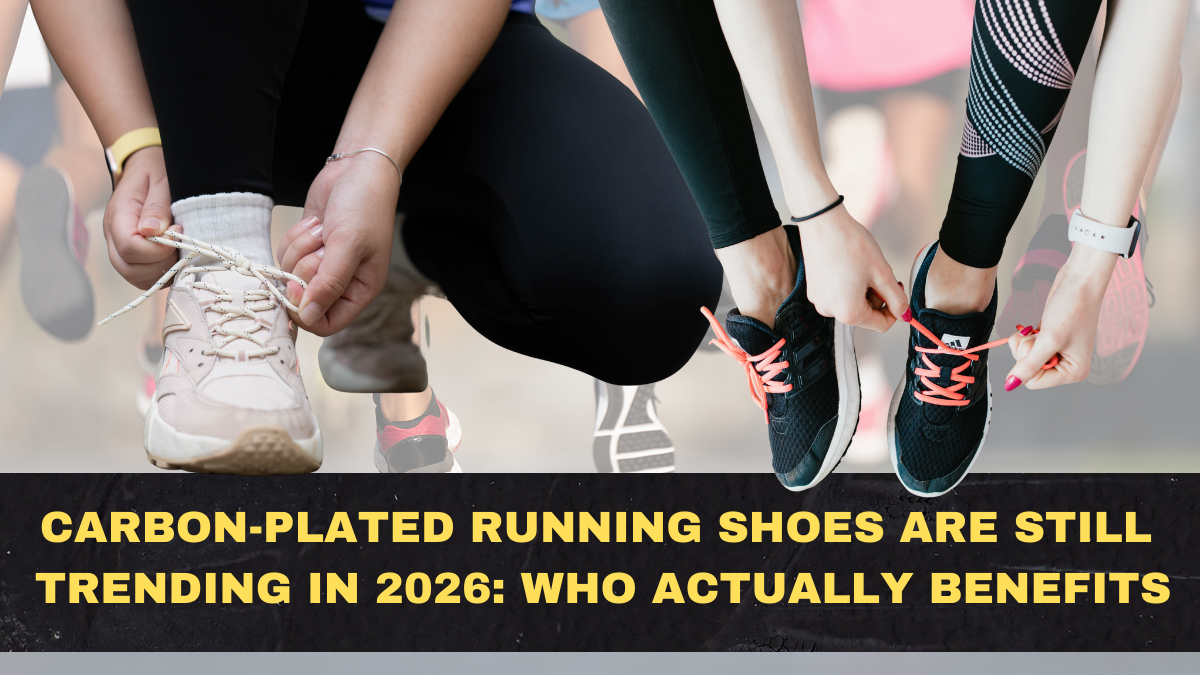
The hype around carbon plated running shoes has not slowed down in 2026. Walk into any running store, scroll through athlete feeds, or watch marathon coverage, and you’ll see the same thick midsoles, curved plates, and neon foam everywhere. What started as elite racing technology is now being marketed to everyday runners as a performance shortcut.
But here’s the uncomfortable truth: carbon plates are not magic. They help some runners enormously. They do nothing for others. And for a surprising number of people, they quietly increase injury risk.
In 2026, carbon-plated shoes are no longer experimental. They are mainstream marathon gear. The real question is not whether they work — it’s who they actually work for.

Why Carbon-Plated Running Shoes Are Still Dominating in 2026
The rise of carbon plated running shoes is rooted in measurable performance gains.
When elite athletes first used them, race times dropped dramatically. Records fell. Podium finishes clustered around the same shoe models. The data was undeniable.
Three things fueled mass adoption:
• Documented energy return improvements
• Race-day visibility at major marathons
• Aggressive marketing to recreational runners
Once brands proved speed gains at the elite level, performance footwear became aspirational gear for amateurs chasing personal bests.
What the Carbon Plate Actually Does
Contrary to marketing, the plate does not push you forward.
It works by:
• Stiffening the midsole
• Reducing energy loss during toe-off
• Stabilizing high-stack foam
• Guiding foot transition forward
The plate acts like a lever, improving running economy by a few percentage points.
That sounds small. But in racing, a 2 to 4 percent efficiency gain is massive.
This is why carbon plated running shoes dominate competitive marathon gear.
Who Benefits the Most From Carbon-Plated Shoes
These shoes are not designed for everyone.
They benefit runners who:
• Maintain consistent midfoot or forefoot strike
• Run at faster paces
• Have efficient biomechanics
• Compete in races or time trials
• Train with good form
For these runners, carbon plates:
• Reduce fatigue
• Improve stride efficiency
• Increase late-race speed
• Protect muscles from breakdown
This is why performance footwear adoption is highest among serious amateurs and competitive runners.
Who Should Think Twice Before Buying Them
Here is where marketing gets misleading.
Carbon plated running shoes are not ideal for:
• Heel-heavy runners
• Beginners with unstable form
• Runners with weak ankles
• Those prone to Achilles or calf issues
• People using them for daily training
The stiffness changes loading patterns. That can:
• Stress calves and Achilles
• Increase ankle instability
• Mask poor mechanics
• Delay injury warning signs
In 2026, sports clinics report rising tendon injuries linked to casual misuse of marathon gear.
Why They Feel Fast (Even When They’re Not Helping You)
Many runners buy carbon shoes and immediately feel faster.
That sensation comes from:
• High-stack responsive foam
• Rocker-shaped midsoles
• Aggressive toe spring
The speed feeling often comes more from foam geometry than the plate itself.
For slower runners, the plate may add stiffness without delivering meaningful propulsion. The benefit becomes psychological, not mechanical.
Training in Carbon Plates vs Racing in Them
This is where smart runners differ from hype-driven buyers.
Most elite runners:
• Train in normal shoes
• Race in carbon plates
• Use plates sparingly
Why:
• Plates reduce muscle activation
• Overuse weakens stabilizing muscles
• Injury risk rises with daily use
In 2026, coaches strongly recommend carbon plated running shoes as race-day tools, not daily trainers.
Why Marathon Gear Design Is Shifting in 2026
Early carbon shoes were extreme.
Now brands are refining:
• Softer foam compounds
• Less aggressive plates
• Better heel stability
• More natural flex zones
This makes performance footwear:
• Safer for more runners
• More durable
• More adaptable to varied styles
The technology is maturing from experimental to optimized.
The Regulation Factor Nobody Talks About
Race authorities now regulate:
• Stack height limits
• Plate configurations
• Foam thickness
This ensures:
• Fair competition
• Injury reduction
• Equipment parity
In 2026, most legal marathon gear sits at the maximum allowed limits — optimized but controlled.
Are Carbon Shoes Actually Worth the Money
They are expensive for a reason.
Worth it if you:
• Race regularly
• Care about personal bests
• Run efficiently
• Compete in long-distance events
Not worth it if you:
• Run casually
• Prioritize comfort
• Train daily in one pair
• Have frequent lower-leg injuries
Carbon plated running shoes are tools, not upgrades.
The Injury Debate Is Becoming Serious
Medical data in 2026 shows:
• Higher calf strain rates
• Increased Achilles tendinopathy
• More ankle instability in amateurs
Not because the shoes are bad — but because they are misused.
Performance footwear amplifies biomechanics. Good form improves. Bad form gets punished.
Conclusion
The carbon plated running shoes trend is not fading because the technology works. But it works selectively.
In 2026, these shoes remain the gold standard for racing and performance. But they are not everyday trainers, not beginner shoes, and not injury-proof.
Used correctly, they unlock speed and efficiency.
Used blindly, they create silent injury risk.
The smartest runners don’t ask “Which carbon shoe is best?”
They ask “Am I the kind of runner this shoe is built for?”
That question decides everything.
FAQs
What are carbon-plated running shoes?
They are performance shoes with a stiff carbon fiber plate designed to improve running efficiency and speed.
Do carbon shoes make everyone faster?
No. They benefit efficient, faster runners most and offer little advantage to beginners or slow runners.
Can I train daily in carbon-plated shoes?
Not recommended. They are best reserved for races and key workouts to avoid injury risk.
Are carbon-plated shoes legal in races?
Yes, as long as they meet stack height and plate regulations.
Are they worth buying in 2026?
Yes for serious racers. No for casual runners focused on comfort and general fitness.
Click here to know more.