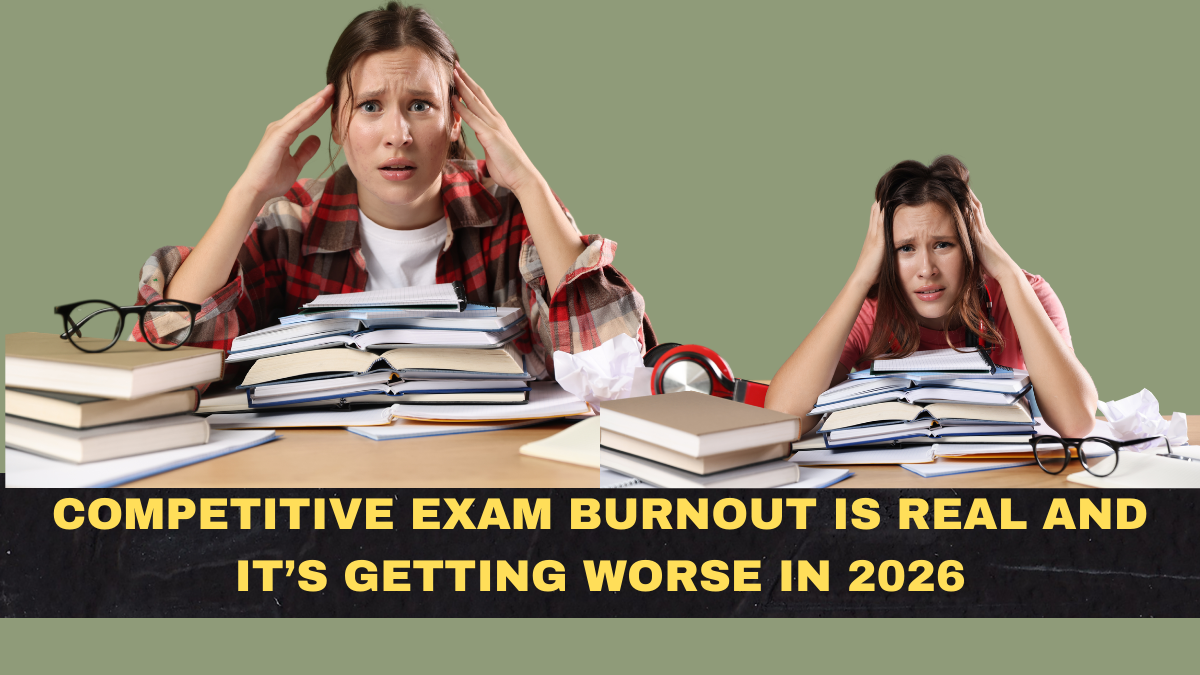
Competitive exams in India were once seen as a test of discipline and perseverance. In 2026, they have increasingly become a source of chronic stress, emotional exhaustion, and deep mental fatigue for millions of students. What starts as ambition and motivation slowly turns into anxiety, self-doubt, and a constant feeling of falling behind. Competitive exam burnout is no longer an isolated issue affecting a few students; it has become a widespread pattern across age groups and preparation levels.
The most disturbing part is how normalized this burnout has become. Long study hours, social isolation, and repeated failures are treated as unavoidable sacrifices rather than warning signs. Students are expected to endure pressure endlessly, often without emotional support or realistic guidance. In 2026, the cost of this silence is becoming impossible to ignore.
Why Competitive Exam Burnout Is Rising So Fast
The scale of competition has expanded dramatically. Exam syllabi keep growing, while selection ratios shrink further each year. Students are preparing longer and harder, yet the probability of success feels increasingly distant.
Digital access has intensified comparison. Students constantly see toppers, rank lists, and success stories online, which quietly amplifies pressure. Even well-performing students feel inadequate when surrounded by unrealistic benchmarks.
This environment creates a sense of permanent urgency, where rest feels like a mistake and slowing down feels like failure.
The Endless Preparation Loop Nobody Talks About
One of the biggest drivers of burnout is repetition. Many students attempt the same competitive exams year after year, adjusting strategies slightly but remaining trapped in the same cycle.
Each failure adds emotional weight. Confidence erodes, motivation weakens, and fear of starting over grows stronger. Instead of clarity, students experience confusion about whether to continue or quit.
In 2026, this endless loop has become common, yet there is little structured support to help students exit it safely.
Coaching Culture and Unrealistic Expectations
Coaching institutes play a powerful role in shaping expectations. Marketing focuses heavily on success stories, often ignoring dropout rates and average outcomes.
Students internalize the belief that failure reflects personal weakness rather than statistical reality. This mindset fuels guilt, shame, and self-blame.
When progress stalls, students push harder instead of reassessing, accelerating the burnout cycle rather than breaking it.
Mental Health Strain Behind Closed Doors
Burnout is not just academic fatigue. It manifests as insomnia, anxiety, irritability, loss of appetite, and emotional numbness. Many students feel disconnected from family and friends during prolonged preparation.
Fear of judgment prevents open conversations. Students worry that admitting struggle will be seen as lack of discipline or seriousness.
In 2026, competitive exam burnout is closely linked to declining mental health, yet access to counseling remains limited and stigmatized.
The Financial Pressure That Makes Burnout Worse
Competitive exam preparation is expensive. Coaching fees, study materials, living costs, and years without income create financial strain.
Students feel pressure not to “waste” this investment, even when exhaustion sets in. This sunk-cost mindset traps them in unhealthy routines.
For middle-class families, financial stress silently reinforces emotional burnout, making recovery even harder.
Why Quitting Feels Harder Than Continuing
Walking away from competitive exams often feels like defeat. Years of identity become tied to a single goal, making alternatives feel invalid or inferior.
Students fear disappointing families and losing social respect. Continuing feels painful, but quitting feels irreversible.
In 2026, many students remain stuck not because they believe in success, but because they fear the consequences of stopping.
How Burnout Impacts Long-Term Confidence
Even when students eventually leave the exam cycle, burnout leaves scars. Self-doubt, fear of failure, and reduced risk-taking often carry into future careers.
Talented individuals underestimate themselves after repeated setbacks. This affects job interviews, career switches, and personal growth.
Competitive exam burnout does not end with the exam; it reshapes how students view themselves long afterward.
What Healthy Preparation Should Look Like
Healthy preparation includes boundaries, realistic timelines, and backup plans. Success should not depend on sacrificing mental health completely.
Students need permission to reassess goals without shame. Flexibility and self-awareness are not signs of weakness; they are survival tools.
In 2026, sustainable success requires treating mental health as part of preparation, not an afterthought.
Conclusion: Burnout Is a System Failure, Not a Student Failure
Competitive exam burnout is not caused by lack of effort or discipline. It is the result of an ecosystem that glorifies endurance while ignoring human limits.
In 2026, recognizing burnout early is critical. Students deserve support, alternatives, and honest conversations about probability and outcomes.
Until the system values well-being alongside achievement, burnout will continue to rise. A competitive exam should test knowledge, not destroy mental health.
FAQs
What is competitive exam burnout?
It is a state of mental, emotional, and physical exhaustion caused by prolonged exam pressure and repeated stress.
Why is burnout increasing in 2026?
Rising competition, longer preparation cycles, social comparison, and financial pressure have intensified stress levels.
How can students identify burnout early?
Warning signs include constant fatigue, anxiety, loss of motivation, sleep issues, and emotional numbness.
Is taking a break a sign of failure?
No, breaks can restore clarity and prevent long-term damage. Ignoring burnout often worsens outcomes.
Do coaching institutes contribute to burnout?
Unrealistic expectations and selective success narratives can increase pressure and self-blame.
Can students recover from exam burnout?
Yes, with rest, support, and reassessment of goals, recovery is possible and often necessary.