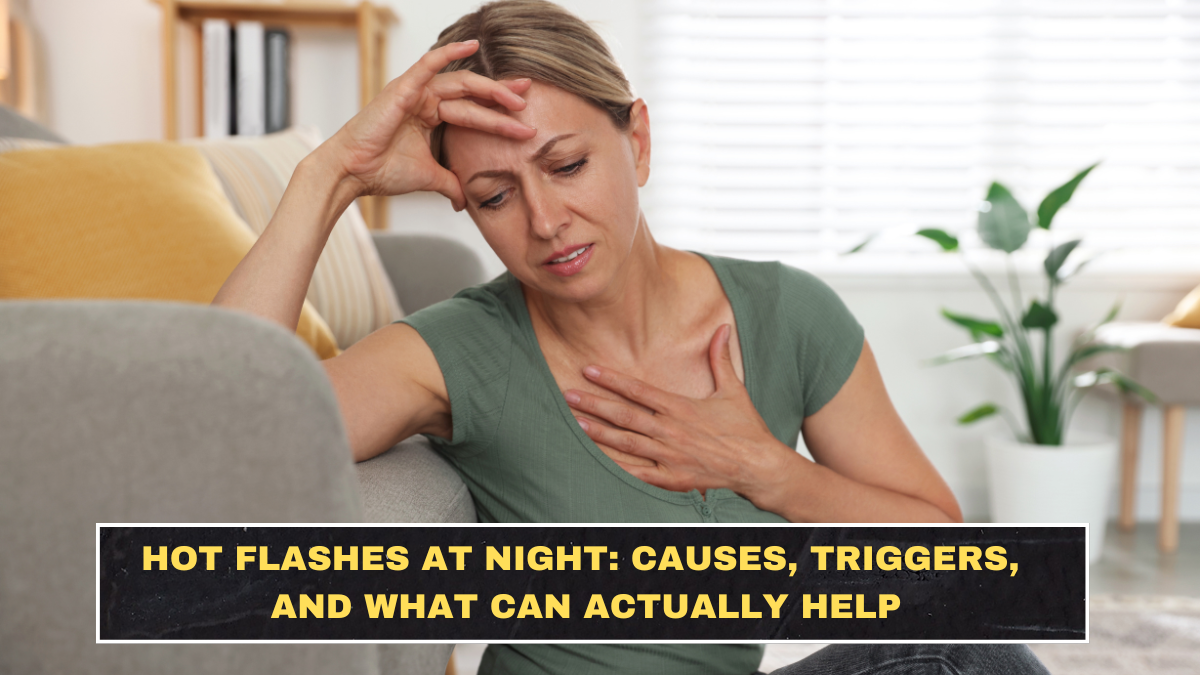
Hot flashes at night are usually called night sweats. They are sudden episodes of heat, sweating, and discomfort that happen during sleep and can wake someone up repeatedly. In menopause and perimenopause, they are one of the most common symptoms and can seriously damage sleep quality, energy, and mood the next day. Menopause is the most common cause of hot flashes, and night sweats are simply hot flashes that happen during the night.
Why do hot flashes get worse at night?
The core issue is hormone change, especially during perimenopause and menopause, when falling and fluctuating estrogen levels affect the body’s temperature regulation. That makes the brain more likely to overreact to small temperature changes, leading to sudden heat, sweating, and then often chills after the episode passes. At night, this feels worse because it interrupts sleep, and one bad episode can turn into hours of broken rest.
Are hot flashes at night always caused by menopause?
No, and this is where people make sloppy assumptions. Menopause is the most common cause in midlife women, but night sweats can also happen for other reasons, including anxiety disorders, alcohol use disorder, hyperthyroidism, infections, some cancers, and certain medicines. That does not mean every sweaty night is a medical emergency, but it does mean repeated night sweats should not always be dismissed as “just hormones,” especially if they come with other unusual symptoms.
Which triggers make night sweats worse?
Some triggers are common and boring, which is exactly why people ignore them. NHS guidance recommends reducing triggers such as spicy food, caffeine, hot drinks, smoking, alcohol, and stress. A hot bedroom, heavy bedding, and synthetic sleepwear can also make night symptoms feel worse even if they are not the root cause. The mistake people make is expecting one miracle product to fix things while keeping every obvious trigger in place. That is not treatment. That is denial with better packaging.
| Common trigger | Why it matters |
|---|---|
| Hot bedroom | Raises body temperature and worsens discomfort |
| Alcohol | Can trigger or intensify night sweats |
| Caffeine and hot drinks | May worsen flushing in some people |
| Spicy food | Common trigger for heat episodes |
| Stress and anxiety | Can increase symptom intensity |
What can actually help at home?
Start with the simple fixes before wasting money. Keeping the bedroom cool, wearing light clothing, using a fan, taking a cool shower, and reducing stress can help reduce how disruptive night sweats feel. Regular exercise and weight loss may also help some people, especially if they are overweight. These steps are not glamorous, but they are part of standard guidance because they are practical and low-risk.
Which treatments are actually worth discussing?
If symptoms are frequent or severe, medical treatment may be worth discussing instead of just suffering through it. Hormone replacement therapy remains one of the main treatments for menopausal hot flashes and night sweats for appropriate patients. When HRT is not suitable or not wanted, non-hormonal options can also be considered. NHS guidance lists clonidine and gabapentin as options, and in March 2026 NICE announced final draft guidance recommending fezolinetant on the NHS for moderate to severe menopausal hot flushes and night sweats when HRT is not suitable.
Can therapy or behavior changes really make a difference?
Yes, but not in the fake-wellness way people often imagine. Cognitive behavioural therapy can help reduce how much hot flashes and night sweats bother someone, and it may also improve sleep-related distress. That does not mean CBT stops hormone shifts. It means it can help people cope better and sleep more effectively despite symptoms. That is useful, even if it is less marketable than some overpriced supplement.
When should you stop guessing and see a doctor?
See a doctor if night sweats are severe, persistent, or affecting daily life, or if they come with symptoms that do not fit the usual menopause pattern. Examples include unexplained weight loss, fever, new chest symptoms, or signs that point to another illness. Also get help if sleep disruption is becoming constant, because poor sleep can wreck concentration, mood, and functioning long before people admit how bad it has become. Menopause may be common, but untreated suffering is not a badge of honor.
FAQs
Are night sweats and hot flashes the same thing?
Night sweats are hot flashes that happen during sleep. They are closely linked, but night sweats are especially disruptive because they interrupt rest.
What is the most common cause of hot flashes at night?
Menopause and perimenopause are the most common causes, due to hormone changes that affect temperature control.
Can alcohol make night sweats worse?
Yes. Alcohol is listed among the common triggers that can worsen hot flushes and night sweats for some people.
Is there a non-hormonal treatment for menopausal night sweats?
Yes. Non-hormonal options include medicines such as clonidine and gabapentin, and in 2026 NICE also backed fezolinetant for eligible patients when HRT is not suitable.