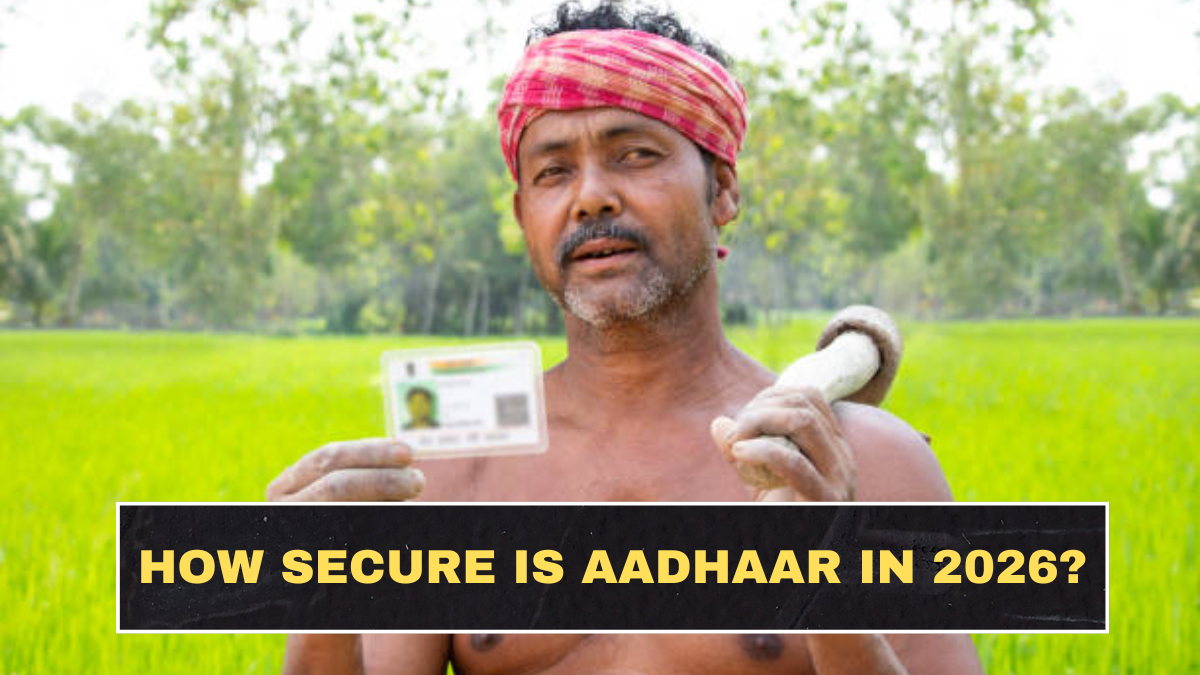
People usually fall into two stupid extremes on Aadhaar. One side says it is completely unsafe and treats every use of Aadhaar like a guaranteed identity disaster. The other side acts as if official systems cannot be misused because the government says security exists. Both are lazy positions. The right question is simpler: what protections does UIDAI actually provide, and what risks still remain because users and service providers behave carelessly?
UIDAI does provide several privacy and security tools in 2026. These include Virtual ID, masked Aadhaar, Aadhaar lock or unlock, biometric lock or unlock, authentication history access through mAadhaar, and paperless offline e-KYC options. Those are real controls, not marketing fluff. But they only help if people use them instead of casually sharing full Aadhaar copies everywhere.
What UIDAI says makes Aadhaar safer
UIDAI’s Virtual ID, or VID, is a temporary, revocable 16-digit random number mapped to the Aadhaar number. UIDAI says VID can be used in place of Aadhaar number for authentication or e-KYC, and that it is not possible to derive the Aadhaar number from the VID. That matters because it reduces the need to expose the actual Aadhaar number every time a service asks for identity verification.
UIDAI also offers masked Aadhaar, where the first 8 digits are hidden and only the last 4 digits remain visible. That is useful when you need to show identity proof but do not need to reveal the full number. For many ordinary use cases, this is the smarter version to share. People who keep handing over full Aadhaar copies for low-value verification are creating their own exposure.
Biometric lock is another strong protection. UIDAI says when biometrics are locked, fingerprints, iris, and face authentication cannot be used for Aadhaar authentication until the holder temporarily unlocks them or disables the lock. UIDAI also says this feature is meant to strengthen privacy and confidentiality of biometric data. That is a practical security layer, especially for people who rarely need biometric authentication.
Where the real risk still exists
Aadhaar security is not just about the central system. It is also about what happens at the edges. If a person shares full Aadhaar photocopies unnecessarily, leaves their registered mobile insecure, ignores authentication history, or gives identity data to shady apps or fake agents, the official safeguards do not magically save them from stupidity. UIDAI’s offline e-KYC model itself shows the safer direction: it lets people establish identity in a paperless way while maintaining privacy and allows limited data sharing instead of handing over everything.
That is the part people avoid because it is uncomfortable. They want a yes-or-no answer to “Is Aadhaar secure?” But the more honest answer is this: the system includes real security tools, yet misuse risk often comes from human behaviour, poor verification practices, and unnecessary data exposure. So the weak link is not always the Aadhaar platform itself. Often it is the user or the business asking for too much.
Simple breakdown of what helps
| Security tool | What UIDAI says it does | Why it matters |
|---|---|---|
| Virtual ID (VID) | Temporary, revocable 16-digit number; Aadhaar number cannot be derived from it | Reduces sharing of actual Aadhaar number |
| Masked Aadhaar | Hides first 8 digits, shows only last 4 | Safer for many proof-sharing situations |
| Biometric Lock | Prevents biometric authentication until unlocked | Blocks unauthorized biometric use |
| Aadhaar Lock | Lets holder lock the Aadhaar number via UIDAI tools | Adds user control over identity use |
| Offline e-KYC | Supports voluntary, paperless identity verification with limited shared data | Lowers unnecessary data exposure |
What users should do in 2026
Use VID where accepted. Use masked Aadhaar when full-number disclosure is unnecessary. Lock biometrics if you do not regularly use biometric authentication. Check authentication history in mAadhaar. And stop uploading or photocopying full Aadhaar casually just because a random office clerk asks for it. UIDAI’s own services show safer alternatives already exist.
Also, do not confuse convenience with safety. A fast verification flow is not automatically a privacy-respecting one. The smarter habit is to ask what exact data is required, whether offline e-KYC or masked Aadhaar is enough, and whether full Aadhaar disclosure is actually necessary. Most people never ask. Then they complain later.
Conclusion
Aadhaar in 2026 is not some lawless identity free-for-all, and it is not perfectly risk-free either. UIDAI provides meaningful protection tools like VID, masked Aadhaar, biometric locking, Aadhaar locking, and offline e-KYC. Those features make the system safer than the panic narrative suggests.
But the real weakness is still careless usage. If users and businesses keep sharing more data than necessary, ignore safer verification methods, and treat Aadhaar like a photocopy document for everything, they remain the easiest point of failure. So yes, Aadhaar can be used securely in 2026. But only if people stop behaving like security is somebody else’s job.
FAQs
Is Aadhaar secure in 2026?
UIDAI provides multiple security controls in 2026, including VID, masked Aadhaar, biometric lock, Aadhaar lock, and offline e-KYC. So the system has real protections, though misuse risk still depends heavily on user behaviour.
What is the safest way to share Aadhaar details?
UIDAI’s tools suggest safer options such as VID, masked Aadhaar, and offline e-KYC, depending on the use case. These reduce unnecessary exposure of the full Aadhaar number.
What happens if biometrics are locked?
UIDAI says locked biometrics cannot be used for Aadhaar authentication until the holder unlocks them temporarily or disables the lock.
Can someone derive my Aadhaar number from VID?
UIDAI says it is not possible to derive the Aadhaar number from VID.