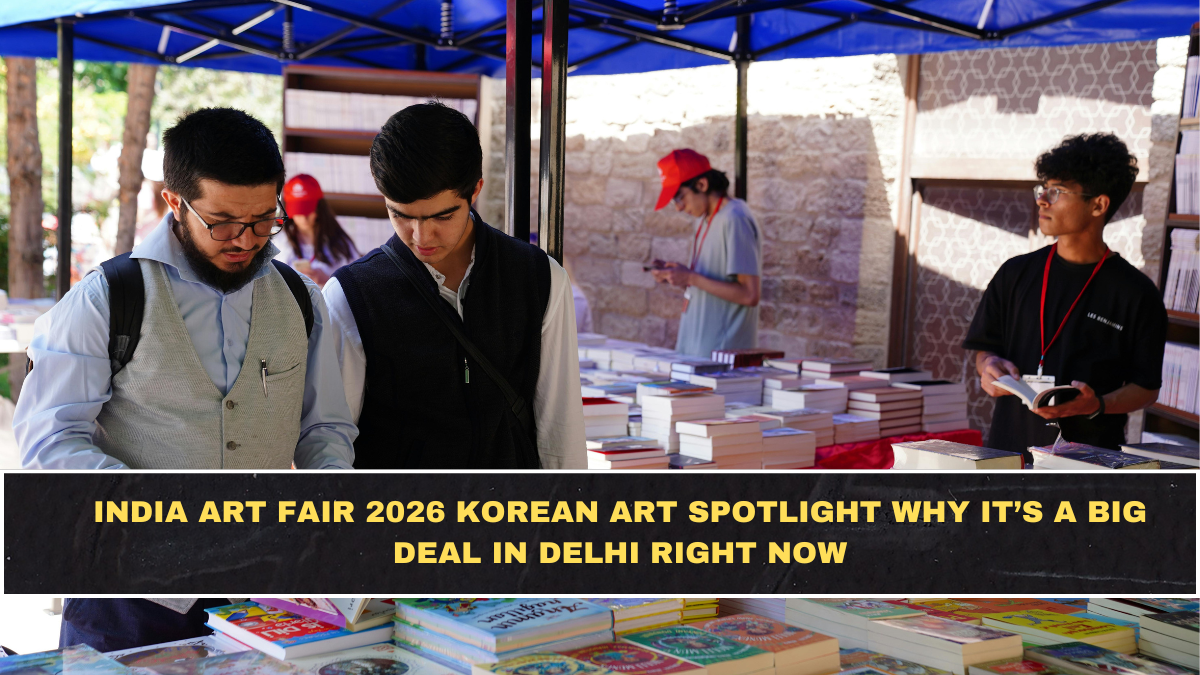
Walking through India Art Fair 2026, one thing becomes immediately obvious: Korean contemporary art is not just present this year, it is dominant in conversation, photography, and crowd movement. Visitors who may not have planned to engage with Korean art are finding themselves pulled into installations that feel emotionally intense, visually precise, and culturally layered. The spotlight is not accidental; it reflects a larger global shift in how Korean creativity is being received outside East Asia.
What makes this moment striking is how organically the attention has grown. People are not lining up because of hype alone. They are stopping because the work feels different, deliberate, and unusually resonant. In 2026, when audiences are flooded with visual content daily, the Korean art pavilion stands out by slowing people down rather than overwhelming them.
Why Korean Contemporary Art Is Resonating Right Now
Korean contemporary art has been building international credibility for years, but its impact in Delhi this year feels sharper and more immediate. The themes being explored focus on memory, urban pressure, identity, and technological intimacy, all of which resonate strongly with younger Indian audiences navigating similar tensions.
The presentation style also plays a role. Instead of dense explanatory text or academic framing, many works rely on space, repetition, and sensory cues. This allows viewers to connect emotionally first, then intellectually. In a fair environment where attention spans are short, this approach works powerfully.
The Korean Art Pavilion and Its Visual Pull
The Korean-focused section of the fair is carefully curated rather than crowded. Booths are spaced to allow silence and movement, which contrasts with the busier commercial galleries elsewhere. This spatial discipline has made the area feel almost meditative, encouraging longer engagement.
Large-scale installations, muted color palettes, and precise lighting dominate the pavilion. Visitors often pause without immediately photographing, which is rare in such settings. When they do take photos, it is usually after spending time absorbing the work, a sign of genuine engagement rather than casual scrolling behavior.
Installations People Are Sharing the Most
Certain installations have become visual anchors of the fair, frequently appearing across social feeds. These works often combine physical materials with digital elements, blurring the boundary between object and experience. The result feels contemporary without being gimmicky.
What stands out is restraint. Instead of loud visuals, many pieces use minimalism to create emotional weight. This has made them especially shareable, as photos feel contemplative rather than performative. In a space crowded with spectacle, understatement becomes memorable.
Cross-Cultural Dialogue With Indian Audiences
One reason Korean art is drawing such interest is its unexpected familiarity. Themes of tradition colliding with modernity, personal identity under social pressure, and the cost of rapid development mirror conversations already present in Indian society.
This overlap creates a sense of dialogue rather than distance. Indian viewers are not approaching the work as foreign or exotic, but as parallel narratives expressed through a different cultural lens. That relatability has been a major driver of attention and discussion.
How Galleries Are Framing Korean Artists
Galleries showcasing Korean artists are avoiding heavy-handed national branding. Instead, they are positioning the work within global contemporary discourse, emphasizing ideas rather than origin. This subtle framing prevents the art from being boxed into a cultural niche.
By allowing the work to speak first, galleries are helping audiences engage without preconceived expectations. The result is curiosity rather than categorization, which aligns well with how art audiences in 2026 prefer to explore.
Why This Moment Matters Beyond the Fair
The prominence of Korean art at India Art Fair 2026 signals a broader shift in global cultural exchange. It reflects how influence is no longer moving only from West to East, but across multiple directions simultaneously.
For Indian artists, curators, and institutions, this moment offers a template for cross-border collaboration based on shared themes rather than superficial fusion. It also signals that audiences are ready for nuanced international voices that feel emotionally honest rather than trend-driven.
What Visitors Should Not Miss
Visitors interested in the Korean art spotlight should plan time specifically for this section rather than stumbling into it accidentally. Slowing down, revisiting installations, and observing how others interact with the work adds depth to the experience.
Engaging with gallery representatives can also provide context that enhances appreciation, especially around material choices and conceptual intent. The work rewards patience, which is increasingly rare and therefore valuable.
Conclusion: A Quiet Takeover That Says a Lot
Korean art’s rise at India Art Fair 2026 is not loud or promotional. It is quiet, confident, and deeply considered. That is precisely why it is commanding attention. In a fair filled with competing visuals, the Korean pavilion succeeds by trusting viewers to feel before they analyze.
This moment matters because it shows how cultural influence now travels through empathy and shared experience rather than spectacle. For visitors, it offers one of the most grounded and memorable sections of the fair. For the broader art ecosystem, it signals a future where meaningful global exchange is built on resonance, not novelty.
FAQs
Why is Korean art so prominent at India Art Fair 2026?
It reflects growing global interest in Korean contemporary art and a curatorial focus on themes that resonate across cultures.
What kind of artworks are featured in the Korean spotlight?
The focus is on installations, mixed media, and concept-driven works that emphasize emotion, space, and identity.
Is the Korean art section suitable for non-art experts?
Yes, the work is accessible and designed to connect emotionally before requiring technical understanding.
Are these installations heavily digital or technology-driven?
Some incorporate digital elements, but most rely on physical presence and spatial experience rather than screens alone.
Why are these works so popular on social media?
Their minimalism and emotional depth translate well into photography without feeling staged or performative.
Should visitors plan extra time for this section?
Yes, the Korean art spotlight rewards slow viewing and benefits from dedicated time rather than rushed browsing.