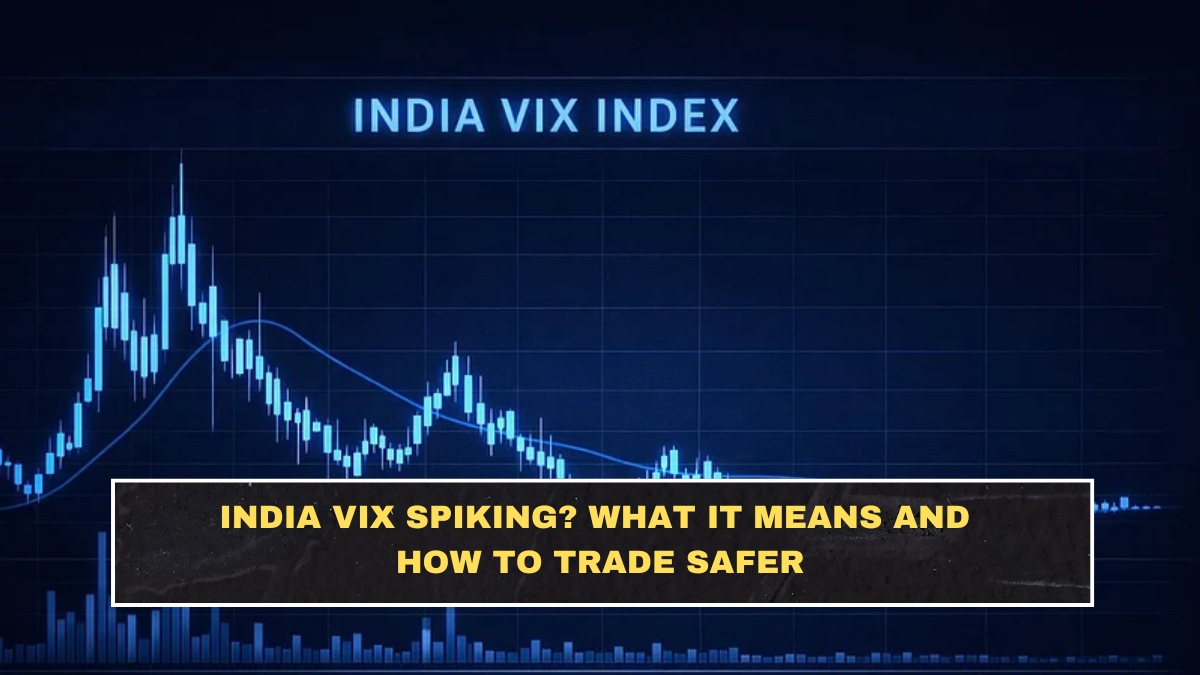
The India VIX, commonly called the market’s “fear index,” has shown a noticeable spike in recent trading sessions. India VIX measures the expected volatility in the Nifty 50 index over the next 30 days based on options pricing. When traders anticipate large market swings, the VIX typically rises because option premiums increase to reflect higher uncertainty.
A rising VIX does not always mean markets will crash, but it does signal that traders expect stronger price movements. Volatility spikes usually occur during periods of global uncertainty, major economic announcements, or geopolitical developments that make investors cautious.
India VIX Market Snapshot
The following table shows the recent movement in the India VIX index, highlighting how volatility expectations have changed during recent trading sessions.
| Indicator | Value |
|---|---|
| Previous Close | 14.20 |
| Opening Level | 15.10 |
| Day High | 17.05 |
| Current Level | 16.50 |
| Daily Change | +12% |
A double-digit percentage rise in VIX often indicates heightened nervousness among traders.
What the India VIX Actually Measures
India VIX is calculated using the order book of Nifty options and reflects how much traders are willing to pay for protection against market swings.
| Indicator | Meaning |
|---|---|
| Below 12 | Very low volatility environment |
| 12–16 | Stable market conditions |
| 16–20 | Rising volatility |
| Above 20 | High uncertainty |
Today’s move toward the higher range indicates that traders are preparing for stronger market fluctuations.
Key Reasons Behind the VIX Spike
Volatility increases when investors become uncertain about future market direction. Several triggers may push the India VIX higher.
| Trigger | Market Impact |
|---|---|
| Global Market Weakness | Increased risk perception |
| Rising Crude Oil Prices | Inflation concerns |
| Geopolitical Tension | Defensive positioning |
| FII Selling | Increased market pressure |
| Major Economic Data | Uncertain investor expectations |
When multiple triggers appear simultaneously, option traders demand higher premiums, pushing the VIX upward.
How India VIX Relates to Nifty Movement
The relationship between VIX and Nifty is often inverse. When VIX rises sharply, markets tend to become volatile and sometimes decline.
| Scenario | Nifty Trend | VIX Movement |
|---|---|---|
| Bullish Market | Gradual rise | Low VIX |
| Market Correction | Declining index | Rising VIX |
| Sideways Market | Range-bound | Moderate VIX |
| Panic Selling | Sharp decline | Very high VIX |
However, VIX mainly measures volatility expectations rather than predicting the exact market direction.
Sector Reaction During High Volatility
Certain sectors respond more strongly to volatility spikes because they are sensitive to global economic conditions.
| Sector | Typical Reaction |
|---|---|
| Banking | Higher volatility due to large weight |
| Metals | Sensitive to global commodity prices |
| IT | Influenced by global demand expectations |
| FMCG | Usually more defensive |
Defensive sectors sometimes perform better when market uncertainty rises.
How Traders Adjust Strategies During VIX Spikes
Professional traders often adjust their strategies when volatility increases. High VIX levels usually lead to different trading behavior compared with calm markets.
| Strategy | Purpose |
|---|---|
| Reduced Position Size | Manage risk exposure |
| Options Hedging | Protect against downside |
| Defensive Stocks | Reduce volatility impact |
| Stop-Loss Discipline | Limit potential losses |
These strategies help traders navigate volatile market conditions more safely.
Historical India VIX Volatility Periods
Looking at past data helps understand how volatility spikes occur during major global events.
| Year | Average VIX Level | Market Context |
|---|---|---|
| 2020 | Above 60 | Pandemic market crash |
| 2022 | Around 30 | Global inflation crisis |
| 2024 | Around 18 | Geopolitical uncertainty |
| 2026 | Around 16–17 | Oil price and global market volatility |
Such periods show how volatility often rises during economic uncertainty.
What Investors Should Watch Next
Investors usually monitor several indicators when VIX begins to rise.
| Indicator | Why It Matters |
|---|---|
| Global Markets | Risk sentiment |
| Crude Oil Prices | Inflation risk |
| Foreign Investment Flows | Market liquidity |
| Central Bank Policy | Interest rate outlook |
Tracking these indicators helps investors anticipate whether volatility will increase or stabilize.
Conclusion
The India VIX spike today reflects rising uncertainty in the stock market as global economic and geopolitical signals influence investor sentiment. While higher volatility can create short-term risks, it also provides opportunities for traders who manage risk carefully.
For long-term investors, volatility is often a normal part of market cycles. Monitoring key indicators and maintaining disciplined investment strategies can help navigate periods of uncertainty effectively.
FAQs
What is India VIX?
India VIX measures expected volatility in the Nifty 50 index over the next 30 days using options market data.
Why is India VIX rising today?
The spike is mainly driven by global market uncertainty, rising oil prices, foreign investor selling, and geopolitical tensions.
Does a high VIX mean the market will crash?
Not necessarily. A high VIX indicates volatility expectations but does not guarantee a market decline.
What is considered a high India VIX level?
Levels above 20 usually indicate high market uncertainty and strong price swings.
How should investors react to rising VIX?
Investors typically focus on risk management, diversification, and avoiding emotional decisions during volatile market conditions.