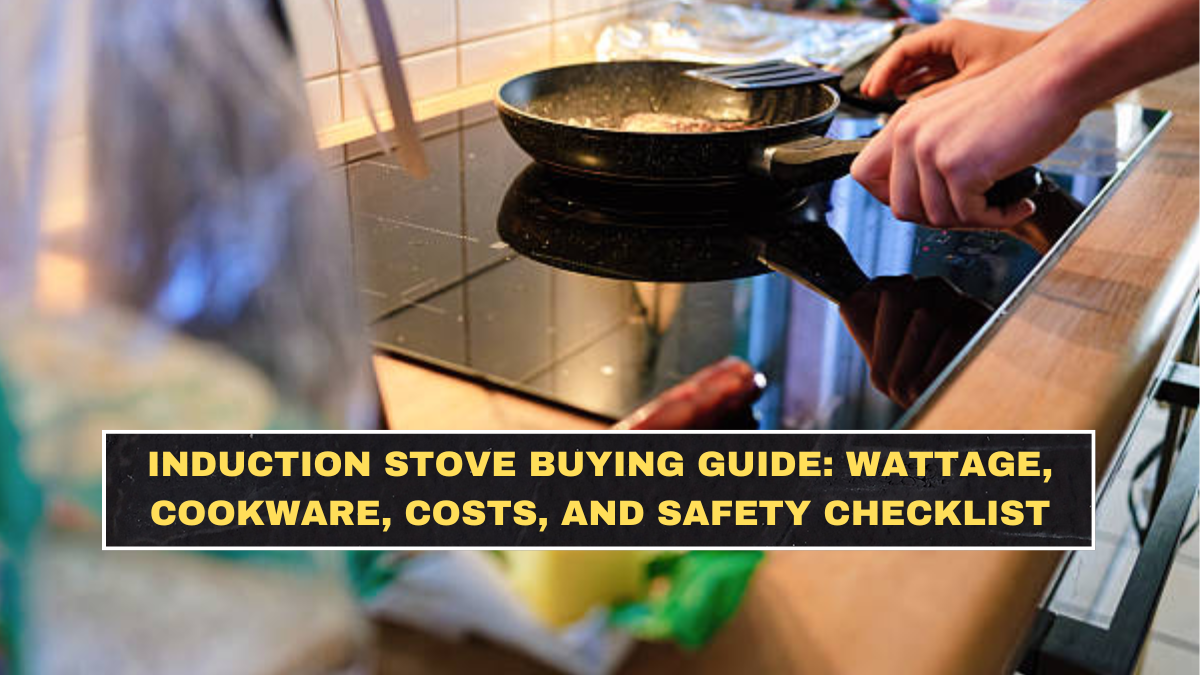
Induction stoves are seeing increased demand in India, especially during LPG supply disruptions and rising cylinder costs. Unlike traditional gas stoves, induction cooktops use electricity and magnetic heating to cook food, making them a practical backup or even a primary cooking option in urban households.
Their popularity is also driven by faster cooking time, energy efficiency, and ease of use, especially in small kitchens or rental setups.
How an Induction Stove Actually Works
Induction cooktops generate heat through electromagnetic fields that directly heat compatible cookware. This means:
-
Heat is generated in the utensil, not the surface
-
Faster heating compared to gas
-
Minimal heat loss
However, this also means only specific cookware works—this is where many buyers make mistakes.
Wattage Guide: What You Should Choose
| Wattage Range | Best For | Key Advantage |
|---|---|---|
| 1200–1500 W | Light cooking, small meals | Lower electricity consumption |
| 1500–1800 W | Regular household use | Balanced performance |
| 1800–2200 W | Fast cooking, heavy usage | Quick heating, time-saving |
Higher wattage means faster cooking—but also higher power consumption.
Electricity Cost: What It Actually Means
This is where most people misunderstand induction stoves.
Example calculation:
-
2000W stove = 2 units/hour
-
If used for 1 hour daily → ~60 units/month
-
At ₹6–₹8 per unit → ₹360–₹480/month
Actual cost depends on usage, but for many households, it can be comparable to or slightly higher than subsidized LPG.
Cookware Compatibility: The Biggest Mistake Buyers Make
Induction stoves require ferromagnetic cookware.
| Cookware Type | Works on Induction? |
|---|---|
| Stainless Steel | Yes |
| Cast Iron | Yes |
| Aluminium | No (unless base modified) |
| Glass/Ceramic | No |
If your utensils don’t work, your induction stove becomes useless—this is the most common oversight.
Safety Advantages Over Gas
Induction stoves offer several safety benefits:
-
No open flame
-
Auto shut-off feature
-
Overheat protection
-
Safer for homes with children
This makes them a preferred option in apartments and compact kitchens.
Limitations You Should Not Ignore
Induction is not perfect—and ignoring this leads to regret:
-
Depends completely on electricity
-
Not ideal during power cuts
-
Limited compatibility with traditional cookware
-
Learning curve for first-time users
Most people buy without considering these realities.
When It Makes Sense to Buy an Induction Stove
You should consider buying if:
-
You face frequent LPG delays
-
You need a backup cooking option
-
You live in a rented or small space
-
You want faster, controlled cooking
You should avoid it if your area has frequent power cuts.
What to Check Before Buying
-
Wattage based on your usage
-
Cookware compatibility
-
Brand reliability and safety features
-
Warranty and service support
Buying randomly based on price is where most people go wrong.
Conclusion
Induction stoves are a practical alternative during LPG shortages, but they are not a one-size-fits-all solution. The right choice depends on your usage, electricity availability, and cookware setup.
If you buy without understanding wattage, cost, and compatibility, you’ll regret it. If you choose based on your actual needs, it can become one of the most efficient tools in your kitchen.
FAQs
Is induction cheaper than LPG in India?
It depends on usage and electricity rates; costs can be similar.
Can normal utensils be used on induction?
No, only induction-compatible (magnetic base) cookware works.
Is induction stove safe?
Yes, it is generally safer than gas due to no open flame.
What wattage is best for home use?
1500–1800W is suitable for most households.
Does induction consume a lot of electricity?
It consumes power based on usage, but efficient cooking can balance cost.
Click here to know more.