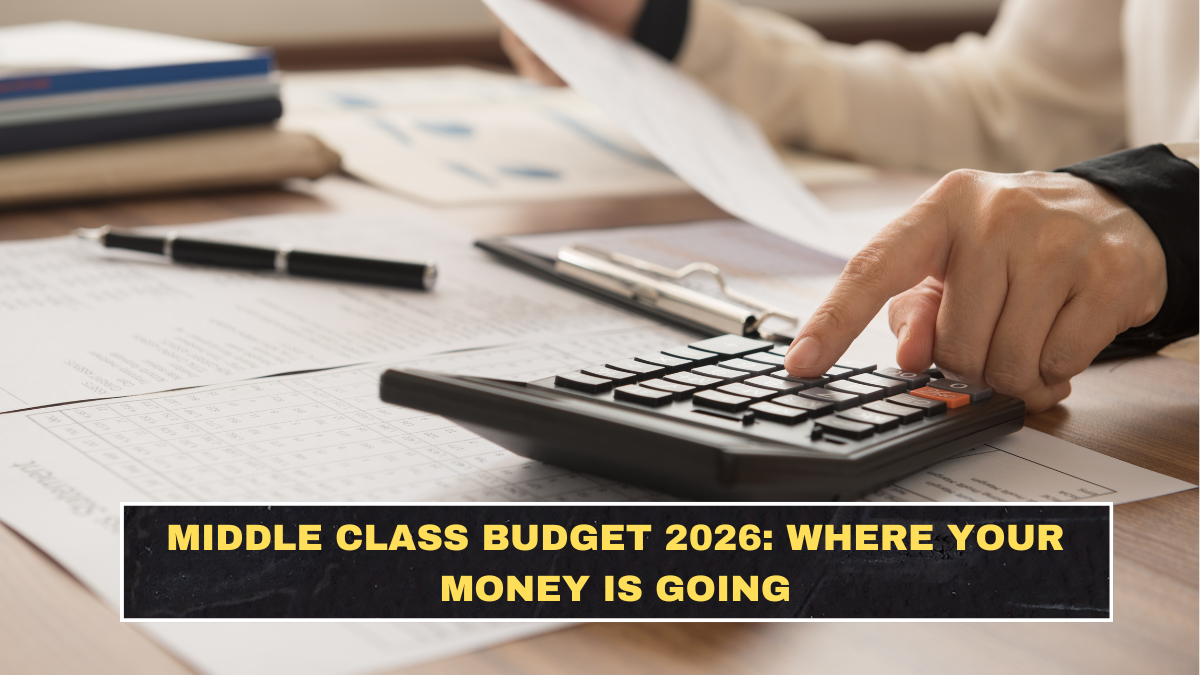
You’re earning. You’re spending. But somehow, you’re still not saving enough.
That’s the reality for most middle-class families in India right now.
The problem is not always low income—it’s where your money is silently disappearing every month.
Why This Matters
For a middle-class household, money is always planned—but rarely controlled. Fixed expenses like rent, school fees, groceries, and bills take up most of the income, leaving very little room for savings.
The real issue is that expenses are increasing faster than income. Electricity bills, fuel costs, food prices, and even small daily expenses have gone up. But salaries haven’t kept pace for most people. That’s why even people earning decent incomes feel financially stuck.
Main Explanation
Let’s simplify this like explaining to a kid.
Imagine you get ₹100 every month. You already know where most of it will go:
-
₹30 for rent
-
₹20 for food
-
₹10 for electricity and bills
-
₹10 for travel
Now you are left with ₹30.
But here’s the catch—small expenses start eating this remaining money:
-
Ordering food
-
Online shopping
-
Subscriptions
-
Random spending
Before you realize it, that ₹30 is gone.
This is exactly what’s happening with middle-class budgets. The problem is not just big expenses—it’s the combination of big fixed costs and small uncontrolled spending.
Table: Typical Monthly Expense Breakdown
| Expense Category | Approx % of Income | Why It Feels Heavy |
|---|---|---|
| Rent/EMI | 25–35% | Fixed and unavoidable |
| Groceries | 15–20% | Prices increasing regularly |
| Electricity & bills | 5–10% | Rising tariffs |
| Transport (fuel) | 10–15% | Fuel price impact |
| School/fees | 5–10% | Increasing education cost |
| Lifestyle expenses | 10–20% | Often uncontrolled |
| Savings | 5–10% | Usually the first to suffer |
What’s Happening
The cost of living in India is rising steadily. Essentials like food, fuel, and utilities are becoming more expensive, while discretionary spending is also increasing due to digital convenience.
At the same time, easy access to online shopping, UPI payments, and subscriptions has made spending effortless. This creates a situation where money goes out faster than people realize.
As a result, even financially aware individuals struggle to maintain consistent savings.
What You Should Do
Start by tracking every rupee. If you don’t know where your money is going, you can’t fix anything.
Set a clear rule—save first, spend later. Even ₹2000 saved monthly can create a strong habit.
Cut unnecessary subscriptions and reduce impulsive spending. Small changes here can make a big difference.
Also, plan your major expenses in advance instead of reacting to them.
Common Mistakes
The biggest mistake is ignoring small expenses. People focus on big costs but ignore daily spending.
Another mistake is saving “whatever is left.” In most cases, nothing is left.
Many people also rely too much on credit cards or loans, which increases financial pressure later.
What to Watch Next
Watch inflation trends, especially in food, fuel, and utilities. These directly affect your monthly budget.
Also watch your own spending behavior. Your habits matter more than external factors.
Reality Check
Here’s the uncomfortable truth.
You’re not broke because you don’t earn enough. You’re broke because your money is not managed properly.
Income matters—but behavior matters more.
Conclusion
Managing a middle-class budget is not about cutting everything—it’s about controlling what matters.
Track your expenses, reduce unnecessary spending, and build a consistent saving habit.
Because financial stability is not about how much you earn—it’s about how much you keep.
FAQs
Why am I not able to save money?
Because expenses and uncontrolled spending are taking up most of your income.
How much should I save monthly?
At least 10–20% of your income, if possible.
What is the biggest expense for middle-class families?
Rent/EMI and groceries are usually the biggest expenses.
How can I reduce monthly expenses?
Track spending, cut unnecessary costs, and avoid impulsive purchases.
Is ₹2000 monthly saving enough?
It’s a good start. Consistency matters more than amount.
Click here to know more.