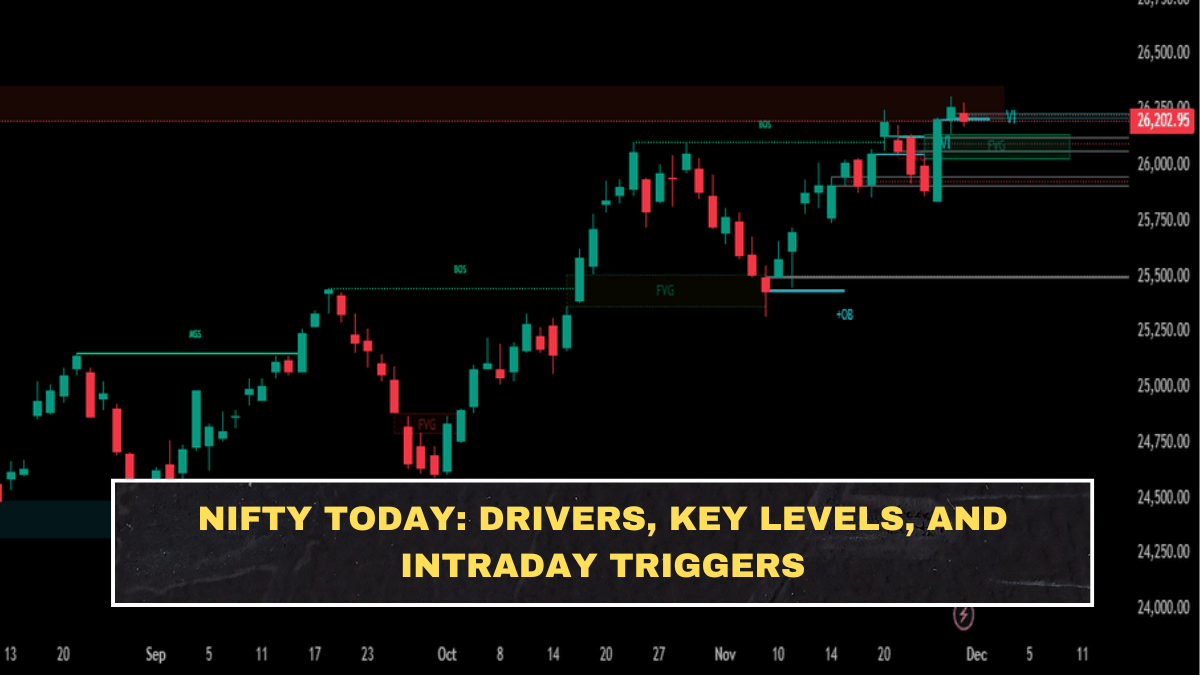
The Nifty 50 index is one of the most widely tracked indicators of the Indian stock market. Managed by the National Stock Exchange (NSE), the index represents the performance of 50 major companies across key sectors of the economy, including banking, information technology, energy, consumer goods, and pharmaceuticals.
Because the Nifty includes companies with large market capitalization and high liquidity, it reflects overall market sentiment and investor confidence. Traders, analysts, and institutional investors closely monitor daily movements in the Nifty to understand broader market trends.
What the Nifty 50 Index Represents
The Nifty 50 index acts as a benchmark for India’s equity market and is often used to evaluate the performance of mutual funds, portfolio investments, and derivatives trading.
| Index Feature | Details |
|---|---|
| Exchange | National Stock Exchange (NSE) |
| Number of Companies | 50 large-cap stocks |
| Sector Coverage | Multiple sectors including banking, IT, and energy |
| Index Methodology | Free-float market capitalization weighted |
| Market Role | Benchmark for Indian equity markets |
Because of its diversified structure, the index provides a broad view of the country’s economic and corporate performance.
Major Sectors Influencing the Nifty
Certain sectors carry a larger weight within the Nifty index. When companies from these sectors move significantly, the index often follows the same direction.
| Sector | Influence on Nifty |
|---|---|
| Banking and financial services | One of the largest contributors |
| Information technology | Sensitive to global tech demand |
| Oil and energy | Influenced by commodity prices |
| FMCG | Reflects domestic consumption trends |
| Pharmaceuticals | Linked to global healthcare demand |
Movements in these sectors often drive the overall direction of the index during trading sessions.
Key Levels Traders Watch
Traders frequently analyze technical levels such as support and resistance to understand potential market direction.
| Technical Level | Meaning for Traders |
|---|---|
| Support level | Price level where buying interest may appear |
| Resistance level | Price level where selling pressure may increase |
| Breakout zone | Area where price movement may accelerate |
| Consolidation range | Period of limited price movement |
Monitoring these levels helps traders identify potential entry or exit points.
Intraday Triggers That Move the Nifty
Short-term market movements can be influenced by several intraday factors.
| Trigger | Market Impact |
|---|---|
| Global market performance | Influences opening sentiment |
| Institutional investor activity | Large buy or sell orders move the index |
| Corporate announcements | Earnings updates affect stock prices |
| Commodity price changes | Impacts energy and metal sectors |
Traders often track these developments throughout the day to anticipate potential market movements.
Role of Derivatives in Nifty Trading
The Nifty index is widely used for derivative trading through futures and options contracts. These instruments allow traders to speculate on market movements or hedge their investment portfolios.
| Derivative Instrument | Purpose |
|---|---|
| Nifty Futures | Speculation on index direction |
| Nifty Options | Risk management and trading strategies |
| Weekly options | Short-term trading opportunities |
Derivative trading activity can also influence short-term movements in the index.
Importance of Global Markets for Nifty
Indian markets are connected to global financial systems. Overnight developments in international markets often influence the opening direction of the Nifty.
| Global Factor | Possible Impact |
|---|---|
| US stock market movement | Affects investor sentiment |
| Oil price fluctuations | Influences inflation expectations |
| Currency movements | Impacts export-oriented companies |
| Global economic data | Affects foreign investment flows |
Because of these linkages, global market trends are closely monitored by Indian investors.
Conclusion
The Nifty 50 index remains a key indicator of India’s equity market performance. Its daily movement reflects the combined impact of major sectors, institutional investment activity, global market trends, and corporate developments. By monitoring key technical levels, sector performance, and macroeconomic triggers, investors and traders can better understand the factors influencing market direction and make informed decisions.
Frequently Asked Questions
What is the Nifty 50 index?
The Nifty 50 is a benchmark stock market index representing 50 major companies listed on the National Stock Exchange of India.
Why does the Nifty move during the trading day?
The index moves based on changes in the prices of its constituent stocks, influenced by economic data, global markets, and investor activity.
Which sectors influence the Nifty the most?
Banking, information technology, energy, and consumer goods sectors typically have significant influence on the index.
What are support and resistance levels?
Support is a price level where buying interest may appear, while resistance is a level where selling pressure may increase.
Why do traders track Nifty daily?
Traders follow the Nifty to understand overall market sentiment and identify potential trading opportunities.