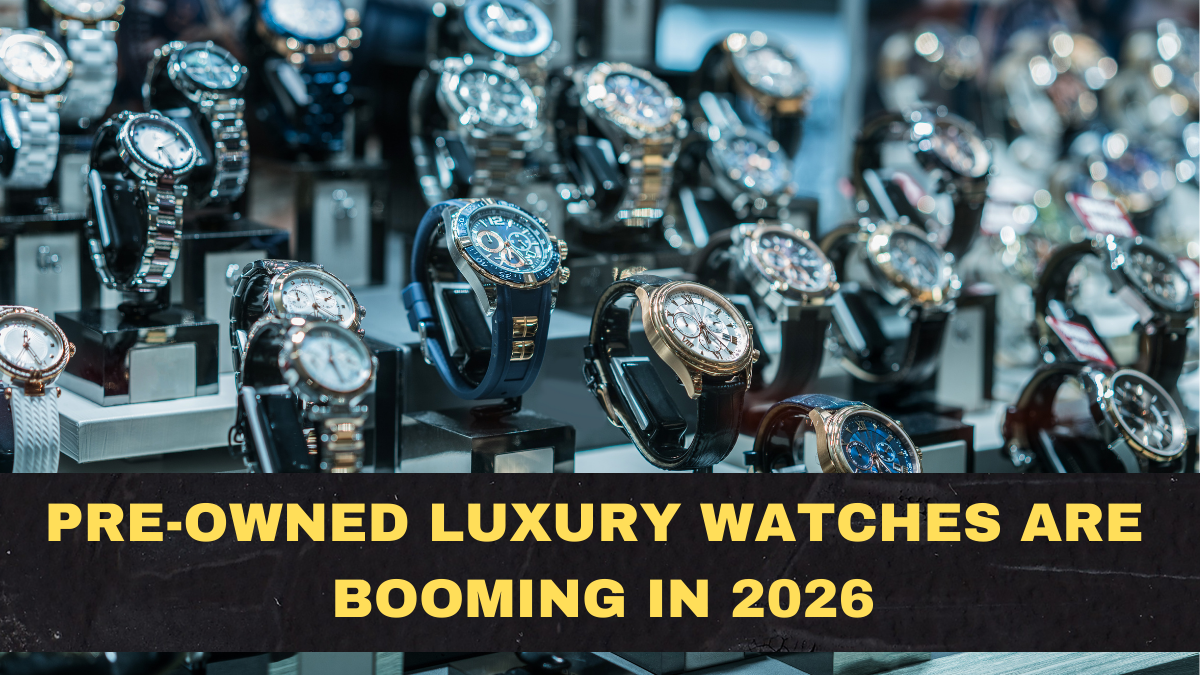
The surge in pre owned luxury watches is one of the clearest signals of how consumer behavior is changing in 2026. What was once considered second-hand shopping is now viewed as strategic buying. Collectors, professionals, and even first-time luxury buyers are entering the resale market not just for savings — but for appreciation, scarcity, and asset value.
Luxury watches are no longer just accessories. They are increasingly treated like alternative investments, sitting somewhere between fashion, collectibles, and financial instruments. And unlike many speculative assets, they can be worn, enjoyed, and resold.
In 2026, this category is no longer niche. It’s one of the fastest-growing segments in the global luxury economy.
Why Pre-Owned Luxury Watches Are Exploding in Demand
The rise of pre owned luxury watches is driven by a combination of scarcity and strategy.
Three forces pushed this market into the mainstream:
• Long waitlists for new luxury models
• Strong resale price appreciation
• Younger buyers treating watches as assets
When buyers realized that some watches gain value instead of depreciating, perception changed permanently. A Rolex or Patek was no longer just jewelry. It became portable wealth.
The resale market offered immediate access to models that were impossible to buy at retail.
How the Watch Investment Mindset Took Over
In earlier decades, watches depreciated like cars.
That changed when:
• Limited production became stricter
• Brand control tightened
• Collector demand globalized
• Resale platforms professionalized
Certain models began appreciating year after year.
Today, watch investment logic mirrors art and sneakers:
• Scarcity drives value
• Condition determines pricing
• Brand prestige anchors demand
• Market timing matters
In 2026, buyers increasingly compare watches to gold, art, and vintage cars.
Which Watches Perform Best in the Resale Market
Not all luxury watches appreciate.
The strongest resale performers usually share:
• Iconic design
• Limited production
• Strong brand heritage
• Long waitlists at retail
• Recognizable reference numbers
Top categories include:
• Steel sports watches
• Iconic chronographs
• Vintage limited editions
• Discontinued models
This is why resale market demand concentrates around a small group of highly liquid models.
Why Gen Z Is Entering the Luxury Watch Market Early
Younger buyers are not entering luxury for status alone.
They are driven by:
• Asset diversification
• Resale liquidity
• Cultural signaling
• Long-term value preservation
Unlike handbags or sneakers, watches offer:
• Global resale markets
• Durable construction
• Historical appreciation patterns
• Cross-generational appeal
For Gen Z, pre owned luxury watches are both identity and investment.
The Role of Resale Platforms in Market Growth
This boom would not exist without platform trust.
Modern resale platforms now provide:
• Authentication guarantees
• Condition grading
• Service histories
• Escrow payments
• Transparent pricing
This removed the biggest risk: counterfeits.
As buyer confidence increased, transaction volumes exploded. In 2026, resale market platforms now rival authorized dealers in volume for certain brands.
Why Retail Shortages Are Fueling the Secondary Market
Authorized dealers control supply tightly.
Common problems include:
• Multi-year waitlists
• Purchase history requirements
• Limited allocation
• Relationship-based selling
Buyers unwilling to wait simply move to the resale market.
Ironically, brand scarcity strategies are directly feeding the growth of pre owned luxury watches.
Is This Market Speculative or Sustainable
There is real data behind this trend.
Sustainability comes from:
• Global demand growth
• Wealth concentration
• Cultural permanence
• Limited supply mechanics
• Inheritance and legacy cycles
Unlike crypto or art hype, watches have:
• Utility
• Wearability
• Longevity
• Historical price records
In 2026, watch investment is considered one of the more stable alternative asset classes.
The Risk: Overpaying and Illiquidity
This market is not risk-free.
Common mistakes include:
• Buying hype models at peaks
• Ignoring servicing costs
• Overestimating liquidity
• Underestimating condition impact
• Falling for speculative micro-brands
Not every watch is an investment.
Serious buyers now analyze:
• Production volume
• Reference popularity
• Service history
• Market depth
• Exit timelines
Watch investment rewards patience, not impulse.
Why Condition and Provenance Matter More Than Ever
Two identical models can differ wildly in value.
Key price drivers include:
• Original box and papers
• Unpolished cases
• Matching serials
• Service documentation
• Dial originality
In the resale market, provenance often matters more than brand.
Collectors increasingly pay premiums for verified history.
How This Is Changing Luxury Buying Behavior
The psychological shift is profound.
Buyers now ask:
• Will this hold value
• Can I resell easily
• Is this model liquid
• Is demand global
Luxury consumption is becoming financially rational.
In 2026, people buy watches with spreadsheets, not just emotions.
Conclusion
The boom in pre owned luxury watches reflects a deeper shift in how people view luxury itself.
In a world of volatile assets and short-lived trends, watches offer something rare: durability, scarcity, liquidity, and emotional value in one object. The resale market turned timepieces into wearable investments, and buyers are responding fast.
In 2026, the smartest luxury buyers are not chasing retail releases.
They are studying reference numbers, tracking resale curves, and buying history — not hype.
Because in this market, the best watches don’t just tell time.
They quietly build wealth.
FAQs
Why are pre-owned luxury watches so popular in 2026?
Because of limited retail supply, strong resale appreciation, and growing investor interest.
Are luxury watches really good investments?
Some models are. Iconic references with scarcity and demand often appreciate over time.
Which brands dominate the resale market?
Rolex, Patek Philippe, Audemars Piguet, and select Omega and Cartier models.
Is buying pre-owned risky?
Not if purchased from trusted platforms with authentication and documentation.
Should beginners invest in luxury watches?
Yes, but only after understanding model liquidity, condition, and long-term demand.
Click here to know more.