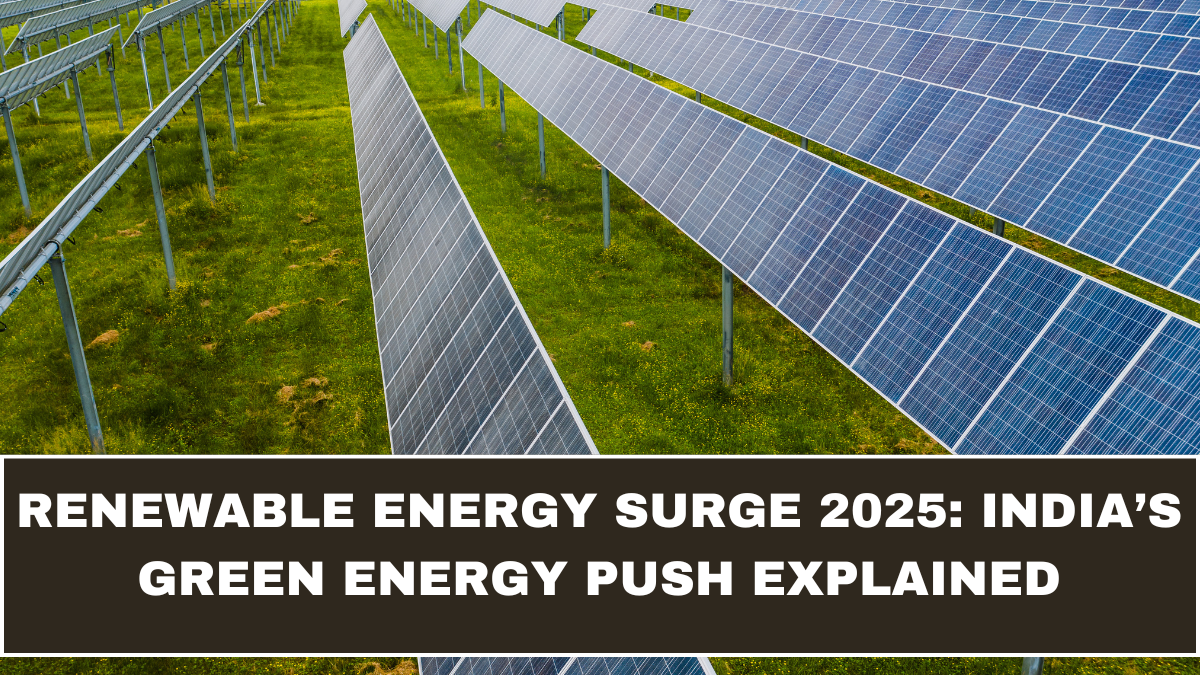
India’s renewable energy sector is experiencing one of its strongest growth phases in 2025, marked by record solar installations, rising wind capacity, and increasing investments in green hydrogen and storage projects. With rising electricity demand, climate commitments, and government-led expansion of clean infrastructure, India has become one of the top three global markets for renewable installations. The rapid pace of additions this year is reshaping the country’s energy mix, creating jobs, reducing carbon emissions, and bringing India closer to its long-term sustainability goals.
The shift is especially visible in utility-scale solar parks, rooftop solar adoption, wind corridors, and hybrid energy projects. As global energy markets fluctuate and countries race to decarbonise, India’s growing renewable energy capacity is emerging as a key pillar of its economic and environmental strategy.
Below is a detailed explanation of what is driving this surge, how it affects electricity reliability, its impact on employment, and why 2025 is considered a defining year for India’s renewable movement.
India’s Renewable Energy Capacity Growth in 2025
India’s renewable installations have grown sharply in 2025, driven by large-scale solar parks and new hybrid energy projects combining solar, wind, and battery storage. Multiple states including Gujarat, Rajasthan, Karnataka, Tamil Nadu, and Maharashtra have commissioned new solar and wind clusters during the year, adding thousands of megawatts of clean power to the grid.
A significant part of the growth is coming from:
-
Utility-scale solar farms in western and southern states
-
Wind repowering projects
-
Rooftop solar installations in homes, offices, and industries
-
Solar-plus-storage solutions for businesses
-
Corporate renewable purchase agreements
The country is also expanding its transmission network to support green energy evacuation from high-generation regions like Rajasthan and Gujarat. With rising peak demand across cities, renewable sources are increasingly helping to stabilise the grid, especially during daytime load.
Why Solar and Wind Installations Are Rising Now
Several factors are driving India’s rapid renewable energy surge in 2025, making it a pivotal year for clean energy transition.
1. Falling Prices of Solar Modules and Components
Global supply chain stabilisation and higher domestic manufacturing have brought down the cost of solar modules. This has made both rooftop and utility-scale projects more affordable for households and industries.
2. Government Incentives and Policy Push
India continues to promote renewable energy through:
-
Production-linked incentives for solar manufacturing
-
Incentives for rooftop solar under national schemes
-
Support for pumped hydro and battery storage
-
State-level renewable purchase obligations
This strong policy framework gives certainty to investors and project developers.
3. Rising Power Demand Across India
With economic growth, urbanisation, and digital expansion, electricity demand is rising sharply. Renewable energy is helping meet this demand without increasing dependence on fossil fuel imports.
4. Corporate Sustainability Commitments
Many Indian and global companies are signing long-term green energy contracts to meet sustainability and net-zero goals. This has significantly boosted commercial and industrial renewable installations.
Impact on India’s Climate Goals
India has committed to installing 500 GW of non-fossil energy capacity by 2030 and aims to meet 50% of its energy requirement through renewables. The capacity added in 2025 is a major step toward achieving these targets.
Increased installation of solar and wind systems is reducing emissions from coal power plants and supporting India’s climate action commitments. The shift also lowers India’s carbon intensity and contributes to cleaner air in many cities.
A fast-growing renewable sector also improves India’s position in global climate discussions, as the country emerges as one of the world’s leaders in large-scale clean energy transition.
How the Renewable Surge Impacts Jobs and the Economy
The renewable energy boom in 2025 is not only an environmental milestone but also a major economic catalyst.
1. New Jobs in Solar, Wind, and Manufacturing
The sector is generating employment in:
-
Solar panel and component manufacturing
-
Installation and maintenance
-
Grid integration
-
Engineering and project management
-
Green hydrogen and battery storage
Skilled and semi-skilled jobs are rising across states, providing new opportunities for youth.
2. Boost to Rural and Semi-Urban Economies
Large solar parks in rural areas are bringing investment, land leasing income, and local employment. Rooftop solar adoption is helping households reduce electricity bills and providing opportunities for local installers and technicians.
3. Growth of India’s Clean Tech Startup Ecosystem
Startups working on solar ROIs, predictive maintenance, energy monitoring systems, EV charging, and smart grids are gaining new traction.
How the Surge Affects India’s Energy Reliability
Renewables are reshaping India’s grid by providing consistent daytime power and reducing heavy reliance on coal.
Key benefits include:
-
Lower peak power shortages
-
More stable power availability during heatwaves
-
Reduced fuel cost volatility
-
Lower risk of blackouts
-
Increased use of battery and pumped hydro storage
Several states are gradually integrating hybrid renewable systems that maintain consistent output even during low sunlight or low wind periods.
Future Outlook: What to Expect After 2025
India’s renewable capacity is expected to grow steadily as manufacturing expands, supply chains strengthen, and storage technologies become cheaper. The government is also focusing on green hydrogen, offshore wind projects, and large-scale solar-wind hybrid parks.
Grid modernisation and better forecasting tools are helping improve renewable integration. With rooftop solar gaining momentum in urban households, India is also moving toward more decentralised, consumer-driven clean energy adoption.
If current trends continue, renewable energy will play an even stronger role in shaping India’s 2030 electricity landscape.
FAQs
What is driving India’s renewable energy growth in 2025?
Lower costs, strong government incentives, rising electricity demand, and corporate sustainability commitments are key drivers of India’s renewable energy growth this year.
Which states are leading renewable installations in India?
Gujarat, Rajasthan, Tamil Nadu, Karnataka, and Maharashtra are currently leading in solar, wind, and hybrid energy projects.
How does renewable energy growth impact jobs?
The surge is creating jobs in manufacturing, installation, maintenance, grid management, and emerging fields like green hydrogen and energy storage.
Does renewable energy reduce electricity costs?
Yes, renewable sources help reduce long-term power costs by lowering dependence on fuel imports and offering stable prices through long-term contracts.
What role will storage play in India’s renewable future?
Battery and pumped hydro storage will help maintain grid stability, manage peak demand, and support higher penetration of renewable energy in the coming years.