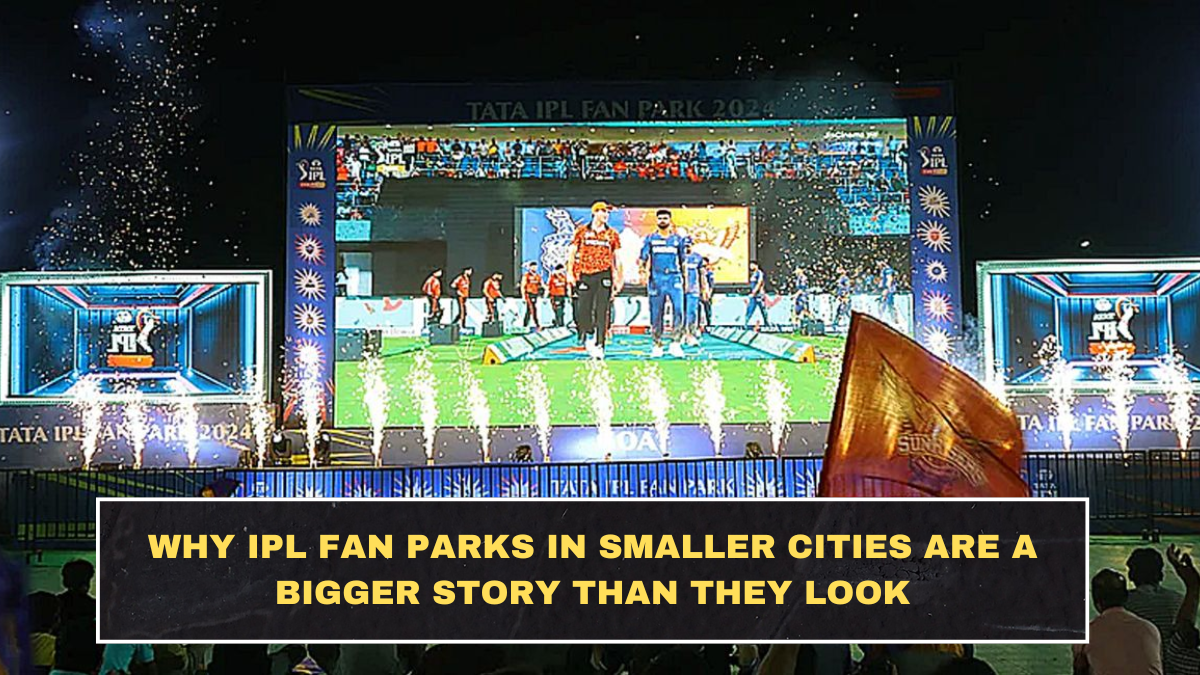
It is easy to dismiss IPL Fan Parks as oversized public screenings. That is lazy analysis. The first phase of IPL Fan Parks 2026 is being held across 15 cities in 11 states over three weekends, and the city list itself tells the real story: Rohtak, Bhopal, Nagpur, Tumakuru, Krishnanagar, Mathura, Jodhpur, Nizamabad, Mysuru, Bhubaneswar, Meerut, Nadiad, Ratnagiri, Coimbatore, and Rourkela. This is not a metro-first rollout. It is a deliberate spread into regional India.
The BCCI says each weekend will have five Fan Parks across North, South, East, and West zones, with live screenings plus food courts, kids’ zones, music, virtual batting, bowling nets, face painting, cheer meters, and photo booths. That matters because the event is being packaged as an experience, not just a place to watch a match. The league is effectively taking a stadium-like atmosphere to audiences that may not get regular access to live IPL matches in person.
What the 2026 City List Really Signals
The strongest evidence is the geography. The official 2026 list is full of non-metro names, and that is the point. If the goal were only audience scale, the easiest play would be bigger urban centers. Instead, the BCCI is placing IPL-branded matchday experiences in smaller and regional cities where fan passion is already high but top-tier live sports access is lower. That suggests the value here is reach, emotional connection, and habit-building, not just one weekend’s attendance.
This is also not a random experiment. The IPL says the Fan Park initiative began in 2015, and a 2019 IPL release said that season’s program covered 36 cities across 21 states, while noting that the effort aimed to reach regions with limited entertainment options and encourage community viewing. That older language matters because it shows the regional logic behind Fan Parks has existed for years. The 2026 list looks less like a novelty and more like a continuation of a long-term distribution model for cricket fandom.
Table: What the 2026 Fan Park Rollout Shows
| Signal | What the official rollout shows | Why it matters |
|---|---|---|
| Scale | 15 cities in 11 states in phase one | This is broad regional coverage, not one-off marketing. |
| Timing | Three weekends: March 28–29, April 4–5, April 11–12, 2026 | The schedule aligns with the early IPL phase to build momentum fast. |
| City mix | Rohtak, Mathura, Nizamabad, Ratnagiri, Meerut, Nadiad and others | Clear focus on smaller or non-metro centers. |
| Format | Screenings plus games, food, kids’ zones, music, photo booths | Converts passive viewership into local event participation. |
| Long-term pattern | Fan Parks started in 2015; 2019 covered 36 cities in 21 states | The regional push is established, not accidental. |
Why Smaller Cities Matter So Much to IPL Culture
Cricket fandom in India has never been only a metro story. The metro bias mostly comes from media coverage, sponsorship visibility, and stadium access. Fan Parks push against that by giving smaller-city audiences a shared public experience tied directly to the IPL calendar. That changes the social role of the tournament. It becomes less of a TV event inside homes and more of a community event with local presence. Based on the official format, that is exactly what these parks are designed to do.
There is also a cultural effect that is easy to miss. Public screenings create memory differently from solo viewing. A live crowd, chants, children’s activities, local food stalls, and fan contests turn a match into an outing. That makes the IPL feel closer to a festival model than a standard broadcast product. This is an inference from the event design, but it is a grounded one: the activities listed by the IPL are built for shared participation, not just screen consumption.
The Local Spending Angle Is Real, Even if It Is Harder to Measure Fast
The official announcement does not publish projected spending numbers, so pretending exact economic impact would be fake precision. But the structure of these events makes one thing obvious: they create temporary demand around food, transport, small vendors, and family entertainment in the host area. Food courts are built into the official plan, and local event footfall usually spills over into nearby spending as well. So while it would be dishonest to invent rupee estimates, it is reasonable to say Fan Parks are not just branding exercises. They are also short-duration local commerce moments.
The more important point is behavioral. When fans in cities like Jodhpur, Tumakuru, Ratnagiri, or Rourkela show up in large numbers for cricket-linked events, it strengthens the case for more sports-linked consumer experiences outside metros. That could mean more fan activations, more sponsor interest, and more regional event experiments later. This is an inference, but it follows logically from the BCCI’s choice to keep expanding regional access rather than concentrating everything in the biggest markets.
What This Says About Indian Fan Behavior in 2026
The rollout suggests a simple truth: the IPL is no longer relying only on stadium attendance and home viewership. It is building in-person fandom layers across the country. Fan Parks sit in the middle of that shift. They give people a reason to leave home for a match they could have watched on TV anyway, which only works when fandom is strong enough to support an experience economy around sport.
This also shows that regional audiences are being treated as event audiences, not just ratings audiences. That distinction matters. Ratings measure who watched. Event strategy measures who will show up, spend time, bring family, and participate publicly. The smaller-city Fan Park model suggests the IPL believes that audience exists well beyond metros, and the 2026 city list backs that up.
Conclusion
IPL Fan Parks in smaller cities are a bigger story because they reveal how cricket is being distributed as an experience, not only as a broadcast. The first phase of 2026 covers 15 cities across 11 states, and the city mix makes the strategy obvious: the IPL wants deeper regional presence, wider participation, and stronger community ownership of the tournament.
The lazy reading is that these are just free screenings. The smarter reading is that they are a signal of where Indian fan culture is going. Smaller cities are becoming central to how the IPL grows emotion, attention, and local engagement. That matters for cricket culture, for brands, and for the business of live sports experiences in India.
FAQs
How many cities are included in the first phase of IPL Fan Parks 2026?
The first phase covers 15 cities across 11 states over the first three weekends of IPL 2026.
Which kinds of cities are being targeted?
The official list includes many non-metro and regional centers such as Rohtak, Tumakuru, Mathura, Nizamabad, Meerut, Nadiad, Ratnagiri, and Rourkela.
What happens at an IPL Fan Park?
The IPL says Fan Parks include live match screenings, food courts, music, kids’ play zones, virtual batting, bowling nets, face painting, cheer meters, and 360-degree photo booths.
Why are smaller-city Fan Parks important?
They bring a stadium-style IPL experience to regions with fewer live-event options, strengthen community viewing, and likely support local short-term spending and fan engagement. The spending effect is an inference from the event format, not an official BCCI estimate.