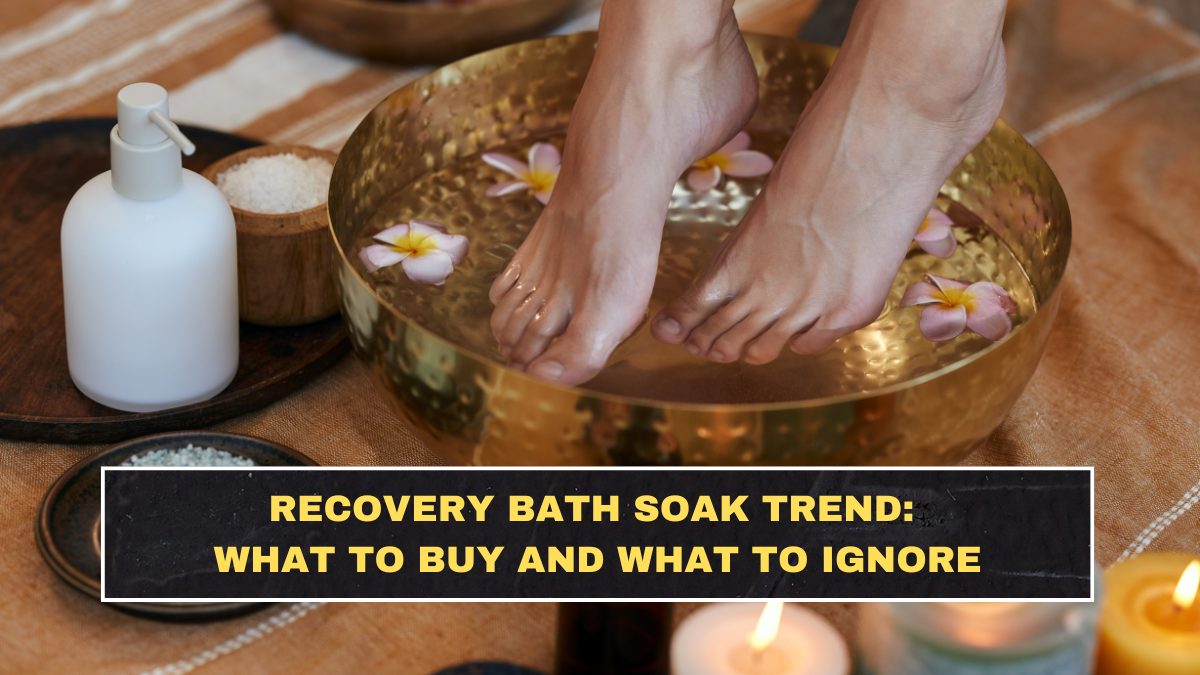
Recovery bath soaks are trending because they promise an easy fix for two modern problems at once: stress and body soreness. That is a strong marketing combination, especially when more people are mixing home fitness, better sleep routines, and low-effort self-care into the same lifestyle. The category usually includes Epsom salt, magnesium flakes, essential oils, or herbal blends, all sold as tools for muscle recovery, relaxation, and mood support. But the reality is less magical than the packaging suggests. Warm baths can absolutely feel restorative, yet the evidence behind every added ingredient is not equally strong.
What Is a Recovery Bath Soak?
A recovery bath soak is usually a powder, salt blend, or mineral mix added to warm bathwater to make soaking feel more therapeutic. The most common formulas use magnesium sulfate, known as Epsom salt, while newer versions often push magnesium chloride flakes, CBD, arnica, or fragrance blends. The main reason people buy them is simple: a plain bath sounds boring, while a “recovery soak” sounds purposeful and premium. That does not mean it is fake, but it does mean the category is built partly on language that makes ordinary relaxation feel more advanced.
The stronger part of the benefit may come from the bath itself. Warm-water bathing has been linked in research to lower pain, better sleep, and reduced fatigue in some groups, while hydrotherapy studies suggest heat and immersion can help with comfort and recovery. So the bath soak may help, but often because it improves the overall soaking experience rather than because one trendy ingredient transforms your muscles. That distinction matters if you do not want to waste money on overpriced salts with fancy branding.
Why Are Recovery Bath Soaks Trending Right Now?
The trend is growing because wellness shoppers increasingly want home rituals that feel useful, not just indulgent. A recovery bath soak sits in the same consumer lane as walking pads, sleep aids, cold plunges, and wearable recovery tech: products that sell the idea of “doing something good for yourself” without requiring much effort. Recent reporting on magnesium flake baths also shows that consumers are linking these soaks to muscle recovery, reduced cramps, and improved sleep, especially after workouts or high-stress days.
There is another reason this category works so well online: it is visually easy to sell. A bag of salts, steam, clean branding, and the promise of calm is a powerful combination. But you should be skeptical. Wellness products often get attention because they are emotionally appealing, not because the evidence is airtight. In this case, there is some support for warm bathing and some support for magnesium in recovery more broadly, but the claim that a soak delivers large amounts of magnesium through the skin is still unclear.
What Benefits Are Actually Realistic?
The most realistic benefits are relaxation, temporary relief from muscle tightness, reduced stress, and a more intentional wind-down routine. Cleveland Clinic notes that people often use Epsom salt baths for muscle pain and stress relief, but also makes clear that definitive evidence for meaningful magnesium absorption through the skin is lacking. Verywell Health made the same point in 2026 coverage of magnesium flake baths: the amount absorbed through the skin during a bath is still unclear.
That does not make the whole category useless. A warm soak can still help your body feel looser and calmer, and better relaxation can improve how recovered you feel. But a recovery bath is not a shortcut around poor sleep, overtraining, low protein intake, or dehydration. If your basics are weak, a mineral soak is just a nicer version of sitting in hot water. That is the blunt truth most trend articles avoid.
What Should You Look For Before Buying?
The best recovery bath soaks are usually the simplest. If you want to try one, a straightforward fragrance-free magnesium sulfate or magnesium chloride product is a more sensible starting point than an overloaded blend with glittering claims. Cleveland Clinic specifically recommends looking for 100% magnesium sulfate when buying Epsom salt. That is useful advice because many products try to disguise basic ingredients behind luxury language.
| What to Check | Better Option | Why It Matters |
|---|---|---|
| Main ingredient | 100% magnesium sulfate or a clearly labeled magnesium flake product | Easier to judge than vague “recovery blend” language |
| Fragrance level | Unscented or lightly scented | Lower risk of irritation |
| Add-ons | Minimal extras | Too many oils or botanicals can irritate skin |
| Use goal | Stress relief, relaxing soak, mild soreness support | Keeps expectations realistic |
| Skin sensitivity | Patch-test if you have eczema, psoriasis, or cuts | Some bath products can worsen irritation |
This table is more important than influencer recommendations. Buyers lose money when they shop by vibe instead of function. If a product cannot clearly tell you what is in it and what it is realistically for, it is probably not worth your money.
What Should You Ignore?
Ignore the claim that every recovery bath soak is a detox product. That word is abused constantly in wellness marketing and is often meaningless in consumer bath products. Ignore dramatic promises about flushing out toxins, resetting hormones, or instantly fixing muscle damage. Also ignore fancy essential-oil-heavy recipes unless they are properly diluted. Recent expert coverage warned that essential oils floating in bathwater can irritate or even burn skin if they are not mixed safely with a carrier and an emulsifier.
You should also ignore any product that tries to act like a soak can replace actual recovery habits. Magnesium supplementation has evidence for muscle soreness and recovery in some contexts, but that is not the same as proving every bath product delivers the same result through the skin. Do not let brands blur that line. They do it because it sells.
Who Should Be Careful With Recovery Bath Soaks?
People with eczema, psoriasis, open cuts, or highly sensitive skin should be more careful, because dermatology experts quoted by Verywell Health said magnesium flake baths may irritate already-compromised skin. People with chronic medical issues should also use basic judgment and check with a clinician if they are unsure, especially if they are trying to use bath soaks for pain rather than just comfort. Even safe-looking products can become irritating when the skin barrier is damaged.
Are Recovery Bath Soaks Worth Buying?
They can be worth buying if you treat them as a comfort and routine product, not a miracle recovery tool. A simple soak may help you relax, feel less stiff, and wind down before sleep, which is already useful. But the good results usually come from the warm bath experience plus a sensible formula, not from magical “detox” branding or inflated science claims.
If your goal is a better-feeling evening routine, a basic recovery soak can make sense. If your goal is to fix deep fatigue, chronic pain, or poor training recovery, this category is being oversold to you. Bath salts are not a substitute for real recovery habits, and pretending otherwise is exactly how people get manipulated by wellness marketing.
Conclusion?
Recovery bath soaks are trending because they feel practical, soothing, and easy to add to everyday life. The useful part of the trend is real: warm baths can support relaxation and may help with mild soreness and stress. The exaggerated part is also real: the science behind transdermal magnesium absorption remains mixed, and many products are marketed far beyond what they can honestly do. Buy simple formulas, ignore detox nonsense, and use bath soaks as a support tool, not a fantasy cure.
FAQs
Do recovery bath soaks really help sore muscles?
They may help you feel more relaxed and less tight, especially because warm baths themselves can be soothing. But the evidence for large amounts of magnesium being absorbed through the skin is still unclear.
Are Epsom salt baths proven to work?
There is some research suggesting Epsom salt baths may help with pain and daily function, but the overall evidence is still not definitive and may depend partly on the warm bath itself.
What should you avoid in a bath soak?
Be careful with strong fragrance, too many essential oils, and vague detox claims. Essential oils can irritate skin if they are not diluted properly.
Who should skip magnesium or Epsom bath soaks?
People with eczema, psoriasis, open cuts, or highly sensitive skin should be cautious because these products may worsen irritation.