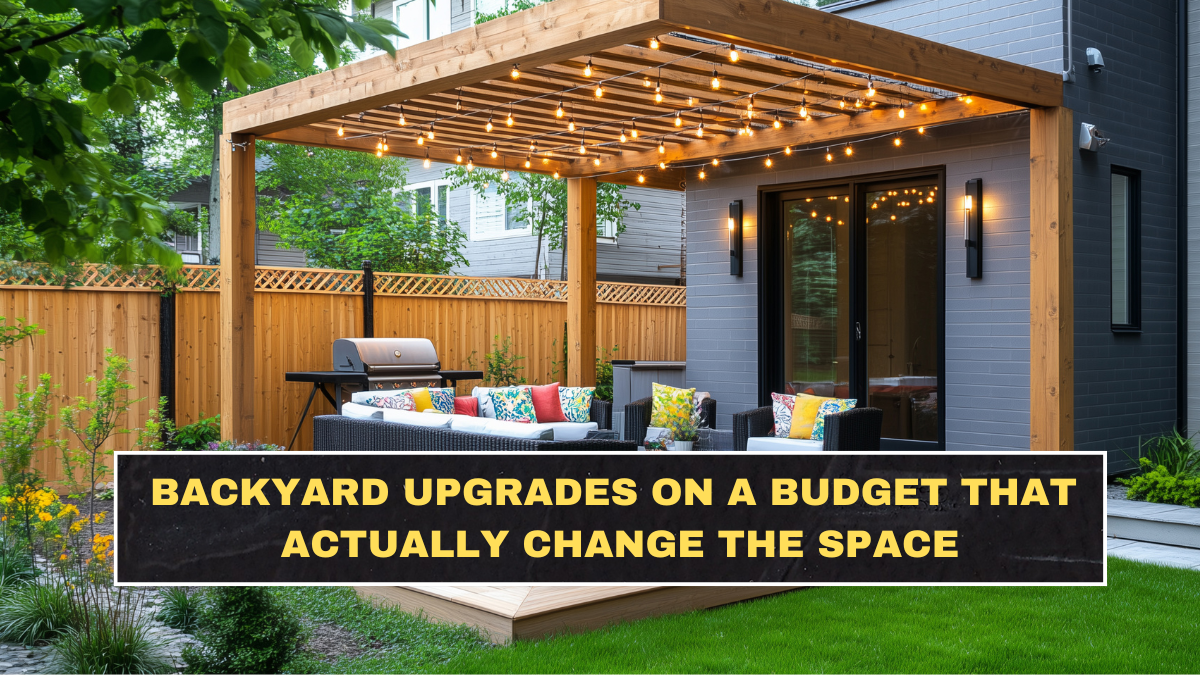
Cheap backyard upgrades only work when they solve real problems. That is the part people ignore. They chase “makeover” ideas that look dramatic in photos but do nothing for comfort, maintenance, or everyday use. A better approach is to focus on changes that improve how the yard feels, how much work it needs, and how often people actually want to use it. The National Association of REALTORS® found that simpler outdoor projects like standard lawn care and landscape maintenance had some of the strongest cost recovery among outdoor improvements, while more expensive features such as patios and lighting involved much larger spending.
Which budget backyard upgrades change the space the fastest?
The fastest upgrades are usually the least glamorous: cleanup, mulch, pruning, and defined zones. People want a miracle, but the truth is harsher. Messy edges, patchy beds, and random clutter make a yard feel worse than an old chair or plain paving ever will. NAR’s outdoor remodeling figures estimated landscape maintenance at about $4,800 and standard lawn care service at $415, with strong value recovery, which tells you something obvious but useful: basic upkeep often pays off better than fantasy features.
Mulch is one of the smartest budget upgrades because it improves appearance and reduces future work at the same time. University of Minnesota Extension says mulch helps retain soil moisture, suppress weeds, regulate soil temperature, reduce erosion, and lower maintenance over time. Penn State also summarizes the three main benefits as weed suppression, soil moisture retention, and improved garden appearance. That is exactly the kind of upgrade worth paying for: it makes the space look cleaner now and makes the next few months easier too.
Why does mulch do more work than many decorative upgrades?
Because mulch fixes the background of the yard. A lot of outdoor spaces look chaotic not because the plants are bad, but because the ground plane looks unfinished. Bare soil reads as neglect. Weeds make everything look accidental. Mulch covers both problems immediately. Maryland Extension notes that organic mulches also contribute to soil organic matter as they break down, which adds longer-term benefit beyond appearance alone.
There is a right way to do it, though. More mulch is not smarter mulch. Maryland Extension recommends about 1 inch around herbaceous perennials and 2 to 3 inches around woody plants for weed suppression, warning that excess mulch is not better. That matters because people often overmulch around trunks and stems, then create moisture and pest problems while thinking they are “refreshing” the yard.
| Budget upgrade | Why it works | Typical cost level | Ongoing payoff |
|---|---|---|---|
| Mulch refresh | Cleaner look, fewer weeds, better moisture retention | Low | Reduces maintenance |
| Basic pruning and cleanup | Makes the yard look intentional fast | Low to medium | Improves plant health and appearance |
| Seating zone with existing hard surface | Adds actual use without major construction | Low to medium | Increases time spent outdoors |
| Gravel or defined path area | Creates structure and reduces muddy wear spots | Medium | Better function and cleaner layout |
| Container plants | Adds color without full bed renovation | Low to medium | Flexible and easy to update |
What should you upgrade before buying new decor?
Fix layout and maintenance first. Buying lanterns, cushions, and random accessories before the yard is cleaned up is just decorating confusion. If the backyard has no clear purpose, even nice items will look scattered. One seating corner, one planted edge, and one defined walking route are often enough to make the whole space feel more deliberate. The University of Florida’s small-space landscape guidance emphasizes simple, durable elements and narrow planting choices in limited spaces, which fits budget backyards too: structure beats clutter.
A seating area is usually one of the best low-cost upgrades because it turns the yard into a place instead of a leftover exterior zone. That does not mean building a giant deck. It can mean using an existing slab, compacted gravel area, or even a leveled corner with weather-resistant chairs. Brutal truth: many people do not need more backyard features. They need one usable spot that is comfortable enough to sit in.
Are patios and lighting worth it on a budget?
Sometimes, but only if the budget is real. NAR’s 2023 outdoor report estimated a new patio at about $10,500 and landscape lighting at about $6,800. Those are not casual purchases, and pretending they are “budget upgrades” is dishonest. They can improve enjoyment and resale, but they are not the first move for someone trying to transform a yard cheaply.
A cheaper version of the same idea is to fake the effect, not the expense. Instead of a full new patio, improve the space you already have with cleanup, edge definition, outdoor seating, and container planting. Instead of professional landscape lighting throughout the yard, use a smaller amount of targeted lighting near the seating area or pathway. The point is to improve function where people actually spend time, not to install expensive features across the whole property just because they look aspirational online.
Which planting upgrades are cheap but still effective?
Container plants, repeated low-cost perennials, and simple groundcover or mulch beds usually beat overcomplicated landscaping. NAR’s landscape maintenance definition included mulch, mowing, pruning shrubs, and planting around 60 perennials or annuals, which shows that planting works best when paired with cleanup and maintenance rather than treated as a magic fix by itself.
Leaf mulch and other organic mulch options can also stretch a budget. Penn State notes that leaf mulch helps moderate soil temperatures, retain moisture, and keep weeds down, while Maryland points out that using organic material from your yard keeps it out of landfills and recycles nutrients. That is the kind of practical move people overlook because it feels too simple. Simple is exactly why it works.
What budget mistakes make a backyard upgrade feel cheap instead of better?
The biggest mistake is doing cosmetic shopping before solving layout and maintenance. The second is trying to copy expensive outdoor designs at low cost. That usually ends in flimsy decor, scattered features, and no real improvement in comfort. Another common mistake is spreading the budget too thin across too many mini-projects. One tidy seating area, one cleaned and mulched planting zone, and one practical path will usually do more than ten tiny decorative purchases.
The last mistake is ignoring maintenance after the upgrade. Even budget improvements need follow-through. The reason mulch, pruning, and simple landscape maintenance rank so well is that they keep working after installation. Decorative clutter does not. Functional changes do.
Conclusion
The best backyard upgrades on a budget are not the flashiest ones. They are the ones that improve the look, reduce the work, and make the yard more usable at the same time. Mulch, cleanup, basic pruning, a defined seating area, and smarter planting choices can change the space more than expensive trend-chasing. Stop trying to fake a luxury backyard all at once. Build one part that works, then make the rest support it. That is how budget upgrades actually pay off.
FAQs
What is the cheapest backyard upgrade with a big visual impact?
A mulch refresh is one of the strongest cheap upgrades because it quickly makes beds look cleaner while also suppressing weeds and helping soil hold moisture.
Are patios a good budget backyard project?
Usually not as a first step. NAR estimated a new patio at about $10,500, so it can be worth it for some homes but does not fit most “budget” makeovers.
How deep should mulch be in landscape beds?
Maryland Extension advises about 1 inch around herbaceous perennials and 2 to 3 inches around woody plants, warning against overmulching.
Do simple outdoor maintenance projects really add value?
Yes. NAR’s 2023 outdoor figures showed strong cost recovery for standard lawn care service and landscape maintenance, which is why basic upkeep often outperforms more dramatic but expensive upgrades.