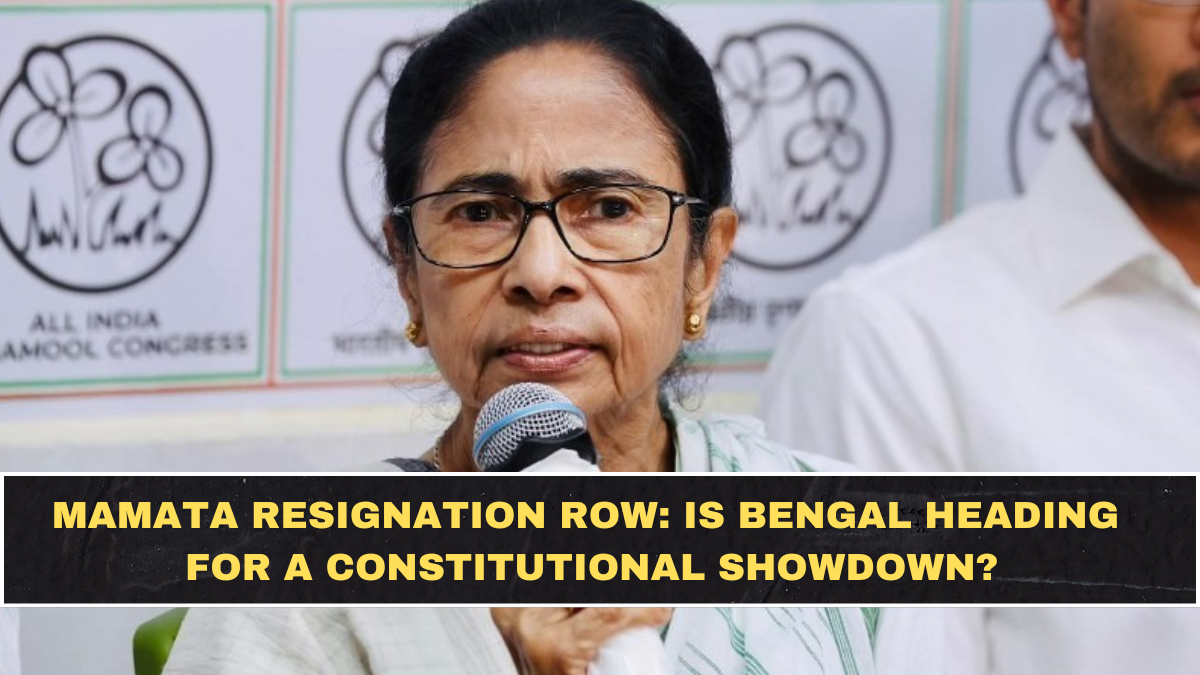
Mamata Banerjee’s resignation row has become the biggest political shock from Bengal because she has refused to accept the election defeat in a normal way. After the 2026 West Bengal Assembly results, the BJP secured a sweeping victory, while the Trinamool Congress was pushed far behind. NDTV reported that the BJP won 207 of the 294 seats, while the TMC was reduced to 80 seats.
Mamata has alleged that the election process was rigged and said she would not resign because, according to her, TMC did not truly lose. That claim may energise her supporters, but it creates a serious constitutional and political problem. A chief minister can question results and move legally, but power in a parliamentary system depends on majority support, not emotional rejection of the verdict.
What Makes This Row So Serious?
This is serious because the West Bengal Assembly has already been formally dissolved. Reports say Governor R N Ravi dissolved the Assembly on May 7, 2026, after the Assembly term ended and the election process was largely completed. The Election Commission had declared results for 293 out of 294 seats, with only Falta pending due to repolling.
Once the old Assembly is dissolved and a new set of MLAs is ready, the political game changes. The outgoing chief minister may continue for a short caretaker phase only to avoid a governance vacuum, but that is not the same as retaining power. The blunt reality is that a leader cannot permanently sit in office after losing majority just by saying the election was unfair.
| Issue | Why It Matters |
|---|---|
| Mamata refuses resignation | Creates a rare post-result standoff |
| BJP majority | Gives the winning side a clear claim to form government |
| Assembly dissolved | Ends the old House and clears transition |
| Falta repoll pending | Keeps one seat unresolved, but not the whole mandate |
| Legal challenge | TMC may fight results in court, not by holding office |
Can She Legally Stay In Power?
The legal position is not as simple as TV debates make it sound, but the direction is clear. Article 164 says the Chief Minister is appointed by the Governor, and ministers hold office during the Governor’s pleasure. Article 174 also gives the Governor power to dissolve the Legislative Assembly.
Legal experts cited in reports discussed possible short-term constitutional options if there is a governance gap before the new government takes oath. These include a caretaker arrangement, temporary appointment, or extreme constitutional steps if no workable transition is possible. But none of these options means a defeated chief minister gets to block the formation of a new government indefinitely.
What Is TMC Trying To Achieve?
TMC’s strategy looks political, legal and emotional at the same time. By refusing to resign, Mamata is trying to keep the allegation of election manipulation alive in public memory. This helps her avoid the image of a clean defeat and gives her party workers a reason to stay mobilised after a massive setback.
But this strategy has a serious weakness. If TMC has proof, the fight belongs in court, with evidence, seat-wise challenges and legal filings. If the party only keeps repeating that the mandate was stolen without proving it, the narrative may look like denial rather than resistance. That is the blind spot Mamata’s camp cannot afford to ignore.
What Happens Next?
The next stage will depend on how quickly the Governor moves with the formation of the new government. The new MLAs are expected to be sworn in, and the majority party will stake claim. If Mamata continues to resist, the conflict may shift to Raj Bhavan, courts and public protests.
Key things to watch now:
- New CM claim: BJP’s legislative leader may formally stake claim to form government.
- TMC legal move: The party may file election petitions or challenge specific results.
- Falta repoll: Repolling is scheduled for May 21, with the result expected on May 24.
- Law and order: Any post-result violence can make the crisis more serious.
- Governor’s action: Raj Bhavan’s next decision will shape the transition timeline.
Conclusion?
The Mamata resignation row is not just a Bengal drama; it is a test of democratic transfer of power. Mamata Banerjee has every right to challenge the result legally if she believes there was malpractice. But refusing to resign after losing majority support cannot become a substitute for constitutional process.
The hard truth is that politics rewards emotion, but government formation runs on numbers. If BJP has the majority and the Assembly transition is complete, Bengal will move toward a new government. Mamata’s real fight now is not to hold the chair by refusal, but to prove her allegations where they actually matter.
FAQs?
Why Is Mamata Banerjee Refusing To Resign?
Mamata Banerjee has refused to resign because she has alleged that the Bengal election process was rigged and that TMC did not genuinely lose. She has accused the Election Commission of bias and rejected the result politically. However, rejecting a result publicly is different from legally overturning it.
Can A Chief Minister Refuse To Resign After Losing?
A chief minister may refuse politically for some time, but they cannot continue indefinitely without majority support. In India’s parliamentary system, the government must command confidence in the Assembly. If the majority has clearly shifted, constitutional transition can move forward through the Governor.
Does The Falta Repoll Change The Bengal Result?
Falta matters because one Assembly seat is still pending, but it does not automatically change the wider result if one party already has a clear majority. The repoll can affect the final seat tally and local representation. It cannot by itself stop government formation unless the overall majority depends on it.
What Can TMC Do Now?
TMC can challenge the result legally, raise specific allegations with evidence, contest the Falta repoll and continue political protests. The strongest path is legal proof, not just public anger. If the party wants the verdict questioned seriously, it must move beyond slogans and present evidence in the proper forum.