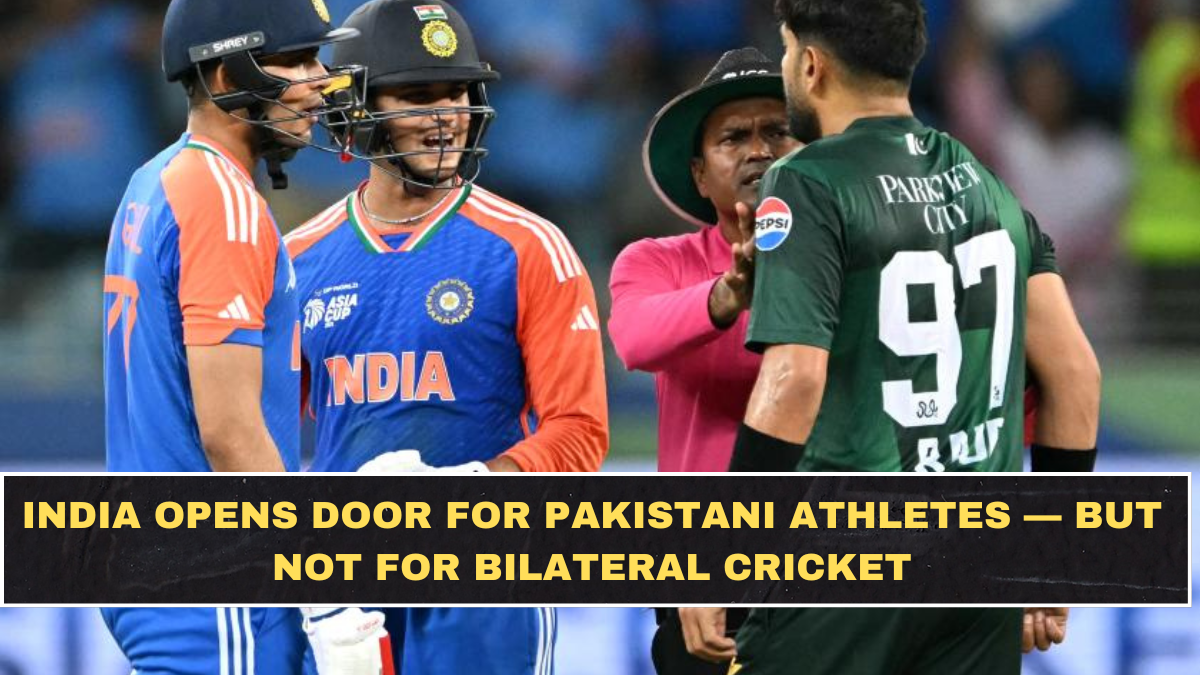
India’s latest sports policy on Pakistan has created a sharp but calculated distinction: Pakistani athletes can come to India for multilateral international events, but bilateral contests between India and Pakistan will remain blocked. The Sports Ministry has made it clear that Indian teams will not participate in competitions in Pakistan, and Pakistani teams will not be permitted to play bilateral events in India. However, international tournaments involving many countries will be treated differently.
This is not a small technical update. It directly affects cricket, Olympic-style events, global championships and India’s bigger ambition to become a major host of international sports. The policy tries to avoid isolating Indian athletes from global competitions while keeping political and security concerns firmly in place. In simple words, India is saying yes to global sport, but no to one-on-one sporting ties with Pakistan.
What Has India Actually Allowed?
The government’s position is that Pakistan’s athletes and teams can participate in multilateral events hosted in India if those events are governed by international sports bodies. That means events like world championships, Asian-level competitions, ICC-style tournaments or Olympic-linked events can still include Pakistani participation when required by tournament rules. India has also said it will follow international sporting practices and protect the interest of Indian sportspersons.
| Event Type | India’s Position | What It Means |
|---|---|---|
| Bilateral cricket series | Not allowed | No direct India vs Pakistan series |
| Bilateral events in India | Not allowed | Pakistani teams cannot come for one-on-one contests |
| Indian teams in Pakistan | Not allowed | India will not travel for bilateral competitions |
| Multilateral events in India | Allowed | Pakistani athletes can participate if part of global events |
| Global sports bodies | Accepted | India will follow international event practices |
Why Is Cricket Still The Biggest Issue?
Cricket is the emotional centre of this policy because India vs Pakistan is not just a match; it is politics, television money, security pressure and national sentiment packed into one event. India and Pakistan have not played a full bilateral cricket series since 2012–13, while their meetings have mostly happened in multi-team tournaments or neutral venues. Reuters noted that the new position continues this old freeze on bilateral cricket while allowing room for international events.
This means fans hoping for a normal India-Pakistan bilateral cricket series should stop fooling themselves for now. The policy does not open that door. It only prevents India from looking isolated in international sports while keeping the bilateral ban intact. That is a compromise, not a complete reset.
Why Would India Allow Multilateral Events?
India wants to host more global sports events, and blocking Pakistani athletes from every tournament could create problems with international federations. If India wants to be taken seriously as a host, it cannot easily reject athletes from one country when the event rules require open participation. That is why this policy is also about India’s global sporting image, not just India-Pakistan tension.
The practical reasons are clear:
- Indian athletes should not lose chances because of political deadlock.
- Global sports bodies expect host countries to follow event rules.
- India wants to strengthen its reputation as a major sports host.
- Multilateral participation reduces the risk of sporting isolation.
- The policy keeps diplomatic pressure separate from athlete opportunity.
Is This Sports Diplomacy Or Political Balancing?
Calling this pure sports diplomacy would be too generous. This is mainly political balancing. India is trying to avoid bilateral normalisation with Pakistan while still participating in global sporting systems. That is why the policy looks flexible on paper but remains strict where direct India-Pakistan engagement is concerned.
The smarter reading is this: India does not want Pakistan ties to block its sports ambitions, but it also does not want sport to look like a backdoor diplomatic thaw. For athletes, this creates a narrow but useful space. For cricket fans, it keeps the most wanted contest trapped inside tournament formats instead of full tours.
What Happens To Olympic And Non-Cricket Sports?
Non-cricket sports may feel the biggest practical impact. If India hosts international events in athletics, hockey, wrestling, shooting, badminton or Olympic-linked competitions, Pakistani athletes may be allowed when the event is multilateral. That avoids unnecessary trouble with global federations and keeps Indian athletes connected to competitive international calendars.
This matters because cricket often hijacks the entire India-Pakistan sports debate. Smaller sports cannot afford constant political disruption because athletes depend on ranking points, qualification events and exposure. The policy may not look emotional, but for Olympic sports it could prevent avoidable damage.
Conclusion: Is This A Smart Compromise?
India’s new sports policy is not a peace signal, and anyone selling it that way is exaggerating. It is a controlled compromise. India is keeping bilateral sporting ties with Pakistan frozen, especially in cricket, while allowing Pakistani participation in multilateral events where international rules and Indian athletes’ interests matter.
The policy may disappoint cricket fans, but it gives India a practical route for hosting global sports without creating unnecessary friction. The message is blunt: India will engage where the world requires it, but direct India-Pakistan sporting normalcy is still off the table. That is not emotion; that is strategy.
FAQs?
Can Pakistani Athletes Now Play In India?
Yes, Pakistani athletes can participate in multilateral international events hosted in India if the tournament structure includes many countries and follows global sports-body rules. This does not mean Pakistan can send teams for bilateral contests in India. The permission is limited and event-based.
Will India And Pakistan Play Bilateral Cricket Again?
No clear opening has been given for bilateral cricket. India’s policy continues to block direct India-Pakistan sporting engagements in each other’s countries. That means fans should not expect a normal bilateral cricket series unless the political position changes.
Why Are Multilateral Events Treated Differently?
Multilateral events are governed by international sports bodies, and host countries are expected to follow global participation rules. India also wants its athletes to compete without losing opportunities because of political restrictions. That is why global tournaments are being separated from bilateral contests.
What Does This Mean For Indian Athletes?
Indian athletes may benefit because the policy reduces the risk of missing international events only because Pakistan is also participating. It protects India’s sporting calendar while maintaining the government’s political position. For non-cricket sports, this could be especially important.