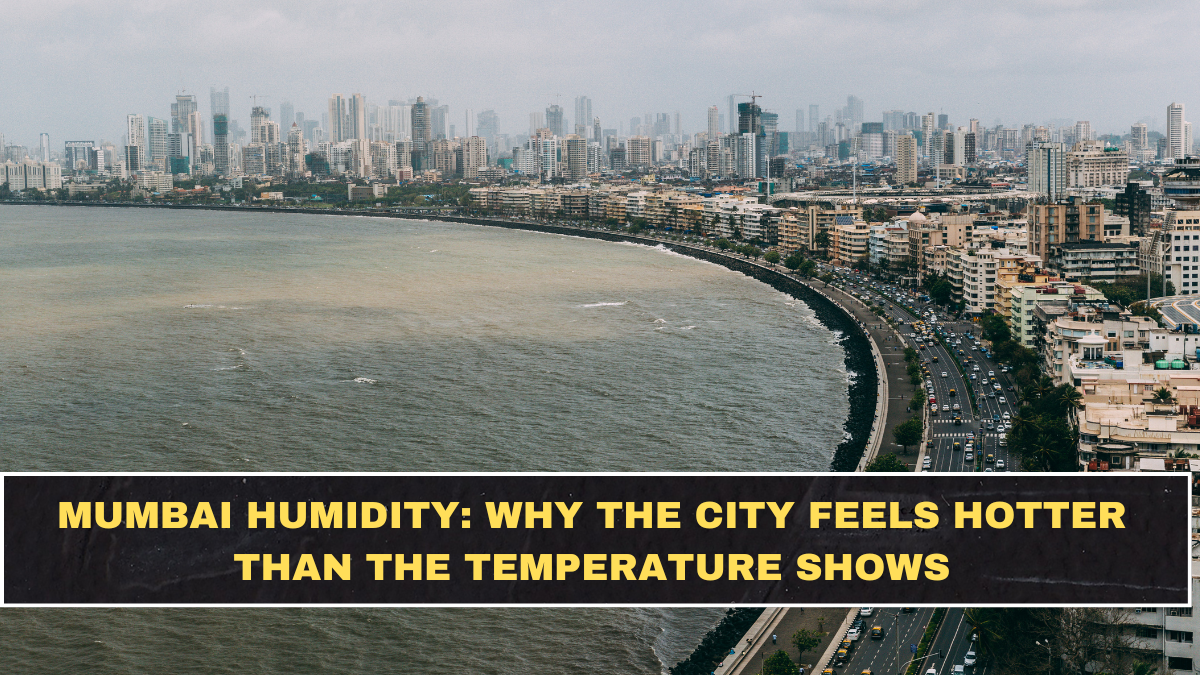
Mumbai’s temperature may look moderate on paper, but the city’s humidity makes the heat feel far more uncomfortable than the number suggests. Current conditions show Mumbai around 32°C, with highs near 33–34°C over the next few days, but humid coastal air can make the body feel much hotter than the official reading. The problem is not only temperature; it is how badly the body struggles to cool down in sticky air.
The India Meteorological Department’s Mumbai bulletin also forecast maximum and minimum temperatures around 35°C and 28°C, with mainly clear skies in the city and suburbs. That combination is uncomfortable because clear skies increase daytime heating, while high night temperatures stop the body from recovering properly. This is why Mumbaikars often feel drained even when the thermometer does not show “extreme heat.”
What Makes Mumbai’s Humidity So Brutal?
Mumbai is a coastal city, so the Arabian Sea constantly influences its weather. Westerly winds from the sea can reduce peak temperatures, but they also bring moisture into the air. Times of India reported that westerly winds recently gave partial relief from extreme heat, yet “feels-like” temperatures had earlier reached 45–50°C during the hot spell.
| Weather Factor | Mumbai Situation | Why It Feels Worse |
|---|---|---|
| Actual temperature | Around 33–35°C | Looks manageable on paper |
| Humidity | High coastal moisture | Sweat evaporates slowly |
| Night temperature | Around 28°C | Body gets less recovery time |
| Sea breeze | Gives partial relief | Can also increase stickiness |
| Suburbs | Hotter in eastern/interior pockets | Sea breeze reaches later |
The real villain is sweat evaporation. In dry heat, sweat evaporates faster and cools the body. In humid heat, the air is already loaded with moisture, so sweat stays on the skin and cooling slows down. That is why Mumbai’s 34°C can feel more irritating than a hotter but drier city.
Why Are Suburbs Feeling Worse Than South Mumbai?
Mumbai does not heat evenly. Coastal and western parts often get sea breeze earlier, while eastern and interior suburbs can stay hotter for longer. Times of India reported that interior and eastern suburbs such as Kalyan, Dombivli and Karjat may see temperatures rising toward 39–40°C when hot and dry northerly winds return after May 8.
This is where many people misunderstand Mumbai weather. Saying “Mumbai is only 34°C” ignores local heat pockets, concrete-heavy neighbourhoods, traffic, weak ventilation and delayed sea breeze. Thane, Navi Mumbai and far suburban belts can feel completely different from Colaba or Bandra on the same day. That difference matters for commuters, outdoor workers and school children.
Is Humidity More Dangerous Than Dry Heat?
Humidity can be dangerous because it blocks the body’s natural cooling system. Scroll, citing IndiaSpend, reported that humid heat weakens the body’s ability to cool itself through sweating, which increases health stress during hot summers. This is why heat warnings should not focus only on maximum temperature; “feels-like” heat can be more important for real discomfort.
Watch these warning signs seriously:
- Heavy sweating but no relief from heat
- Dizziness, headache or unusual weakness
- Fast heartbeat or breathlessness outdoors
- Muscle cramps after travel or work
- Nausea, confusion or fainting feeling
- Poor sleep because nights stay hot and sticky
The blunt truth is that people act careless because Mumbai does not always look like a classic heatwave city. That is stupid. Humid heat can still exhaust the body, especially for senior citizens, children, delivery workers, construction workers and people travelling in crowded trains or buses.
How Can Mumbaikars Handle This Weather Better?
The first rule is to stop judging risk only by temperature. If the day feels sticky and windless, treat it as a heat-stress day even if the official maximum is below 36°C. Drink water regularly, avoid heavy outdoor activity in the afternoon and choose breathable clothing that allows sweat to evaporate faster.
Practical steps that actually help:
- Carry water during local train and bus travel
- Avoid dark, tight synthetic clothes in daytime
- Use ORS or lemon water if sweating heavily
- Keep rooms ventilated before sleeping
- Avoid heavy oily meals during peak heat
- Check on elderly family members during hot nights
The uncomfortable point is simple: AC is not a full solution if daily habits are reckless. Poor hydration, skipped meals, long commutes and ignoring early symptoms make humid heat worse. Mumbai’s weather demands small daily discipline, not dramatic panic.
Conclusion: Is Mumbai’s Heat Worse Than It Looks?
Yes, Mumbai’s heat often feels worse than the official temperature because humidity changes how the body experiences summer. A 33–35°C day can feel oppressive when moisture is high, nights stay warm and sea breeze timing varies across the city. That is why “feels-like temperature” matters more than the basic thermometer reading.
The smartest response is not panic, but awareness. Mumbai’s coastal climate will keep bringing sticky days before the monsoon settles in. People who track humidity, avoid peak heat, hydrate properly and respect early symptoms will handle this weather better than those who only look at the maximum temperature and assume everything is normal.
FAQs
Why Does Mumbai Feel Hotter Than The Actual Temperature?
Mumbai feels hotter because high humidity slows sweat evaporation, making it harder for the body to cool down. Even when the temperature is around 33–35°C, the “feels-like” heat can be much higher due to moisture in the air.
What Is Mumbai’s Current Weather Forecast?
Current conditions show Mumbai around 32°C, with sunny weather and highs near 33–34°C over the next few days. The IMD bulletin also forecast temperatures around 35°C maximum and 28°C minimum for Mumbai city and suburbs.
Why Are Mumbai Suburbs Hotter Than Coastal Areas?
Suburbs can feel hotter because sea breeze often reaches them later, and concrete-heavy areas trap heat. Eastern and interior belts such as Kalyan, Dombivli and Karjat may see higher temperatures than coastal parts when hot winds return.
Can Humidity Cause Heat Illness?
Yes, high humidity can increase heat stress because the body cannot cool itself efficiently through sweating. People should watch for dizziness, weakness, headache, cramps, nausea and breathing discomfort during sticky hot days.