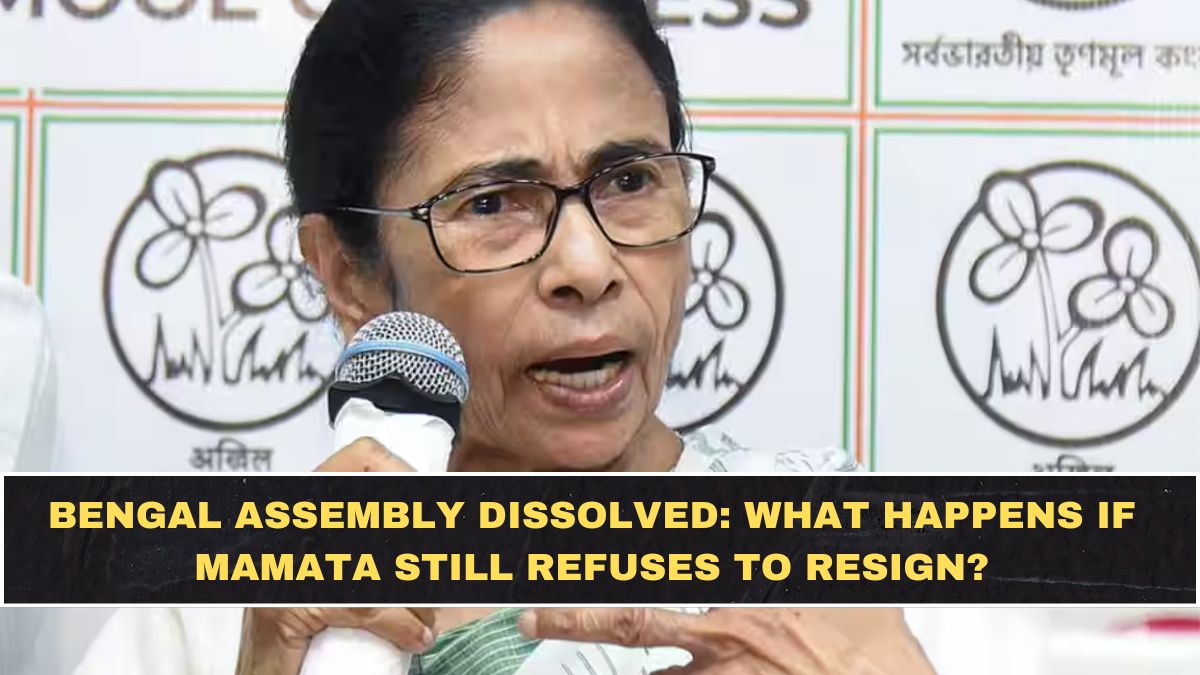
West Bengal politics has moved into a tense phase after Governor R N Ravi formally dissolved the state Assembly following the 2026 election process. The drama became bigger because Mamata Banerjee reportedly refused to resign after rejecting the election outcome. This is not just another post-result political fight; it is a test of how power transfers when a defeated chief minister refuses to step aside.
Reports say the Assembly’s term ended after midnight on May 7, and the Governor used constitutional powers to dissolve the House. The Election Commission had already declared results for 293 of 294 seats, while Falta remained pending because of a scheduled repoll. That means the old Assembly has ended, a new mandate is almost complete, and the next government formation process has begun.
What Exactly Did The Governor Do?
The Governor dissolved the existing West Bengal Legislative Assembly under Article 174 of the Constitution, which allows the Governor to dissolve the Assembly. This step clears the formal path for the newly elected MLAs to be sworn in and for the new government to take charge. In normal politics, this is routine after an election, but Mamata’s refusal to resign has made it explosive.
Article 164 is also important here because the Chief Minister is appointed by the Governor, and ministers hold office during the pleasure of the Governor. In simple words, a chief minister cannot continue politically if the majority and constitutional process move against them. The uncomfortable part for TMC is that moral arguments may create headlines, but numbers and constitutional procedure decide government formation.
| Key Point | What It Means |
|---|---|
| Assembly dissolved | Old House has formally ended |
| Mamata refuses resignation | Political standoff has intensified |
| New MLAs elected | Government formation process can move ahead |
| Falta repoll pending | One seat still remains unresolved |
| Governor’s role | Ensures constitutional transition of power |
Can Mamata Still Remain Chief Minister?
Mamata Banerjee can protest, challenge results legally, and refuse to concede politically, but staying in power without a majority is a different matter. Indian parliamentary democracy works on majority support in the Assembly, not personal refusal. If a leader loses the mandate, the expected constitutional convention is resignation.
Legal experts cited in recent reporting said possible remedies include inviting the outgoing CM as caretaker, appointing another temporary arrangement, or, in an extreme short-gap situation, considering constitutional options to avoid a governance vacuum. But that does not mean a defeated government can permanently block the winner from forming government. Refusal may delay optics, not overturn arithmetic.
Why Does Falta Still Matter?
Falta matters because it is the one seat where the result has not been completed like the rest of Bengal. Reports say repolling in Falta is scheduled for May 21, with the result expected on May 24. The Election Commission lifted the Model Code of Conduct across Bengal except in Falta, which keeps that constituency politically alive even after the broader result.
But let’s be clear: one pending seat usually cannot reverse a massive mandate if the winning party already has a clear majority. It can matter symbolically, legally, and locally, but it does not automatically stop government formation. The bigger battle is now about legitimacy, legal challenge and political messaging.
What Happens Next In Bengal?
The next few days are crucial because the new Assembly and new government must be formed smoothly. The Governor can move ahead with constitutional steps, including the swearing-in of newly elected MLAs and inviting the leader who commands majority support. If Mamata continues to resist, the conflict may shift from political speeches to courts and Raj Bhavan procedure.
Watch these developments closely:
- Swearing-in process: Newly elected MLAs may be sworn in through a pro-tem speaker.
- Government claim: The majority party will formally stake claim to form government.
- TMC legal move: Mamata’s party may challenge results in court.
- Falta repoll: The pending seat will keep one election chapter open.
- Post-poll violence: Security and law-and-order may become a major national issue.
Conclusion?
The Bengal Assembly dissolution has turned a political defeat into a constitutional showdown. Mamata Banerjee’s refusal to resign may energise her supporters and keep the controversy alive, but it cannot replace the formal election result or the Assembly process. In democracy, protest has space, but power depends on numbers.
The real test now is whether Bengal gets a clean transfer of power or enters a prolonged legal and political confrontation. If Mamata challenges the result, that is her right. But if she tries to hold office despite losing majority support, the Governor’s constitutional role becomes central, and Bengal’s political crisis becomes a national case study.
FAQs?
Why Was The West Bengal Assembly Dissolved?
The Assembly was dissolved because its term had ended and the election process had produced a new set of elected MLAs. The Governor used powers under Article 174 to formally dissolve the old House. This is required to clear the way for the new Assembly and government formation.
Can Mamata Banerjee Refuse To Resign?
She can refuse politically and challenge the result legally, but a chief minister cannot continue indefinitely without majority support. Under India’s parliamentary system, the leader must command the confidence of the Assembly. If the mandate has clearly shifted, the constitutional process moves toward a new government.
Does The Falta Repoll Stop Government Formation?
The Falta repoll keeps one seat pending, but it does not automatically stop government formation if a party already has a majority. The seat still matters for the final Assembly tally and local representation. However, the larger government formation process can continue if the majority position is clear.
What Can TMC Do Next?
TMC can challenge the election result in court, raise allegations before constitutional bodies, and continue political protests. It can also contest the Falta repoll and build a public narrative around alleged irregularities. But legal proof, not political anger, will decide whether any result is overturned.