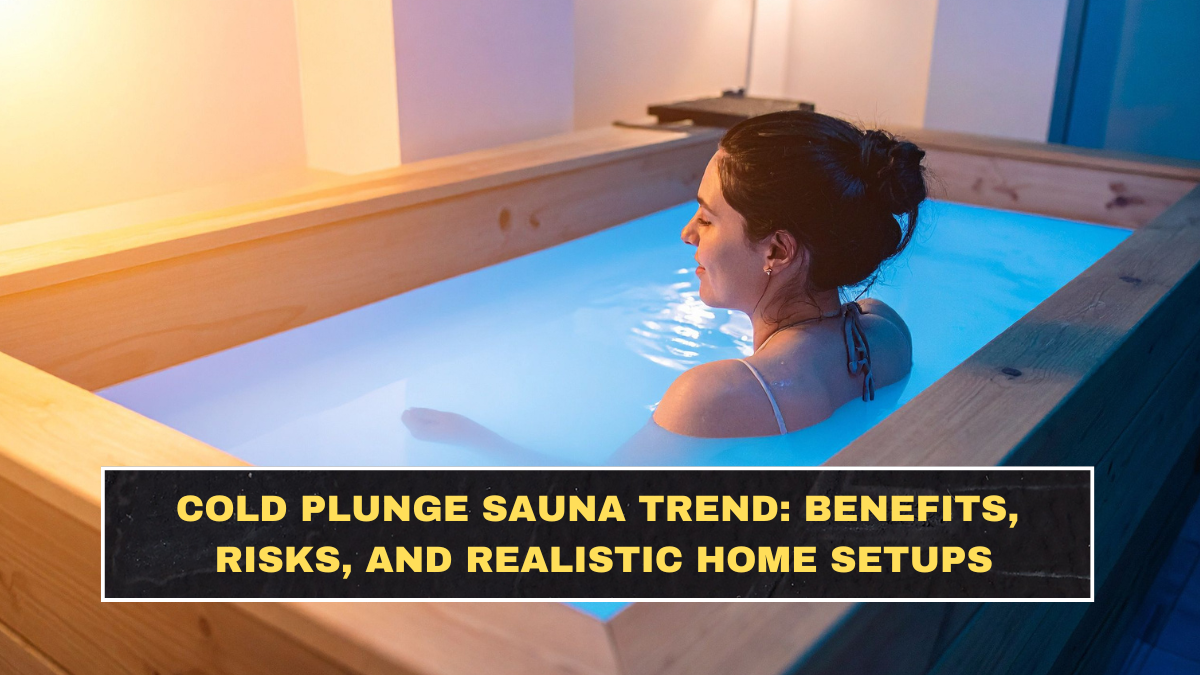
Cold plunge and sauna routines have gone from niche recovery practice to mainstream wellness trend because they promise something people love buying: a ritual that feels intense, disciplined, and health-focused. The usual idea is simple. You expose the body to heat in a sauna, then switch to cold water through an ice bath or plunge. That pattern is commonly called contrast therapy, and recent wellness coverage describes it as one of the most visible recovery habits spreading through gyms, spas, and home wellness setups in 2026.
The problem is that this trend gets sold with way too much certainty. Some benefits are plausible and supported to a degree, especially around short-term recovery, soreness, mood, and stress response, but many claims are still broader than the evidence justifies. A 2025 systematic review on cold-water immersion found time-dependent effects on inflammation, stress, immunity, sleep quality, and quality of life, but it did not turn cold plunging into a miracle intervention.
What Is a Cold Plunge Sauna Routine?
A cold plunge sauna routine usually means spending time in dry heat first, then moving into cold water, and sometimes repeating the cycle more than once. In popular practice, articles and recovery guides often describe something like 10 to 15 minutes in a sauna followed by 2 to 5 minutes in cold water, though exact timing varies a lot. The reason people like the routine is that it creates a dramatic contrast in body sensation and gives the experience a strong “reset” feeling.
The physiological idea behind it is that heat causes vasodilation while cold causes vasoconstriction, creating what some experts describe as a kind of vascular workout. That sounds impressive, and it may help explain why users report feeling more alert, refreshed, and less stiff afterward. But buyers need to stop pretending every intense feeling equals proven health transformation. It does not.
What Benefits Are Actually Realistic?
The most realistic benefits are temporary muscle soreness relief, a sense of improved recovery, reduced stress, better mood, and possibly improved sleep for some people. Mayo Clinic Health System says cold plunging may help with post-exercise recovery, mood, and nervous system balance, while Cleveland Clinic notes possible help with sore muscles, focus, and cooling down after exertion.
Sauna use also has support behind it. A 2026 health article summarizing established sauna research noted benefits around stress relief, sore muscle comfort, heart health, and sleep, while broader contrast-therapy coverage points to circulation and recovery as the main reasons people keep doing these routines.
That said, there is a difference between “may help” and “guaranteed upgrade.” Prevention’s late-2025 coverage, drawing on a 2025 review, said cold plunges may improve stress, immunity, and sleep quality, but more research is still needed. So the smarter conclusion is that the trend has some real basis, but it is still being oversold by people who want everything to sound life-changing.
What Are the Main Risks?
The risks are not small, and people who treat this trend casually are being reckless. Mayo Clinic warns that sudden cold-water immersion can trigger a cold shock response, including gasping, hyperventilation, and rises in heart rate and blood pressure. Cleveland Clinic also warns against staying in a cold plunge too long and specifically mentions a five-minute upper limit in its consumer guidance.
These risks matter more for people with heart conditions, uncontrolled blood pressure issues, respiratory problems, or poor cold tolerance. General contrast-therapy guidance also flags unstable cardiovascular conditions, Raynaud’s disease, pregnancy, and active illness or wounds as situations where caution or avoidance is sensible. Even when the trend is useful, it is still a stressor on the body. That is the point of it. So pretending everyone should do it is just dumb.
What Does a Realistic Home Setup Look Like?
Most people do not need a luxury spa-style installation. A realistic home setup is simply one reliable heat source and one controlled cold option. That could mean a home sauna plus a cold tub, or even a sauna session followed by a cold shower if space and budget are limited. The trend becomes stupid when people assume they need influencer-level equipment before they can benefit at all.
| Setup Level | Heat Option | Cold Option | Best For |
|---|---|---|---|
| Basic | Gym or community sauna | Cold shower | Beginners testing the routine |
| Moderate | Home infrared or dry sauna | Portable plunge tub | Regular users with limited space |
| Premium | Dedicated outdoor sauna | Chiller-based plunge | High-frequency enthusiasts |
This is the real buying logic: start simple, see whether you will actually use the routine, then spend more only if the habit sticks. Most people quit trends long before they recover the cost of premium wellness gear.
Who Should Be Careful Before Trying It?
People with cardiovascular issues, uncontrolled hypertension, Raynaud’s disease, respiratory concerns, pregnancy, open wounds, or active infections should be much more careful or avoid it entirely unless cleared by a clinician. That is not fearmongering. It is basic risk management based on the known stress response to extreme temperatures.
Even healthy people should not jump straight into long cold plunges. Safer guidance is to start with short exposure, avoid plunging alone, and warm up gradually afterward. Health.com’s guidance on cold plunging and contrast baths also stresses that these practices are not for everyone, especially people with sensitive skin, neuropathy, open wounds, or chronic conditions.
Is the Cold Plunge Sauna Trend Worth Following?
It can be worth trying if you want a structured recovery ritual and you are realistic about what it can and cannot do. The experience may help with soreness, mood, stress relief, and mental reset, and that alone can make it useful. But if you think it will replace sleep, smart training, hydration, or good nutrition, then you are falling for wellness theater.
The best version of this trend is simple: use it as a support habit, not a miracle cure. The worst version is using extreme temperature exposure as a personality trait while ignoring the basics that actually drive recovery.
Conclusion?
Cold plunge and sauna routines are trending because they feel powerful, disciplined, and different from ordinary self-care. Some of the appeal is deserved. There is real support for short-term recovery, stress response, and mood-related benefits, especially when used sensibly. But the trend is still oversold, and the risks are real enough that people with health issues should not treat it like a casual social-media challenge. Start simple, keep exposure moderate, and stop confusing intensity with proof.
FAQs
Does contrast therapy really help recovery?
It may help with soreness, circulation, and how recovered you feel, especially after hard training, but the evidence is supportive rather than magical.
How long should a beginner stay in a cold plunge?
Consumer medical guidance commonly points to short exposure, and Cleveland Clinic specifically warns not to go beyond five minutes.
Can you do cold plunge and sauna at home?
Yes. Many people can start with a gym sauna and a cold shower or a simple portable plunge setup rather than expensive full installations.
Who should avoid cold plunge sauna routines?
People with cardiovascular problems, Raynaud’s disease, pregnancy, uncontrolled blood pressure issues, or other relevant medical concerns should be especially cautious.