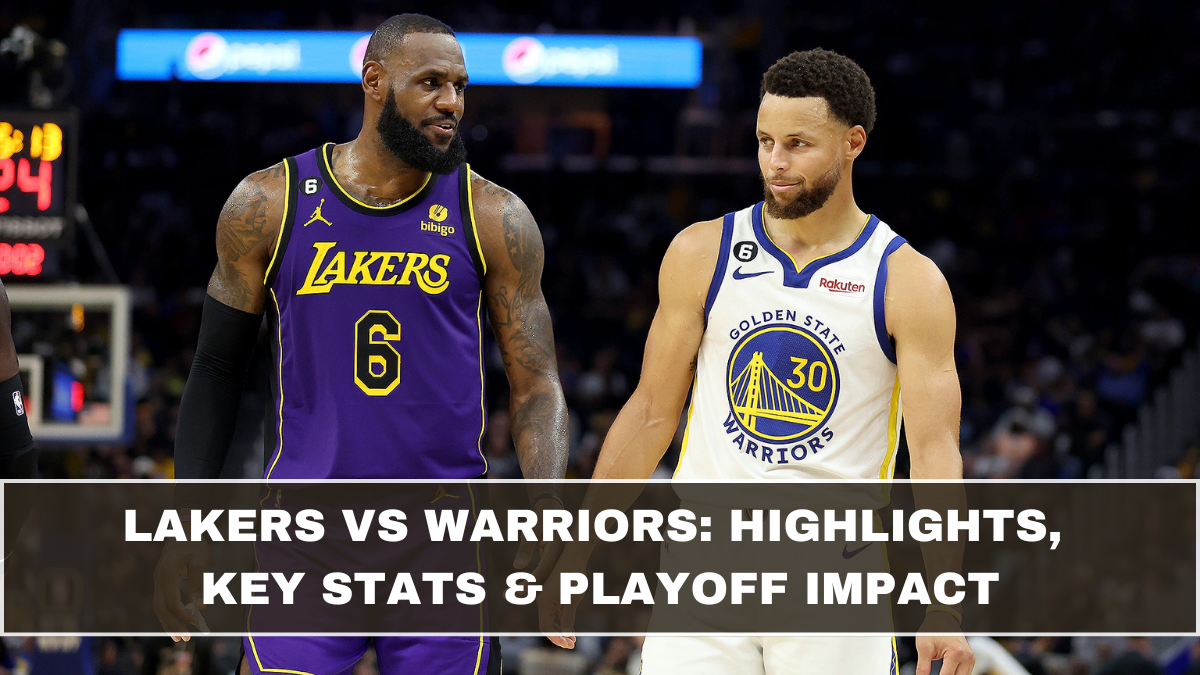
The latest Lakers vs Warriors result delivered exactly what NBA fans expected — intensity, star power, and major playoff implications. Whenever these two Western Conference rivals meet, it feels bigger than a regular-season game. This matchup was no different, with momentum swings, clutch shooting, and postseason positioning on the line.
Here’s a full recap of the NBA highlights, key stats, and what the result means moving forward.

Game Recap: How It Unfolded
The game started at a playoff pace, with both teams trading early runs. The Los Angeles Lakers leaned on their inside presence and transition offense, while the Golden State Warriors responded with perimeter shooting and ball movement.
By halftime, the score remained tight, reflecting the evenly matched tempo. The third quarter proved pivotal, as one side created separation through defensive stops and fast-break conversions.
In the fourth quarter, late-game execution became the difference. Clutch free throws, smart possessions, and a key defensive stand sealed the final outcome.
Top Performers and Key Stats
Star performances defined the night.
For the Lakers, their leading scorer attacked the paint consistently, drawing fouls and finishing through contact. Rebounding also played a significant role, with second-chance points shifting momentum.
The Warriors countered with perimeter efficiency and spacing. Their primary scorer knocked down multiple three-pointers in critical stretches, keeping the game within reach.
Key statistical factors included:
• Field goal percentage differential
• Three-point shooting efficiency
• Turnovers leading to fast-break points
• Bench scoring impact
The box score reflected how slim the margin was — a few possessions ultimately determined the Lakers vs Warriors result.
Defensive Adjustments That Changed the Game
Defense often decides matchups between elite teams. One of the biggest adjustments came in limiting open perimeter looks late in the game. Rotations tightened, closeouts improved, and contested shots increased in the final minutes.
Interior defense also played a major role, particularly in protecting the rim and forcing difficult finishes. These defensive sequences slowed offensive rhythm and shifted control.
What This Means for the Western Conference Playoff Race
With the Western Conference standings tightly packed, every win carries extra weight. This result could impact:
• Seeding between the 4th and 8th spots
• Potential play-in tournament positioning
• Head-to-head tiebreaker scenarios
Both teams remain firmly in the playoff race, but consistency down the stretch will determine whether they secure direct postseason berths or face the uncertainty of the play-in format.
Momentum also matters psychologically. Winning high-stakes matchups like this can influence confidence heading into the final stretch of the season.
Looking Ahead
The Lakers will aim to build on this performance by maintaining defensive intensity and rebounding dominance. Meanwhile, the Warriors will likely focus on reducing turnovers and tightening late-game execution.
If these teams meet again — especially in a playoff series — expect another high-intensity battle shaped by star performances and small strategic adjustments.
One thing is certain: whenever the Lakers and Warriors share the court, the NBA spotlight follows.
FAQs
Who won the latest Lakers vs Warriors game?
The final result reflected a tightly contested matchup, decided in the closing minutes.
Who led the game in scoring?
Both teams had standout offensive performances, with their primary stars leading the scoring charts.
How does this affect playoff standings?
The result impacts Western Conference seeding and could influence play-in positioning depending on upcoming games.
Could these teams meet in the playoffs?
Yes. Given their current standings, a postseason matchup remains a realistic possibility.
What was the biggest factor in the game?
Late-game execution, defensive stops, and turnover management ultimately shaped the outcome.