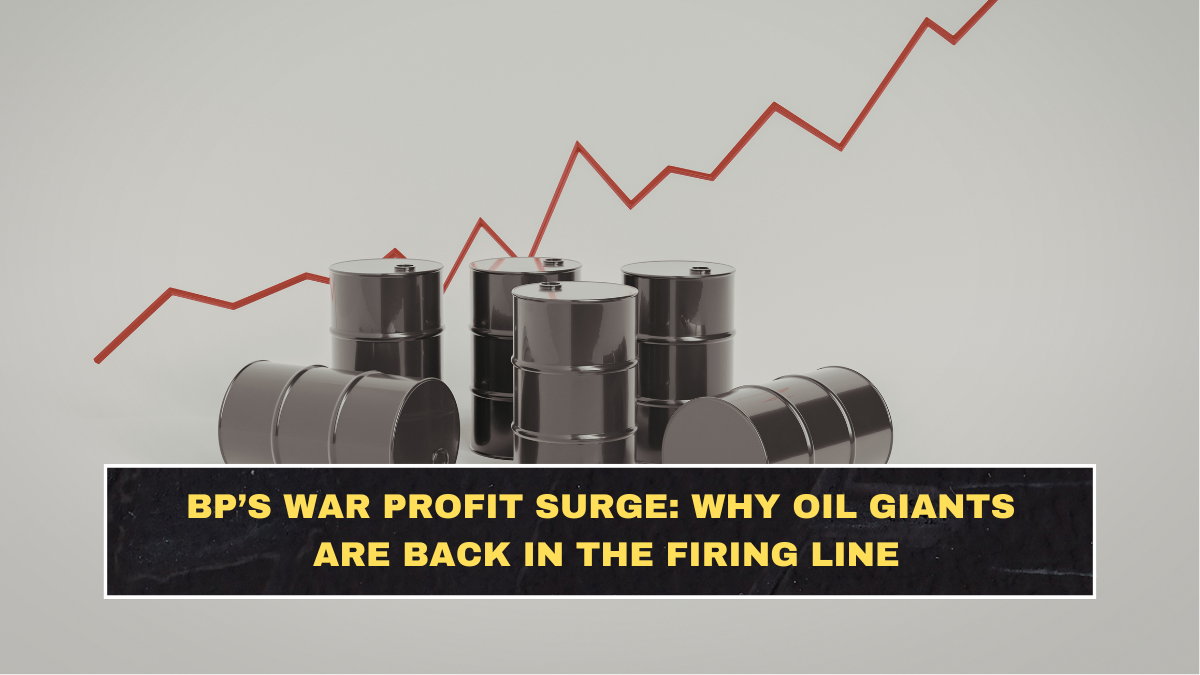
BP is back in the political firing line after reporting a sharp profit jump during a global energy crisis linked to the Iran war. The company posted first-quarter underlying replacement cost profit of $3.2 billion, more than double the $1.38 billion it made in the same period last year. That result was also ahead of market expectations, making the numbers even harder for critics to ignore.
The anger is not only about BP making money. Oil companies are expected to profit when prices rise. The real issue is timing and optics. When households, airlines, factories, and governments are worried about fuel costs, a major oil company reporting a profit surge looks politically toxic. Critics argue that energy firms are benefiting from conflict-driven volatility while ordinary people face higher bills and economic uncertainty.
What Drove BP’s Profit Jump?
BP’s profit surge was mainly driven by stronger oil trading performance as the Iran war pushed crude markets into turmoil. Reuters reported that BP’s first-quarter profit beat expectations by around 20%, helped by high oil trading revenues linked to the conflict. The company’s oil trading division performed strongly, even while some other areas, including gas, low carbon, and oil operations, were weaker than expected.
This is an important detail. BP did not simply make more money because it pumped more oil. A big part of the profit came from trading in a volatile market. When prices move sharply, companies with strong trading desks can make money from buying, selling, hedging, and timing energy flows. That is legal business activity, but politically it becomes explosive when the volatility is tied to war.
| BP Result / Issue | What Happened | Why It Matters |
|---|---|---|
| Q1 2026 profit | $3.2 billion | More than doubled from last year |
| Q1 2025 profit | $1.38 billion | Shows scale of profit jump |
| Main driver | Oil trading | Volatility helped earnings |
| Net debt | $25.3 billion | BP still has balance-sheet pressure |
| Public criticism | Windfall-tax demands | War-linked profits are politically sensitive |
Is BP Really Profiting From War?
Bluntly, yes — but the wording needs precision. BP is not being accused of starting the war. The criticism is that the company’s trading and oil-linked earnings improved because the war made energy markets more volatile and pushed prices higher. The Guardian reported that BP’s profits more than doubled as oil and gas prices rose during the Iran war, with climate and social justice groups accusing energy companies of benefiting from global suffering.
That does not automatically mean BP did anything illegal or unusual. Oil majors are designed to make money in high-price environments. The uncomfortable question is whether governments should allow companies to keep extraordinary gains caused by global crisis while consumers pay more. That is where the windfall-tax debate becomes unavoidable.
Why Are Windfall Taxes Being Discussed Again?
Windfall taxes come back whenever companies make unusually large profits because of events outside their own control. In this case, critics argue that BP’s profit jump came from geopolitical conflict and energy disruption, not from brilliant innovation or better service to consumers. That makes the profits politically vulnerable.
The argument for a windfall tax is simple: if war-driven prices raise company profits while citizens face higher bills, governments should take a larger share and use it for public relief. The argument against it is also serious: heavy taxes can discourage investment, weaken energy supply, and push companies to move capital elsewhere. Anyone pretending this is a one-sided issue is being lazy.
Why Is BP’s Debt Still A Problem Despite Big Profits?
BP’s situation is not as clean as “huge profit, no problems.” Reuters reported that BP’s net debt rose to $25.3 billion, up from about $22 billion in the previous quarter, largely because of weaker operating cash flow and wider market pressures. The company also suspended its share buyback programme to focus on debt reduction.
This matters because profit headlines do not tell the full balance-sheet story. A company can report strong quarterly earnings and still face pressure from debt, capital spending needs, investor demands, and long-term strategy problems. BP’s critics focus on the profit number, while investors also look at cash flow, debt, dividends, buybacks, and future production.
How Does BP’s Strategy Make The Backlash Worse?
BP’s strategy makes the backlash sharper because the company has been moving back toward oil and gas after earlier promises around the energy transition. Reuters noted that BP’s latest report came under new CEO Meg O’Neill, who is leading a strategic return to oil and gas after less successful renewable-energy moves. That shift may please some investors, but it gives climate critics more ammunition.
The political problem is obvious. When a company slows its green transition and then posts big profits during a fossil-fuel price shock, critics see confirmation that the old energy model is still winning. BP can argue that the world still needs reliable oil and gas supply. Critics can argue that dependence on oil is exactly why wars and chokepoints keep hurting consumers.
What Does This Mean For Ordinary People?
For ordinary people, BP’s profit report matters because it shows how energy shocks move through the economy. Higher crude prices can affect petrol, diesel, aviation fuel, shipping, food distribution, and manufacturing. Even people who never think about Brent crude can feel the result through travel costs, grocery prices, electricity bills, and inflation.
The harsh truth is that consumers usually absorb energy shocks faster than they benefit from energy-company profits. Shareholders may benefit from dividends or higher share prices, but most households simply face higher costs. That gap is why these profit reports create public anger, especially during conflict.
Could BP Face More Political Pressure?
Yes, and it probably will. If oil prices stay high and household energy bills rise, politicians will find it difficult to ignore profit jumps at major oil companies. The Guardian reported that campaigners have already intensified calls for stronger windfall taxes and emergency support for affected families after BP’s latest results.
BP’s defence will be that energy companies need strong balance sheets to invest, maintain supply, and manage unstable markets. That argument is not fake, but it is incomplete. The public will ask why companies deserve protection when times are hard but face limited restraint when crisis creates huge upside.
Conclusion
BP’s profit surge is not just a business story. It is a political, economic, and moral argument wrapped inside an earnings report. The company made $3.2 billion in first-quarter profit, helped by oil trading strength during Iran-war-driven market volatility. That is good news for BP’s financial performance, but terrible optics during a global energy shock.
The blunt takeaway is this: oil giants win when volatility rises, while ordinary people often pay more before they see any benefit. BP may argue it is doing its job in a difficult market. Critics will argue that war-linked profits should not be treated like normal business success. Both sides know this fight is not over.
FAQs
Why did BP’s profits rise so sharply?
BP’s profits rose mainly because oil prices and trading volatility increased during the Iran war. Its oil trading business performed strongly, helping the company report $3.2 billion in first-quarter profit.
What is underlying replacement cost profit?
Underlying replacement cost profit is BP’s preferred profit measure, similar to adjusted net income. It removes some inventory and one-off effects to show how the business performed operationally.
Why are people demanding a windfall tax on BP?
Critics want a windfall tax because BP’s profits rose during a crisis that is making energy more expensive for consumers. They argue that extraordinary crisis-driven profits should help fund public relief.
Does BP’s profit mean the company has no financial problems?
No. BP still reported net debt of about $25.3 billion and has suspended share buybacks to focus on debt reduction. Strong profit does not automatically mean the company has no balance-sheet pressure.