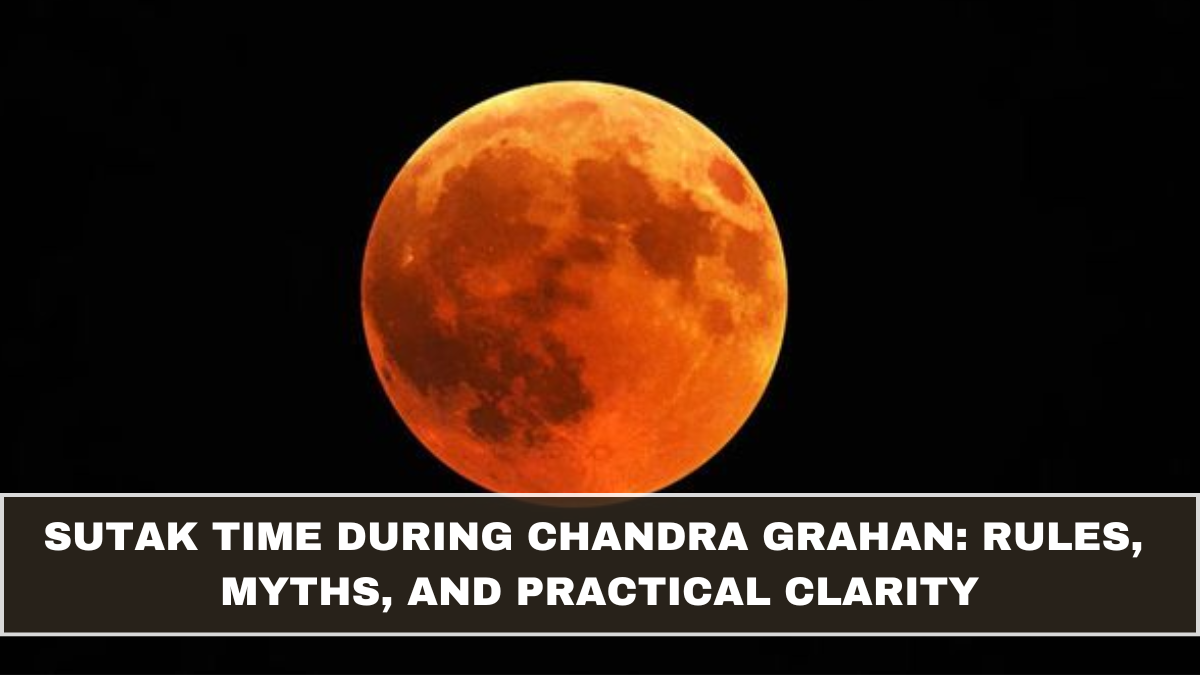
Sutak is a traditional period observed by many people before a Chandra Grahan (lunar eclipse). It is generally considered a time when certain activities are avoided and spiritual practices are followed. The concept comes from Hindu traditions and is associated with eclipse observances mentioned in religious texts and regional customs.
Understanding what Sutak time means, when it begins, and what practices are commonly followed helps clarify its significance and removes common confusion surrounding eclipse-related beliefs.
What Is Sutak Time?
Sutak refers to a specific period observed before an eclipse when certain religious restrictions are followed by many devotees. In traditional practice, it is regarded as a time for prayer, reflection, and avoiding routine activities considered inauspicious.
For a lunar eclipse, Sutak is traditionally observed several hours before the start of the eclipse and ends after the eclipse concludes. The exact duration may vary depending on religious traditions and regional beliefs.
The observance is mainly spiritual and cultural, and practices differ across communities.
When Does Sutak Apply During Chandra Grahan?
Sutak is generally observed only in regions where the lunar eclipse is visible. If the eclipse cannot be seen from a specific location, many traditions do not consider Sutak applicable.
The period typically begins before the eclipse phase starts and continues until the eclipse ends. Devotees rely on Panchang timings and official eclipse schedules to determine when the observance begins and concludes.
Regional customs and personal beliefs play a major role in how strictly Sutak is followed.
Common Rules Followed During Sutak
During Sutak time, some people avoid cooking, eating, or starting new activities. Many households keep food covered or prepare meals before the Sutak period begins.
Religious practices such as chanting, meditation, and prayer are commonly observed. Some devotees also avoid temple visits during the eclipse and perform purification rituals after the event.
These practices are followed as part of traditional beliefs and vary based on individual faith and regional customs.
Sutak Do’s and Don’ts Explained
Sutak observances focus on maintaining spiritual discipline and mindfulness.
Commonly followed practices include prayer, mantra chanting, and maintaining a calm environment. After the eclipse ends, some people take a bath and clean their surroundings as a symbolic purification process.
However, practices differ widely, and not all communities follow the same rules. Many modern observers treat Sutak as a cultural tradition rather than a strict requirement.
Myths and Practical Understanding of Sutak
There are several misconceptions about Sutak that often create confusion. Some people view it as a mandatory rule, while others treat it as a symbolic observance.
From a scientific perspective, a lunar eclipse is an astronomical event caused by Earth’s shadow covering the Moon. The restrictions associated with Sutak are based on cultural and religious traditions rather than scientific necessity.
Understanding the difference between tradition and astronomy helps individuals make informed decisions about observance.
Cultural Importance of Sutak Observance
Sutak reflects the deep connection between celestial events and spiritual practices in traditional Hindu culture. It encourages reflection, discipline, and mindfulness during rare astronomical events.
For many families, observing Sutak strengthens cultural continuity and religious identity. At the same time, practices have evolved over time, and observance varies widely in modern society.
Conclusion
Sutak time during Chandra Grahan is a traditional observance followed by many people before and during a lunar eclipse. It involves spiritual practices, temporary restrictions, and cultural rituals based on regional customs and personal beliefs. Understanding its meaning, rules, and practical aspects provides clarity about its significance while distinguishing tradition from scientific explanation.
FAQs
What is Sutak time during Chandra Grahan?
Sutak is a traditional period observed before a lunar eclipse when some people follow spiritual practices and temporary restrictions.
Does Sutak apply everywhere?
Many traditions consider Sutak applicable only in regions where the eclipse is visible.
What activities are avoided during Sutak?
Some people avoid cooking, eating, or starting new activities and focus on prayer or meditation.
Is Sutak scientifically required?
No, Sutak is based on cultural and religious traditions rather than scientific necessity.
When does Sutak end?
Sutak generally ends after the lunar eclipse concludes, followed by purification rituals in some traditions.