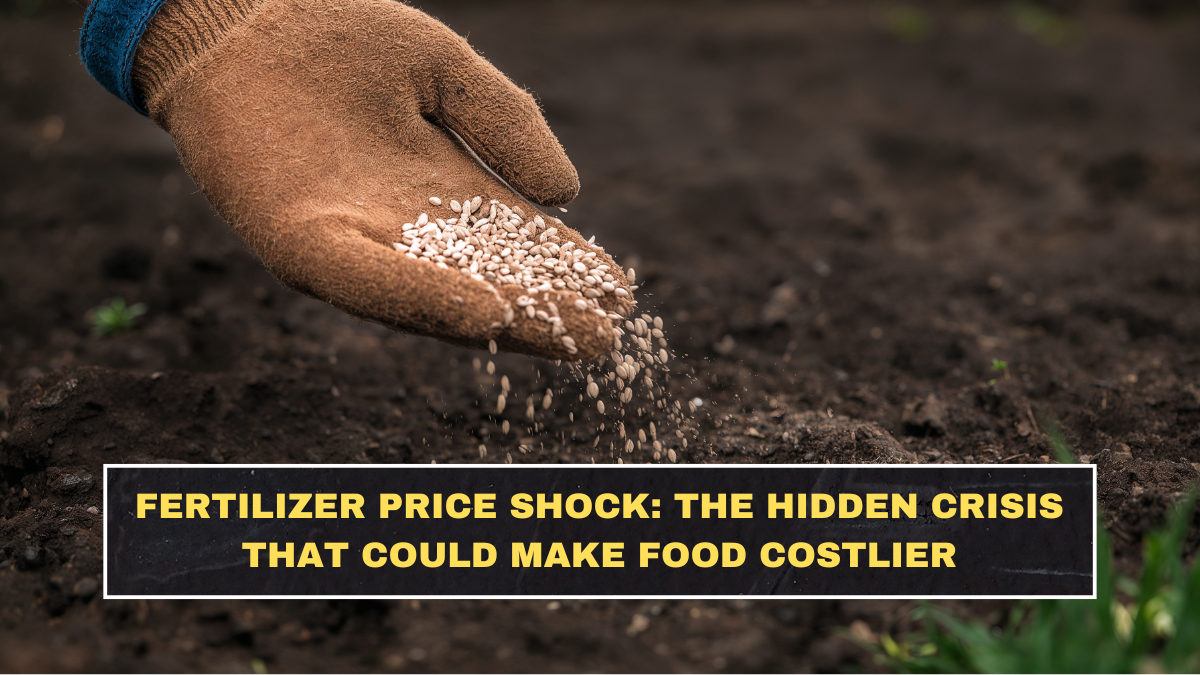
The fertilizer price shock is becoming a global concern because it can quietly turn today’s energy crisis into tomorrow’s food crisis. The World Bank’s April 2026 Commodity Markets Outlook says fertilizer prices rose in the first quarter of 2026, mainly driven by urea, and the fertilizer index is projected to increase by more than 30% this year. That is not a small farming issue. It is a direct threat to food affordability.
Most people notice fuel prices immediately, but fertilizer inflation works more slowly. Farmers pay more before planting, then may reduce fertilizer use, delay purchases or plant less intensively. The result can show up months later as weaker yields and higher food prices. This is why fertilizer is one of the most dangerous hidden parts of the current commodity shock.
What Is Driving Fertilizer Prices Higher?
Fertilizer prices are rising because energy prices, trade restrictions and Middle East conflict disruption are hitting the supply chain together. Fertilizer production depends heavily on natural gas and other energy inputs, especially for nitrogen-based fertilizers like urea. When gas and energy costs rise, fertilizer production becomes more expensive.
Reuters reported that the World Bank expects fertilizer prices to rise 31% in 2026, driven by soaring urea costs. The same World Bank outlook also warns that energy prices could jump 24% this year because of Middle East war disruption. That link matters: expensive energy makes expensive fertilizer, and expensive fertilizer can eventually make expensive food.
| Factor | How It Raises Food Risk? |
|---|---|
| Higher energy prices | Fertilizer production becomes more expensive |
| Rising urea costs | Farmers pay more for key nitrogen fertilizer |
| Trade restrictions | Supplies become harder to access internationally |
| Middle East disruption | Shipping and input costs rise |
| Lower fertilizer use | Crop yields may fall later |
| Higher farm costs | Food prices can rise for consumers |
Why Is Urea So Important In This Crisis?
Urea is important because it is one of the most widely used nitrogen fertilizers in the world. Farmers use it to improve crop growth and increase yields for staple foods such as rice, wheat, maize and many vegetables. When urea prices rise sharply, the impact can spread across multiple food categories at once.
The World Bank said fertilizer prices rose in early 2026 mostly because of urea, and the affordability index for urea “markedly deteriorated.” That phrase sounds technical, but the meaning is simple: fertilizer is becoming harder for farmers to afford compared with crop prices. When fertilizer becomes unaffordable, farmers may use less, and that can hurt production.
How Can Fertilizer Inflation Make Food More Expensive?
Fertilizer inflation makes food more expensive by raising the cost of production before crops even reach the market. Farmers need fertilizer to protect yields, especially in countries where soil nutrients are already under pressure. If fertilizer costs rise too much, farmers either spend more to maintain output or cut usage and risk smaller harvests.
Both outcomes hurt consumers. If farmers spend more, they may pass costs into food prices. If they use less fertilizer and harvest less, supply can tighten, which also raises prices. The danger is especially serious for staple crops because even small yield declines can affect millions of people when food systems are already stressed.
Why Are Developing Countries Most Exposed?
Developing countries are most exposed because their farmers often have less money, weaker access to credit and fewer tools to absorb higher input costs. A large commercial farm may be able to buy fertilizer early, hedge costs or negotiate better deals. A small farmer may simply use less fertilizer because there is no other option.
The World Bank warned that the commodity shock could raise inflation in developing economies to an average of 5.1%, or 5.8% if the conflict continues, while growth in developing regions could slow to 3.6%. That combination is brutal. Food gets costlier while incomes and jobs become weaker.
How Is China Affecting The Fertilizer Market?
China matters because it is a major fertilizer supplier, and its export controls can affect global availability. Reuters reported that China has intensified customs inspections on fertilizer exports, especially ammonium sulphate, after concerns that some exporters were mislabeling restricted products such as urea and potash. China exported more than $13 billion worth of fertilizer last year, making its policy decisions important for the world market.
Beijing says tighter controls help protect domestic agriculture, especially during planting seasons. That may make sense for China, but it can squeeze international buyers. When a major supplier prioritizes its own farmers, import-dependent countries may face higher prices, delayed shipments or fewer available cargoes.
Why Could Farmers Be Hit Twice?
Farmers could be hit twice because energy shocks raise both fertilizer and fuel costs. Fertilizer becomes expensive before planting, while diesel, electricity and transport become expensive during production and distribution. That means farmers face higher costs at nearly every stage of the crop cycle.
This is particularly dangerous for small farmers. They cannot easily raise prices before harvest, and many depend on loans or seasonal credit. If input costs rise too quickly, some may reduce planting, switch crops, delay purchases or accept lower yields. That does not only hurt farmers. It reduces the stability of the food system for everyone.
Could This Trigger A Bigger Food Inflation Wave?
Yes, it could. The fertilizer shock does not guarantee a global food crisis by itself, but it increases the risk. Food prices depend on many factors, including weather, trade policy, harvest quality, currency strength and transport costs. But when fertilizer prices rise at the same time as energy and shipping costs, the risk becomes much larger.
The World Bank’s broader warning is that commodity prices are forecast to rise 16% in 2026, driven by energy, fertilizer and key metals. That means food systems are being hit from more than one side. A fertilizer shock during a stable global economy is manageable. A fertilizer shock during war, shipping disruption and inflation is much more dangerous.
What Can Governments Do To Reduce The Damage?
Governments can reduce damage by targeting support carefully. Blanket fertilizer subsidies can become expensive and wasteful, but small farmers may need temporary help to avoid cutting fertilizer use too sharply. Countries can also diversify import sources, build strategic fertilizer reserves, improve soil testing and support more efficient fertilizer application.
The smarter long-term move is to reduce waste. Many farms either underuse fertilizer because it is too expensive or overuse it because advice is poor. Better extension services, precision farming, organic soil improvement and local production can reduce vulnerability. But none of that happens overnight. For 2026, governments need emergency planning, not slogans.
What Is The Bottom Line?
The fertilizer price shock is dangerous because it hides inside the food system. Consumers may not see it today, but farmers are already facing higher input costs. If fertilizer becomes too expensive, crop yields can fall, food prices can rise and poorer households will suffer first.
The blunt truth is that the world is underestimating fertilizer risk. Energy shocks get headlines because petrol prices are visible. Fertilizer shocks matter because they decide how much food farmers can grow. If governments wait until grocery prices jump, they will already be late.
FAQs
Why Are Fertilizer Prices Rising In 2026?
Fertilizer prices are rising because of higher energy input costs, Middle East conflict disruption, shipping pressure and trade restrictions. The World Bank says the fertilizer index is projected to increase by more than 30% in 2026.
Why Is Urea Important For Food Prices?
Urea is a major nitrogen fertilizer used for staple crops such as rice, wheat and maize. If urea becomes expensive, farmers may use less, which can reduce yields and raise food prices later.
How Much Are Fertilizer Prices Expected To Rise?
Reuters reported that the World Bank expects fertilizer prices to rise by 31% in 2026, driven largely by soaring urea costs.
How Is China Affecting Global Fertilizer Supply?
China has tightened inspections on fertilizer exports, especially after concerns about mislabeling restricted products. Since China is a major fertilizer exporter, stricter controls can affect global supply and prices.
Who Is Most At Risk From The Fertilizer Shock?
Small farmers, low-income households and food-importing developing countries are most at risk because they have less money to absorb higher input and food costs.