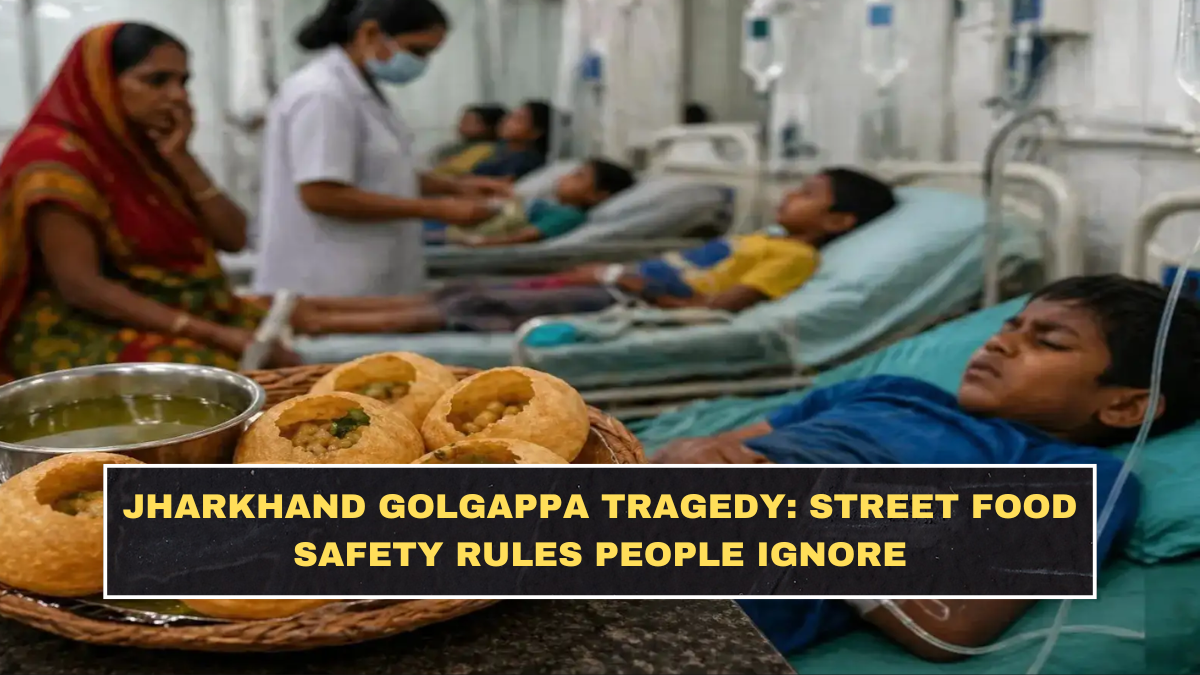
A suspected food poisoning incident in Jharkhand’s Giridih district has raised serious concerns about street food safety. According to police officials quoted by PTI, a seven-year-old child died and 18 others were hospitalised after consuming golgappa and chaat from a cart vendor in Leda Bajto village under Mufassil police station limits.
Other reports have mentioned a higher number of affected people, with Aaj Tak reporting that more than three dozen people fell ill after eating golgappa, most of them children. The reported symptoms included fever, stomach pain, vomiting, and diarrhoea, and the local administration started an investigation into suspected food poisoning.
The most important point is this: this is not just a “bad street food” story. It is a reminder that contaminated water, stale ingredients, poor storage, and unhygienic handling can become dangerous very quickly, especially in summer. Children are more vulnerable because dehydration can worsen faster in them than in healthy adults.
Why Can Golgappa Become Risky In Summer?
Golgappa can become risky because it uses multiple ingredients that are exposed to contamination easily. The water, chutney, boiled potatoes, chickpeas, spices, onions, and serving containers all need proper hygiene. If even one part is contaminated, many people can fall sick because the same water or filling is served repeatedly.
Summer makes the risk worse because heat helps bacteria grow faster in food that is not stored properly. Street vendors often operate without refrigeration, running water, gloves, covered containers, or strict temperature control. That does not mean every street vendor is unsafe, but it does mean consumers must stop pretending that taste is the only thing that matters.
The biggest blind spot is golgappa water. People focus on the flavour, spice level, and crunch, but the water quality is the real danger zone. If the water is made with unsafe drinking water, stored in open containers, or handled with dirty hands, contamination can spread to every customer.
What Are The Warning Signs Of Food Poisoning?
Food poisoning symptoms often include upset stomach, vomiting, loose stools, stomach cramps, nausea, fever, and weakness. Mayo Clinic says symptoms usually begin within hours or days after eating contaminated food or drink, and while many people recover without treatment, some cases can become serious.
The CDC lists severe warning signs that need medical attention, including bloody diarrhoea, diarrhoea lasting more than three days, fever over 102°F, repeated vomiting that prevents keeping liquids down, and signs of dehydration such as little urination, dry mouth, dry throat, or dizziness when standing.
| Symptom | What It May Mean | What To Do |
|---|---|---|
| Vomiting and diarrhoea | Body may be reacting to contaminated food | Start fluids and monitor closely |
| High fever | Possible infection or severe illness | Seek medical advice quickly |
| Blood in stool | Serious warning sign | Do not wait; get medical help |
| Dry mouth or low urination | Dehydration risk | Give oral rehydration solution and consult doctor |
| Severe stomach pain | Possible serious infection | Visit a healthcare facility |
When Should People Stop Waiting And See A Doctor?
People should stop waiting when symptoms are severe, repeated, or worsening. The dangerous thinking is, “It’s just stomach upset, it will settle.” That attitude can be risky, especially for children, elderly people, pregnant women, and people with weaker immunity.
The National Institute of Diabetes and Digestive and Kidney Diseases says infants and children with food poisoning symptoms should not be ignored because diarrhoea can cause severe dehydration in a short time. It also warns that dehydration in children can become life-threatening if not treated.
For adults, warning signs include confusion, lack of energy, high fever, frequent vomiting, six or more loose stools in a day, diarrhoea lasting more than three days, severe abdominal pain, blood or pus in stool, or dehydration. These are not situations for home remedies, social media advice, or “wait till morning” thinking.
What Street Food Safety Rules Do People Ignore?
People often ignore basic checks because they are hungry, the stall is popular, or the food looks tasty. That is careless. Popular does not always mean safe. A crowded stall can still use unsafe water, stale filling, dirty utensils, or uncovered ingredients.
Before eating golgappa or chaat, check whether the vendor uses clean water, keeps ingredients covered, washes hands, avoids touching money and food together, and serves from clean containers. If the stall is surrounded by flies, stagnant water, garbage, or open drains, walking away is smarter than gambling with your stomach.
Also avoid food that smells sour, looks stale, has been sitting in heat for hours, or is served from containers that are repeatedly opened and handled. Children should be given extra caution because their dehydration risk is higher. Parents need to stop treating roadside spicy snacks as harmless fun when hygiene looks doubtful.
How Can Families Reduce Risk After Eating Unsafe Food?
If someone develops symptoms after eating street food, the first step is hydration. Oral rehydration solution, clean water, and light food can help in mild cases, but this should not replace medical care when warning signs appear. Avoid self-medicating with random antibiotics or anti-diarrhoea tablets without a doctor’s advice.
CDC advises people who suspect food poisoning to talk to a healthcare provider, note what they ate, keep food receipts or labels when available, and report illness to the local health department if an outbreak is suspected. This matters because reporting helps authorities trace the source and prevent more people from falling sick.
The practical rule is simple: mild symptoms can be watched carefully, but severe symptoms need treatment. In children, do not wait for the situation to become dramatic. If a child is weak, repeatedly vomiting, not passing urine, unusually sleepy, or has diarrhoea with fever, medical help should be taken quickly.
Conclusion?
The Jharkhand golgappa tragedy is a painful reminder that food poisoning is not always a minor stomach issue. One unsafe batch of water, stale filling, or contaminated handling can affect many people at once, especially during hot weather.
Street food is part of Indian life, but hygiene cannot be optional. Consumers must check cleanliness before eating, vendors must follow food safety rules, and authorities must act quickly when outbreaks happen. Taste is not worth risking a child’s life.
FAQs
What Happened In The Jharkhand Golgappa Incident?
A child died and several people were hospitalised in Giridih, Jharkhand, after reportedly eating golgappa and chaat from a street vendor. Authorities are investigating suspected food poisoning as the cause.
What Are Common Food Poisoning Symptoms?
Common symptoms include vomiting, diarrhoea, stomach pain, nausea, fever, weakness, and dehydration. Symptoms may start within a few hours or days after eating contaminated food or drinking unsafe water.
When Should Food Poisoning Be Treated As Serious?
Food poisoning should be treated as serious if there is blood in stool, high fever, repeated vomiting, dehydration, severe stomach pain, or diarrhoea lasting more than three days. Children need faster attention because dehydration can become dangerous quickly.
How Can People Eat Street Food More Safely?
Choose stalls that use clean water, covered ingredients, clean utensils, and hygienic handling. Avoid stalls with flies, open drains, dirty containers, stale fillings, or food sitting in heat for long hours.