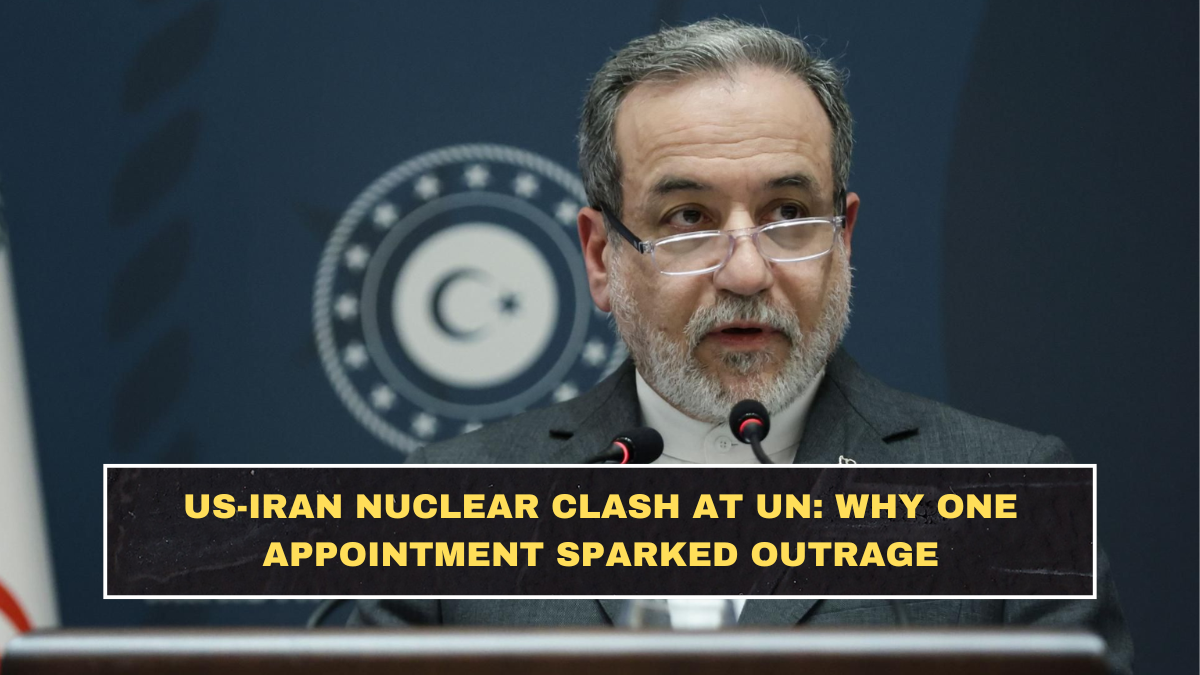
The United States and Iran clashed at the United Nations after Iran was selected as one of 34 vice presidents at the 2026 review conference of the Nuclear Non-Proliferation Treaty, also known as the NPT. On paper, this may sound like a procedural appointment. In reality, it became a political flashpoint because Iran’s nuclear programme is already at the centre of a major global security crisis.
Reuters reported that US official Christopher Yeaw called Iran’s selection an “affront” to the NPT, accusing Tehran of contempt for non-proliferation commitments and lack of cooperation with the UN nuclear watchdog. Iran rejected the criticism as politically motivated and argued that the US, as the only country to have used nuclear weapons in war, had no moral authority to lecture others.
What Is The NPT And Why Does This Appointment Matter?
The Nuclear Non-Proliferation Treaty is one of the world’s most important arms-control agreements. It is built around three broad goals: stopping the spread of nuclear weapons, promoting peaceful nuclear energy, and pushing nuclear-armed states toward disarmament. That is why leadership roles at an NPT review conference carry symbolic weight, even if they do not give one country full control over the process.
Iran’s appointment matters because the country is accused by Western governments of enriching uranium close to weapons-grade levels while limiting cooperation with inspectors. Tehran insists its nuclear programme is peaceful and civilian. That contradiction is exactly why the appointment created outrage. Critics see it as putting a controversial nuclear actor inside the leadership structure of a treaty meant to prevent nuclear danger.
| Issue | Why It Became Controversial |
|---|---|
| Iran’s vice president role | Seen by the US as damaging NPT credibility |
| Iran’s nuclear programme | Western states fear possible weapons capability |
| Tehran’s defence | Iran says its programme is peaceful |
| US criticism | Washington says Iran has not cooperated enough |
| Wider context | The clash comes during US-Iran war tensions |
Why Is Washington So Angry About Iran’s Role?
Washington’s anger comes from credibility. The US argument is blunt: a country accused of undermining nuclear transparency should not be given a visible leadership role at a nuclear non-proliferation conference. For the US, Iran’s appointment sends the wrong message at the worst possible time, especially when the Trump administration is demanding that Iran never obtain a nuclear weapon.
AP reported that the US and Iran exchanged sharp remarks as the 2026 NPT review opened, with Washington objecting to Iran’s role and other countries including Australia, the UAE, the UK, France, and Germany echoing concerns. That means this was not only a bilateral US-Iran fight. It became a broader dispute over whether the NPT process can still maintain authority during a live nuclear crisis.
How Did Iran Respond To The US Criticism?
Iran responded by attacking what it sees as American hypocrisy. Tehran’s argument is that the US has no right to act as judge because it possesses a major nuclear arsenal, continues to modernise it, and remains the only state to have used nuclear weapons in war. Iran also says its nuclear activities are allowed under the NPT because the treaty permits peaceful nuclear energy.
This is not a small rhetorical point. Iran is trying to turn the debate away from its own enrichment activity and toward the behaviour of nuclear-armed states. That strategy may not convince Washington, but it resonates with some non-aligned countries that believe powerful states apply nuclear rules selectively. Russia also objected to singling out Iran and called for depoliticising the conference, according to AP.
Why Is This Happening During A Bigger US-Iran Crisis?
The UN clash is happening while the US and Iran are already locked in a wider conflict involving the Strait of Hormuz, shipping disruption, and nuclear talks. Reuters reported that President Trump was unhappy with Iran’s latest proposal because it would delay nuclear discussions until after the war and Gulf shipping disputes were resolved. That explains why the UN appointment became so explosive.
Washington does not want the nuclear issue pushed aside. Iran, however, appears to want immediate pressure relief before deeper nuclear talks. So when Iran gets a visible role at an NPT conference, the US sees it as diplomatic theatre: Tehran gains legitimacy while avoiding the exact nuclear commitments Washington wants. That is why the appointment triggered such a strong reaction.
Is Iran Actually Violating The NPT?
This is where the issue becomes legally and politically complicated. Western governments accuse Iran of failing to fully cooperate with the International Atomic Energy Agency and enriching uranium to levels that raise weapons concerns. Iran denies seeking nuclear weapons and says its enrichment is for peaceful purposes. The problem is that trust has collapsed so badly that technical claims are no longer judged in isolation.
The NPT does allow peaceful nuclear energy, but that right depends heavily on verification and confidence. If inspectors cannot fully resolve concerns, the political pressure rises. This is why the UN clash is not just about one title. It is about whether the international system can still separate peaceful nuclear rights from weapons risks when major powers no longer trust each other.
Why Should Ordinary Readers Care About This UN Fight?
This matters because nuclear diplomacy affects real-world security and prices. If the US and Iran cannot agree on nuclear talks, the Strait of Hormuz crisis may continue, oil prices may stay volatile, and the risk of wider war could grow. A procedural fight at the UN may look distant, but it is connected to fuel costs, shipping routes, inflation, and military escalation.
It also matters because the NPT itself is under pressure. UN Secretary-General António Guterres warned that global nuclear risks are rising and called for renewed disarmament efforts as the conference opened, according to AP. If countries lose faith in the treaty system, more states may question whether restraint still benefits them. That would make the world more dangerous, not safer.
Conclusion
The US-Iran clash at the UN was not really about a conference title. It was about legitimacy, trust, and nuclear power politics. The US sees Iran’s vice president role at the NPT review as insulting because Tehran is under heavy suspicion over its nuclear programme. Iran sees the US criticism as hypocrisy from a nuclear-armed power that wants to control the rules.
The harsh truth is that both sides are using the UN stage to strengthen their bargaining position. Washington wants nuclear pressure first. Tehran wants pressure relief first. Until that basic conflict changes, even a procedural appointment can become a global controversy.
FAQs
Why did Iran’s UN appointment cause outrage?
Iran’s appointment caused outrage because it was selected as one of the vice presidents of an NPT review conference while facing Western accusations over its nuclear programme and cooperation with inspectors. The US argued that this damaged the credibility of the treaty process.
What is the Nuclear Non-Proliferation Treaty?
The NPT is a major international treaty designed to stop the spread of nuclear weapons, support peaceful nuclear energy, and promote nuclear disarmament. It is one of the foundations of global nuclear arms control.
What does Iran say about its nuclear programme?
Iran says its nuclear programme is peaceful and meant for civilian energy and scientific purposes. Western governments remain concerned because of Iran’s uranium enrichment levels and unresolved inspection issues.
Why does this UN clash matter globally?
The clash matters because it is linked to wider US-Iran tensions, the Strait of Hormuz crisis, oil-market instability, and fears of nuclear escalation. It also raises questions about whether global nuclear rules still have enough credibility.