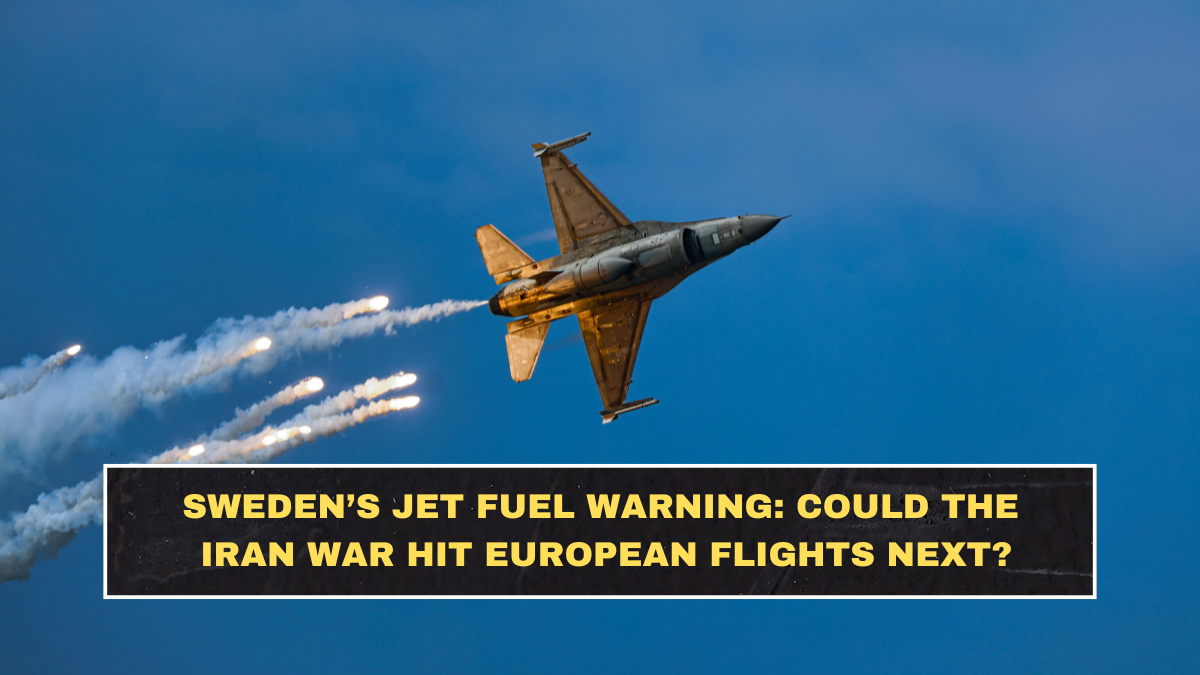
Sweden has issued an early warning about a possible jet fuel shortage as the Middle East war disrupts energy flows and aviation supply chains. The warning came from Energy Minister Ebba Busch, who said it was based on an assessment by the Swedish Energy Agency. This does not mean Swedish airports are out of fuel today, but it does mean officials are preparing for a serious worst-case scenario.
Reuters reported that Sweden could, in the worst case, face aviation-fuel rationing if the situation worsens. Swedish Energy Agency Director General Caroline Asserup said the final impact will depend heavily on how the market adapts. That detail matters because the crisis is not only about supply being blocked; it is also about whether traders, tankers, refiners, and airlines can reroute fuel quickly enough.
Why Is Jet Fuel Suddenly A European Problem?
Jet fuel is becoming a European problem because aviation depends on stable refinery supply, tanker routes, and predictable prices. When war disrupts Middle East energy flows, the impact does not stop at crude oil. It can hit refined products such as aviation fuel, which airlines need daily and cannot easily replace with alternatives.
Europe is especially exposed because it relies on imported fuel and global refining networks. If supplies from the Middle East become unreliable, European buyers must compete harder for alternative cargoes from the US, Asia, or nearby refiners. That pushes up prices and makes smaller or less-hedged airlines more vulnerable. Sweden’s warning is important because it shows governments are no longer treating fuel disruption as a distant market issue.
| Problem Area | What It Means For Airlines And Passengers |
|---|---|
| Jet fuel shortage risk | Airlines may face tighter supply at some airports |
| Higher fuel prices | Ticket prices can rise if costs stay elevated |
| Fuel rationing | Worst-case scenario could affect flight schedules |
| Market rerouting | Tankers may divert to Europe if prices are attractive |
| Summer travel demand | Disruption hurts more during busy travel months |
Could Flights Actually Be Cancelled?
Yes, but it is not guaranteed. A fuel warning does not automatically mean mass cancellations. Airlines, airports, and fuel suppliers usually have contingency plans, including fuel hedging, alternative sourcing, tanker rerouting, and operational adjustments. However, if the shortage becomes physical rather than only price-driven, then some flights could be delayed, rescheduled, or reduced.
This is where people need to avoid panic but also avoid stupidity. A government warning is not the same as “your flight is cancelled.” But pretending nothing can happen is also naive. If a major fuel route remains disrupted for weeks, airlines may prioritise profitable routes, reduce frequencies, or pass higher fuel costs into fares.
Why Are Some Airlines Less Worried Than Sweden?
Some airlines are less worried because they believe the market can adapt. Wizz Air CEO Jozsef Varadi said the airline does not expect to run out of jet fuel, even though the Iran war has raised supply concerns. He said high jet-fuel prices, around $1,500 per metric ton, are encouraging tankers to divert to the US and source fuel that can help offset Middle East disruption.
That does not make Sweden’s warning wrong. It simply shows the difference between a government risk assessment and an airline’s operational confidence. Governments must prepare for worst-case scenarios. Airlines often speak in terms of current supply contracts, hedges, and route plans. Both can be true at the same time.
How Could This Affect Ticket Prices?
Ticket prices could rise if fuel prices remain high. Fuel is one of the largest operating costs for airlines, and when it jumps suddenly, carriers usually try to recover some of that cost through fares, fuel surcharges, or reduced capacity. Passengers may not see the impact instantly, especially if airlines already hedged fuel earlier at lower prices.
But once hedges expire, the pressure becomes harder to hide. Reuters reported that Wizz Air is about 70% hedged for its summer fuel needs and expects to renew some hedges to maintain stability. That helps in the short term, but it does not remove longer-term price risk if fuel remains expensive.
Why Does The Middle East War Affect European Aviation So Quickly?
The Middle East sits at the centre of global oil, gas, and refined-fuel trade. When conflict affects routes near the Persian Gulf, Red Sea, or Strait of Hormuz, aviation fuel markets react quickly. Airlines cannot simply stop using fuel or replace jet fuel with another energy source overnight. That makes aviation one of the first sectors to feel pressure from energy shocks.
The International Air Transport Association has warned that the Middle East conflict has exposed vulnerabilities in jet-fuel supply chains. The key issue is that aviation fuel is not just about crude oil production. It also depends on refining capacity, transport routes, airport storage, and timely delivery to aircraft. If one part of that chain tightens, the whole system becomes more fragile.
What Should Travellers Watch Now?
Travellers should watch airline notifications, route changes, fuel surcharge updates, and airport advisories. There is no need to cancel plans based only on Sweden’s warning, but people booking expensive international trips should understand that fuel volatility can affect fares and schedules. Flexible tickets, travel insurance, and direct flights may become more valuable if disruption spreads.
Business travellers and families planning summer travel should be especially careful. If the crisis worsens, last-minute bookings could become more expensive, and some routes may see reduced capacity. The smarter move is not panic; it is planning with more flexibility than usual.
Could This Become A Wider Europe Aviation Crisis?
It could, but only if supply disruption lasts and spreads. Right now, Sweden’s warning is an early risk signal, not proof of continent-wide collapse. The market is already trying to adapt through tanker diversions, hedging, and alternative fuel sourcing. The biggest danger is a long conflict that keeps prices high and makes fuel availability uneven across Europe.
The worst-case scenario would involve airport-level rationing, higher ticket prices, and route reductions during peak travel demand. The more likely near-term scenario is continued price pressure, cautious airline planning, and government monitoring. Either way, Sweden has made one thing clear: Europe’s aviation system is more exposed to Middle East energy shocks than many travellers realise.
Conclusion
Sweden’s jet fuel warning should not be dismissed as alarmism, but it also should not be treated as proof that flights are about to stop. The real message is more practical: the Middle East war is now reaching European aviation through fuel prices, supply chains, and government contingency planning.
The uncomfortable truth is that airlines run on fragile global energy systems. If jet fuel becomes harder to source or more expensive, passengers eventually feel it through fares, route changes, and schedule uncertainty. Sweden is not saying the crisis is here in full force. It is saying the risk is serious enough to prepare for now.
FAQs
Why did Sweden warn about a jet fuel shortage?
Sweden warned about a possible jet fuel shortage because the Middle East war is disrupting energy flows and aviation fuel supply chains. The warning was based on an assessment by the Swedish Energy Agency.
Will flights in Sweden be cancelled?
Flights are not automatically being cancelled because of the warning. However, if fuel supply becomes tight enough, airlines could face delays, reduced schedules, or higher operating costs.
Can jet fuel prices increase ticket fares?
Yes. If jet fuel prices stay high, airlines may raise ticket prices, add surcharges, or reduce capacity. Fuel is one of the biggest costs for airlines, so prolonged price pressure usually reaches passengers.
Are all European airlines facing the same risk?
No. Airlines with stronger fuel hedging, better supply contracts, and flexible route networks may handle the crisis better. Others could face more pressure if fuel remains expensive or physically scarce.