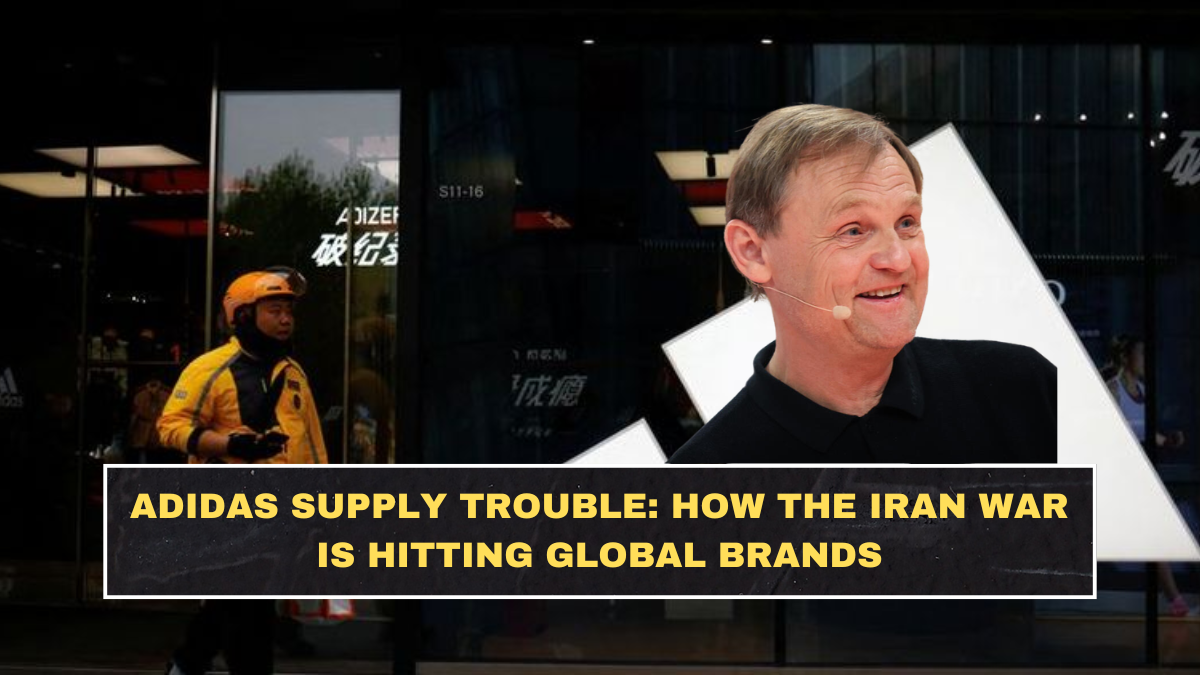
Adidas is facing supply trouble because the Iran war has made it harder and more expensive to move goods into the Middle East. Reuters reported that Adidas CEO Bjorn Gulden said it is “difficult” to get products into the region because of the war, even though the company has not yet seen a direct disruption to goods. He also warned that rising oil prices are increasing transport costs.
This matters because Adidas is not an oil company, airline or shipping firm. It is a sportswear brand. When even a global fashion and footwear company starts warning about war-related logistics pressure, it shows how conflict spreads through normal business life. A war near energy and shipping routes can affect sneakers, clothing, stores, freight bills, inventory planning and consumer prices.

What Exactly Did Adidas Say?
Adidas said access to the Middle East remains difficult because of the ongoing conflict. The company has not reported a full supply breakdown, but its CEO made clear that moving products into the region has become harder. Reuters also reported that Gulden expects rising transport costs because oil prices have increased, while material prices may face pressure over the next six to twelve months.
That is important because the impact is not only immediate. Supply-chain pressure often works slowly. A brand may still have products in stores today, but if shipping becomes expensive, delayed or uncertain, the damage can appear later through stock gaps, late launches, weaker margins and higher prices. This is exactly how geopolitical conflict becomes a business problem.
| Business Impact | What It Means For Adidas? |
|---|---|
| Shipping difficulty | Products take longer or cost more to reach Middle East markets |
| Higher oil prices | Freight, air cargo and transport costs increase |
| Material pressure | Input costs may rise over the next 6–12 months |
| Store disruption | Regional sales can suffer if stores close or traffic falls |
| Inventory risk | Wrong products may arrive late or miss seasonal demand |
| Margin pressure | Adidas may absorb costs or pass them to consumers |
Why Does A War Affect A Sportswear Brand?
A war affects a sportswear brand because modern retail depends on predictable movement of goods. Adidas designs, manufactures, ships, stores and sells products across different regions. If shipping routes become risky or fuel costs rise, every part of that chain becomes harder to manage. Products may need different routes, longer delivery times or more expensive transport.
Sportswear also depends on timing. New shoes, football kits, training wear and seasonal collections need to reach stores at the right moment. If goods arrive late, they may miss demand windows. That can force discounts later, reduce margins and frustrate customers. This is the boring but brutal reality of retail: timing is money.
How Are Oil Prices Making The Problem Worse?
Oil prices make the problem worse because transport depends heavily on fuel. Ships, trucks and planes all become more expensive to operate when oil rises. Reuters reported that the World Bank expects energy prices to rise 24% in 2026 because of Middle East war disruption, with Brent crude projected to average $86 per barrel and potentially rise to $115 if the conflict persists or deepens.
For Adidas, higher fuel costs can show up in ocean freight, air freight, warehouse movement and regional distribution. Even if the company avoids the worst shipping disruption, it can still face higher costs. That creates a margin problem. Adidas must decide whether to absorb the cost, raise prices, reduce promotions or accept lower profitability.
Why Is The Middle East Important For Global Brands?
The Middle East is important because it is a growing consumer region with strong demand for international fashion, sportswear and lifestyle brands. Cities such as Dubai, Riyadh, Doha, Abu Dhabi and Kuwait City are major retail markets with malls, tourism, sports events and high spending power. For global brands, the region is not an afterthought. It is part of their growth strategy.
But the region also sits close to some of the world’s most sensitive shipping and energy routes. That creates a risk premium. Brands may like the consumer opportunity, but they cannot ignore logistics and security exposure. The Adidas warning is a reminder that attractive markets can still become difficult when geopolitics turns hostile.
Could Adidas Stores And Sales Be Hit Too?
Yes, stores and sales can be hit if conflict affects foot traffic, mall operations, staff safety or product availability. Reuters reported in March that Adidas expected a revenue impact from closed stores in the Middle East and delays on some products sent by air freight through the region. That shows the issue is not limited to warehouse logistics. It can directly affect sales.
A store can lose money even if it stays open but lacks the right inventory. Customers do not care why a product is missing. They simply buy from another brand or delay the purchase. In competitive sportswear, that matters because Adidas is fighting not only Nike, but also fast-growing running, athleisure and local competitors.
Why Are Material Prices A Hidden Risk?
Material prices are a hidden risk because clothing and footwear depend on synthetic fabrics, rubber, plastics, dyes, packaging and transport-linked inputs. Many of these are connected directly or indirectly to energy prices. When oil and gas rise, raw materials and manufacturing costs can follow.
Adidas CEO Bjorn Gulden warned that material-price pressure could build over the next six to twelve months. That timing matters because companies often have contracts, inventory buffers and supplier agreements that delay the impact. The real cost increase may not hit instantly, but it can appear in future product cycles, wholesale pricing and profit margins.
What Does This Mean For Customers?
For customers, the impact may show up as delayed product launches, fewer sizes in stock, higher prices or fewer discounts. Not every shopper will notice immediately. Big brands usually have inventory buffers and multiple supply routes. But if the war continues, pressure builds across the system.
The worst mistake consumers make is thinking supply-chain problems only affect essential goods. They do not. Fashion, shoes, electronics, furniture and beauty products all depend on global logistics. When freight becomes expensive and uncertain, brands make tough choices about where to send inventory first and which markets get priority.
What Does This Say About Global Supply Chains?
This shows that global supply chains are still fragile. Companies spent years trying to recover from pandemic disruption, port congestion and Red Sea shipping risks. Now the Iran war has added another layer of pressure through oil prices, Middle East access and security concerns. The Guardian reported that UK exports to the Middle East have also fallen sharply amid trade disruption and higher logistics costs, showing the issue is broader than Adidas alone.
The blunt lesson is simple: cheap global shipping made companies comfortable, maybe too comfortable. When routes are stable, brands can run lean inventory and move goods efficiently. When conflict hits, lean systems become vulnerable. Adidas is only one visible example of a much wider business problem.
What Is The Bottom Line?
Adidas’ Middle East supply trouble shows how the Iran war is spilling into everyday business. The company is not saying its entire supply chain has collapsed, but it is clearly warning that access to the region is difficult, transport costs are rising, and material prices may come under pressure over the coming months.
The hard truth is that global brands cannot treat war as a distant headline. If oil routes are threatened and regional logistics become unstable, even sneakers and sportswear get caught in the shock. Adidas may manage the disruption, but the warning is clear: conflict raises costs, delays goods and makes global retail less predictable.
FAQs
Why Is Adidas Having Trouble Supplying The Middle East?
Adidas says it is difficult to move goods into the Middle East because of the ongoing war, while higher oil prices are also increasing transport costs.
Has Adidas Reported A Complete Supply Breakdown?
No. Adidas has not reported a complete supply breakdown, but its CEO said access to the Middle East is difficult and warned of rising transport and material cost pressure.
How Does The Iran War Affect Adidas?
The Iran war affects Adidas through shipping disruption, higher fuel costs, possible store closures, delayed air freight and rising material prices.
Could Adidas Products Become More Expensive?
Yes, prices could rise if higher transport and material costs persist. Adidas may also choose to absorb some costs, but that would pressure profit margins.
Why Does This Matter Beyond Adidas?
It matters because Adidas is an example of how the Middle East war can affect global brands that depend on predictable shipping, stable energy prices and reliable regional retail operations.