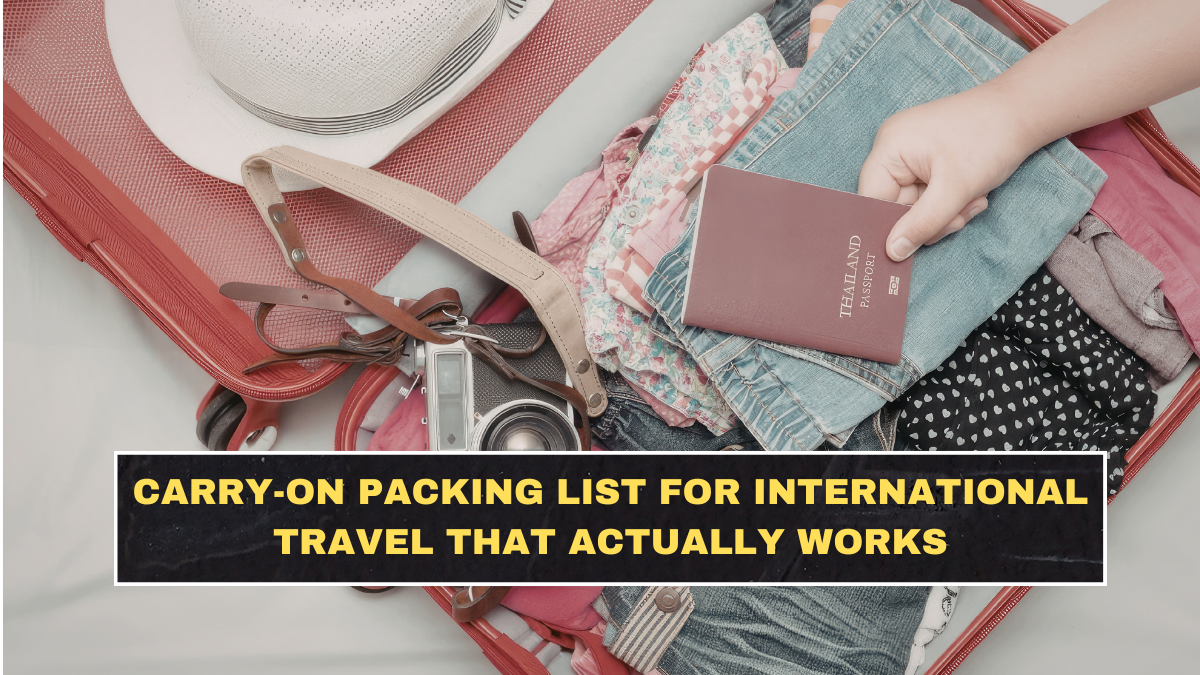
International carry-on packing gets overcomplicated because people pack for imaginary problems instead of real trips. The result is a stuffed bag, airport stress, and clothes they never wear. Packing lighter matters even more now because bag fees keep climbing. In April 2026, Reuters reported that major U.S. airlines including American and Alaska raised checked-bag fees again, adding more pressure for travelers to stay carry-on only when possible. Google also highlights bag-fee filtering in Google Flights because baggage costs now materially affect trip pricing, not just convenience.
What should a real international carry-on packing list include?
A useful carry-on list starts with categories, not random items. You need documents, tech, health essentials, one core clothing system, and a few comfort items. That is it. The problem is that travelers pack “just in case” versions of all five. TSA’s official guidance still makes the basics clear: liquids in carry-on need to follow its 3.4-ounce rule unless they are medically necessary, and larger medically necessary liquids are allowed in reasonable quantities if declared at screening. FAA guidance also says spare lithium batteries and power banks belong in carry-on, not checked baggage, because cabin crews can respond to battery incidents there.
Which documents and essentials should never leave your personal item?
Your passport, visa documents if applicable, boarding pass access, wallet, phone, medications, charging cable, and one backup payment method should stay in the smaller bag that remains with you at all times. That is not paranoia. It is basic risk control. If your cabin bag gets gate-checked, the important items still stay with you. This matters even more for battery-powered items because IATA and FAA both stress that portable chargers, spare batteries, and similar loose battery items should remain in hand baggage and protected from short circuits.
How much clothing do you actually need?
Less than you think. For most trips of one to two weeks, the smarter formula is about four to five tops, two bottoms, one extra layer, sleepwear, underwear and socks for several days, and one pair of shoes on top of the pair you wear. Laundry is cheaper than baggage problems. The trap most people fall into is packing an outfit for every day instead of building a small rotation. If your clothes do not mix with each other, your problem is not lack of space. Your problem is bad planning.
| Category | Better carry-on amount | Why it works |
|---|---|---|
| Tops | 4–5 | Easy to repeat and layer |
| Bottoms | 2 | One worn, one alternate often works |
| Outer layer | 1 | Handles flights and weather changes |
| Shoes packed | 1 pair max | Shoes waste space fast |
| Underwear and socks | 5–7 pairs | Enough before laundry |
| Toiletries | Travel-size only | Keeps security and bag space manageable |
What toiletries belong in a carry-on bag?
Only the versions you will actually use during transit and the first few days. TSA’s official rules still center on small liquid containers in carry-on, while liquid or gel food items above the limit generally belong in checked baggage if allowed at all. That means you should stop trying to bring half your bathroom. A toothbrush, toothpaste, deodorant, sunscreen, moisturizer, one small cleanser, and any essential medication usually cover the real needs. Medically necessary liquids can exceed the standard liquid rule, but TSA says they must be declared at screening.
What tech items do travelers keep getting wrong?
Batteries. This is where people act sloppy and then blame the airline. FAA guidance says spare lithium-ion batteries from 0 to 100 Wh are generally allowed on passenger aircraft, 101 to 160 Wh usually require airline approval, and anything above 160 Wh is forbidden. Power banks and spare batteries should stay in carry-on, with terminals protected. FAA also says electronic cigarettes and vaping devices are prohibited in checked baggage and must remain with the passenger in carry-on. If you do not know your battery size or watt-hours, check before travel instead of improvising at security.
How do you pack so the bag actually works in real life?
Use layers and zones. Heavy items go closest to the wheels or base. Liquids and electronics should be easy to remove. One packing cube for clothing, one slim pouch for cables, and one clear toiletry bag is enough for most people. You do not need ten organizers unless you enjoy creating your own mess in separate compartments. The real goal is airport speed. If you need five minutes to find your passport, charger, or medication, your bag is badly packed no matter how aesthetic it looks on Instagram.
What should you skip even if it feels useful?
Skip duplicate shoes, full-size products, bulky “maybe” outfits, thick books, too many gadgets, and random emergency items you can buy almost anywhere. IATA’s recent battery-safety messaging even includes a simple principle travelers ignore: pack light and only bring the devices and batteries you really need. That advice is not just about safety. It is also about friction. Every unnecessary object steals space from something more useful or makes the whole bag heavier and more annoying to move.
What is the smartest final carry-on checklist?
The smartest checklist is the one built around repeatability. Carry your documents, medication, tech essentials, a minimal toiletry kit, and a compact wardrobe that can rotate through laundry. Wear the bulkiest clothing and heaviest shoes on the plane. Keep valuables and must-haves in your personal item. Check your airline’s exact size limits before departure, because cabin allowance varies, and cheap fares often punish careless packing. The carry-on method works when you accept one uncomfortable truth: you do not need more options, you need fewer mistakes.
Conclusion?
A carry-on packing list for international travel only works when it is based on real constraints, not anxiety. Bag fees are rising, battery rules are strict, and airport screening still rewards simple packing over clever packing. So the winning strategy is boring but effective: fewer clothes, fewer liquids, fewer gadgets, and faster access to essentials. Most overpackers are not being prepared. They are just being disorganized with extra steps.
FAQs
Can you bring medication and larger medical liquids in a carry-on?
Yes. TSA says medically necessary liquids are allowed in reasonable quantities beyond the standard liquid rule, but they should be declared during screening.
Should power banks go in checked baggage?
No. FAA says spare lithium batteries and portable chargers should be carried in hand baggage, not checked baggage.
Is carry-on only cheaper for international travel now?
Often yes, especially as baggage fees continue rising and search tools increasingly show bag-fee impacts in total trip cost.
How many outfits should you pack for a 7 to 10 day trip?
Usually a compact rotation works better than daily outfits. Around 4 to 5 tops, 2 bottoms, and one extra layer is enough for many trips if you repeat pieces intelligently.
Click here to know more