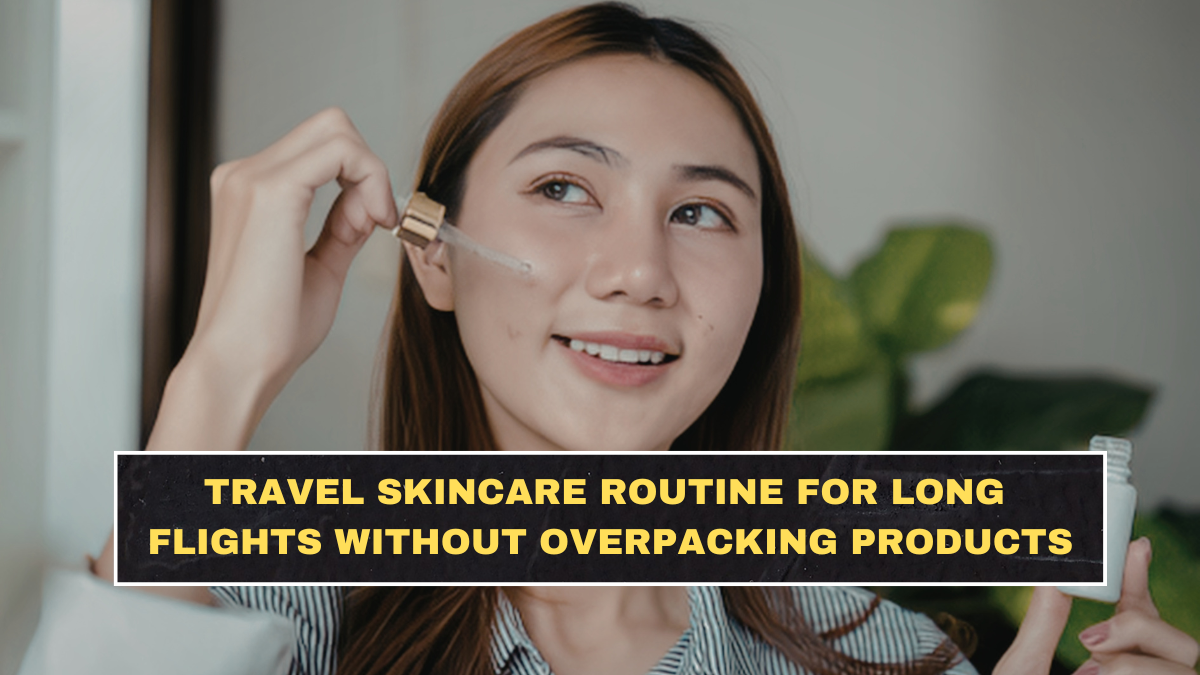
Long flights are rough on skin for a very simple reason: airplane cabins are dry. Medical and travel-health sources have long noted that cabin humidity is typically very low, often under 20%, which can dry out the eyes, mouth, nose, and skin. The American Academy of Dermatology also warns that airplanes and climate changes can make skin drier and recommends regular moisturizing while traveling. That is the real problem most people should solve first, not chasing a 10-step in-flight routine that turns a seat tray into a bathroom shelf.

What should your long-flight skincare routine actually focus on?
It should focus on three things: protecting your skin barrier, avoiding unnecessary irritation, and landing without feeling greasy or dehydrated. Most people mess this up by doing too much. They use strong acids before flying, pile on sheet masks in recycled cabin air, or keep touching their face with unwashed hands. That is not skincare. That is boredom dressed up as self-care. A better routine is boring but effective: gentle cleanse before the airport, moisturize well, protect lips, stay consistent, and avoid harsh actives until after landing. The AAD specifically recommends moisturizing because travel conditions can dry the skin out, and British dermatology guidance also regularly points back to fragrance-free emollients and avoiding harsh cleansers when skin is dry or irritated.
What should you do before boarding the flight?
Start with a gentle cleanse and a solid moisturizer before you even get on the plane. If you are flying during the day and will be exposed to sunlight before boarding or after landing, use sunscreen too. The goal here is to begin the flight with calm skin, not stripped skin. That means no aggressive exfoliation, no experimenting with retinoids right before takeoff, and no over-cleansing just because you are traveling. If your skin is dry, applying moisturizer to slightly damp skin is a practical move the AAD explicitly recommends, because it helps trap water in the skin more effectively.
Which products are actually worth carrying on the plane?
You do not need a beauty counter in your handbag. You need a short list that fits airline rules and solves real problems. TSA says liquids, aerosols, gels, creams, and pastes in carry-on must generally be in containers of 3.4 ounces, or 100 milliliters, or less, and all of them must fit inside one quart-sized bag. So the useful in-flight kit is usually a small moisturizer, lip balm, travel-size sunscreen if needed after landing, a gentle mist only if you know it helps you, and perhaps a mild cleanser for arrival. Anything beyond that is usually vanity, not function.
| Product | Why it helps on a long flight | Keep or skip? |
|---|---|---|
| Gentle moisturizer | Helps reduce dryness and tightness | Keep |
| Lip balm or ointment | Lips dry fast in low humidity | Keep |
| Mild cleanser | Useful after landing, not repeatedly onboard | Keep |
| Sunscreen | Important for daytime arrival or layovers | Keep |
| Exfoliating acids | Can irritate already stressed skin | Skip |
| Retinoids | Often too drying for flight day | Skip |
| Sheet masks | Bulky and unnecessary for most travelers | Skip |
Should you wash your face during the flight?
Usually not more than once, and often not at all. This is where people get carried away. Repeated washing on a long flight can make dryness worse, especially if you are using harsh cleansers or wiping your face with rough tissues. A better move is to leave your face alone, then reapply a little moisturizer if your skin feels tight. If you must refresh, use a very gentle method and clean hands first. Constantly touching your face in airports and planes is one of the easiest ways to invite irritation or breakouts. The smarter routine is minimal interference, not nonstop product layering.
Are face mists and sheet masks useful on planes?
Mostly overrated. A mist can feel refreshing, but if you do not seal that moisture in with a moisturizer, it does not solve much. In some cases it may just evaporate and leave your skin feeling dry again. Sheet masks are worse for most travelers because they are awkward, messy, and unnecessary in public cabin conditions. They are more content than care. If your skin gets dry, the more rational fix is a small amount of moisturizer and lip protection, not a dramatic spa performance at 35,000 feet.
What should you do after landing?
After landing, that is when a reset makes sense. Use a gentle cleanser if your skin feels oily, sticky, or grimy from the journey. Then moisturize again. If you land during the day, apply sunscreen before stepping out. If your skin breaks out easily, resist the urge to attack it immediately with exfoliants just because travel made it feel congested. Flight skin is often irritated and dehydrated at the same time, which means over-treating it can make things worse. The first recovery step should be calm hydration, not punishment.
What mistakes make travel skincare worse?
The biggest one is overpacking products and overusing them. The second is ignoring airline liquid rules until airport security forces you to throw things away. TSA’s 3-1-1 rule is not complicated, yet people still act surprised when oversized products are not allowed through. Another mistake is using active ingredients right before a long-haul flight when the cabin environment is already dry enough to stress the skin barrier. And then there is the classic bad habit: not moisturizing, then wondering why skin feels flaky, dull, or tight halfway through the trip.
What is the simplest long-flight skincare routine that works?
Use a gentle cleanser before leaving for the airport, apply a moisturizer, protect your lips, and use sunscreen if daytime exposure is likely. During the flight, touch your face less, drink water normally, and reapply moisturizer only if your skin feels dry. After landing, cleanse gently if needed, moisturize again, and move on with your life. That is enough for most people. The fantasy that better skin comes from more products is exactly why so many travelers end up with irritated skin and an overstuffed toiletry bag.
Conclusion?
A smart travel skincare routine for long flights is not complicated. Cabin air is dry, your skin barrier is under more stress, and most people make it worse by doing too much. So the real solution is simple: fewer products, gentler products, and better timing. Moisturize, protect, and stop turning a long-haul flight into a skincare experiment.
FAQs
Why does skin feel so dry on long flights?
Because cabin humidity is very low, often below 20%, which can contribute to dryness and discomfort.
Can you carry skincare products in your hand luggage?
Yes, but TSA says most liquids, gels, creams, and pastes in carry-on must be in containers of 3.4 ounces or less and fit inside one quart-sized bag.
Should you use active ingredients like retinol before a flight?
Usually it is smarter not to, especially if your skin gets dry or sensitive easily. Flight conditions already stress the skin barrier.
Is moisturizer the most important in-flight skincare product?
For most people, yes. Dermatology guidance specifically highlights moisturizing during travel because airplanes and climate changes can dry out the skin.
Click here to know more