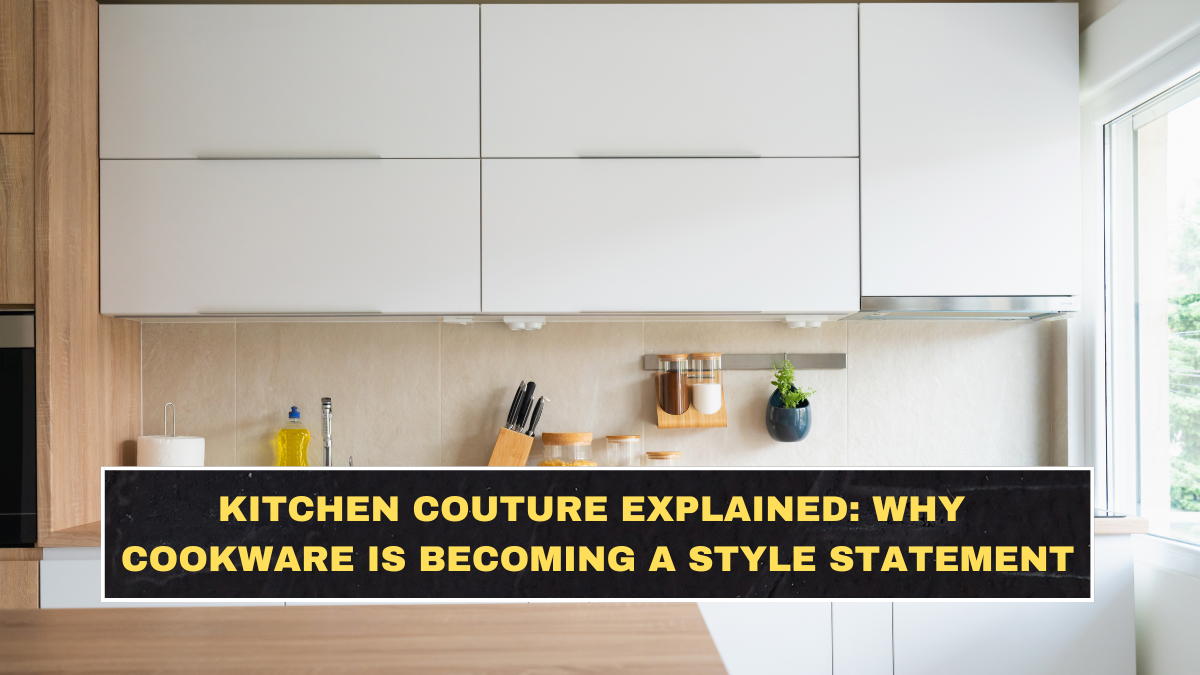
Kitchen couture is really just a cleaner name for an obvious shift: people are no longer buying cookware only to cook. They are buying it to display, photograph, gift, and match with the rest of the home. That is why pans, bowls, kettles, utensils, and countertop appliances are increasingly discussed in the same way fashion or decor gets discussed. Food & Wine’s recent trend coverage says kitchen design has become “smarter, bolder, and more personal,” with open shelving showcasing ceramics and cookbooks like art and colorful appliances adding personality to the room.
This is not just a social-media illusion. Product roundups in 2026 from Food & Wine are testing and ranking cookware and dinnerware not only on function and durability, but also on look, finish, color, and overall design feel. That matters because it shows how the category is now being sold and judged. Style is no longer an extra. It is part of the product value.
Why is cookware becoming part of home style now?
Because kitchens are no longer hidden work zones. They are visible rooms, social rooms, and in many homes, content rooms. Open shelving, statement backsplashes, tiled hoods, and integrated appliances have all pushed the kitchen closer to interior design territory than pure utility. Recent Homes & Gardens coverage on 2026 kitchens highlights tiled range hoods as a way to turn a practical feature into an architectural statement, while Food & Wine notes that backsplashes, shelving, and colorful cabinetry are now being used to put personality front and center.
Once the kitchen became something people look at all day, ugly tools started feeling out of place. That is the honest reason. A Dutch oven in a saturated enamel finish, a sculptural kettle, or a well-designed dinnerware set now plays the same role as a lamp or vase in another room. That does not mean function stopped mattering. It means shoppers increasingly want both.
What products define the kitchen couture trend best?
Cookware is leading the trend, especially enameled cast iron, ceramic cookware, and high-end tool sets that look polished enough to leave out on display. Food & Wine’s 2026-tested picks repeatedly praise products for contemporary lines, saturated colors, elegant finishes, and design that improves the user experience rather than just performance. That language is a clue. The market is rewarding tools that look intentional in the home.
Dinnerware is also part of it. Food & Wine’s 2026 dinnerware testing covers not just durability and value, but visual style ranges from modern minimal to retro color. That tells you tableware is no longer a background purchase for many shoppers. It is part of the aesthetic identity of the home, especially for people who host or share meals online.
Which kitchen items are turning into status pieces?
The obvious ones are Dutch ovens, espresso machines, stand mixers, ceramic cookware sets, and premium knives. These objects hold status because they are visible, giftable, and often associated with “serious” home cooking even when buyers mostly want the image of that lifestyle. Food & Wine’s high-end kitchen tools list for 2026 includes products such as Staub cocottes and smart ovens, with attention paid not just to performance but to sleek design and finish.
Affordable versions of the same behavior are showing up too. A 2026 Food & Wine shopping feature specifically frames Hearth & Hand kitchen products as budget-friendly items that look like high-end brands, including copper pans, ceramic bowls, and other kitchen pieces chosen for their expensive-looking aesthetic. That is a classic sign of a trend moving mainstream: people want the look even if they are not buying the luxury original.
How are shoppers mixing function and fashion in the kitchen?
Usually by buying fewer visible items but expecting each one to perform two jobs. A pan now has to cook well and look good hanging on a rack. A bowl has to work for pasta night and still look worthy of a styled shelf. A fridge, hood, or backsplash is expected to solve a practical need while also making the kitchen feel custom. Homes & Gardens’ 2026 reporting on invisible fridges and tiled range hoods shows exactly that logic: functional elements are being pushed to look more refined, more integrated, and more visually deliberate.
Here is where the trend usually shows up first:
| Kitchen item | Why it feels fashionable now | What buyers care about most | Main risk |
|---|---|---|---|
| Enameled Dutch oven | Color, display value, heritage feel | Durability, heat retention, looks | Paying luxury prices for image only |
| Ceramic cookware set | Clean aesthetic, modern palette | Nonstick ease, design, countertop appeal | Coating wear over time |
| Dinnerware set | Tablescaping and hosting value | Shape, finish, stackability, style | Buying pretty but fragile sets |
| Countertop appliance | Always visible in the kitchen | Performance plus design | Clutter if too many compete visually |
| Knife block or tools | Signals “serious cook” identity | Materials, grip, finish | Overspending on little real use |
That table matters because most buyers pretend they are being purely rational. They are not. They are buying for utility, yes, but also for identity.
Is this trend just shallow consumerism dressed up nicely?
Partly, yes. A lot of kitchen couture is lifestyle theater. People buy products that imply skill, calm, and good taste whether or not they cook enough to justify them. But dismissing the whole trend as fake would be lazy. Better-designed kitchen tools can improve use, reduce clutter, and make a kitchen feel more cohesive. Food & Wine’s product testing still centers performance, heating, durability, and usability, which shows the strongest products tend to win when style and function overlap.
The bad version of the trend is when people fill kitchens with styled junk. The better version is when a few well-made items replace ugly, mismatched, low-quality ones. That is not irrational. That is just better buying.
Who is driving the kitchen couture trend most?
Homeowners who treat the kitchen as part of the home’s visual identity are driving it most, especially people who host, share food content, or want visible surfaces to look curated. Design media is reinforcing it by covering kitchens as lifestyle spaces, not just workspaces. Food & Wine’s recent kitchen trend reporting and Homes & Gardens’ 2026 kitchen coverage both point toward the same broader direction: personalized, design-led kitchens with visible materials, color, texture, and statement features.
Will kitchen couture keep growing?
Probably, because the kitchen is now one of the most emotionally loaded rooms in the house. It is where people cook, gather, host, film, clean up, and judge themselves. That makes it an easy target for aspirational spending. The exact products may change, but the behavior is not going away soon. Buyers will keep looking for tools and tableware that feel useful and beautiful at the same time.
Conclusion
Kitchen couture is not really about cookware becoming fashion by accident. It is about the kitchen becoming a stage where practicality and identity now mix. The strongest version of the trend is not buying the most expensive pan in the prettiest color. It is choosing products that genuinely work and also deserve to be seen. The weak version is paying for kitchen cosplay. The smart buyer knows the difference.
FAQs
What does kitchen couture mean?
It refers to the growing habit of treating cookware, tableware, and kitchen tools as style pieces as well as functional items. Design, color, and display value matter more than they used to.
Which products best represent the kitchen couture trend?
Enameled cast iron, ceramic cookware, stylish countertop appliances, premium dinnerware, and visible kitchen tools are among the biggest examples right now.
Is stylish cookware actually worth paying more for?
Sometimes. It is worth more when design also improves durability, usability, or long-term satisfaction. It is not worth more when the product is mostly image and weak performance.
Why are kitchens becoming more design-led?
Because kitchens are increasingly open, visible, and central to home life. That pushes buyers to care more about how practical objects look in the space.