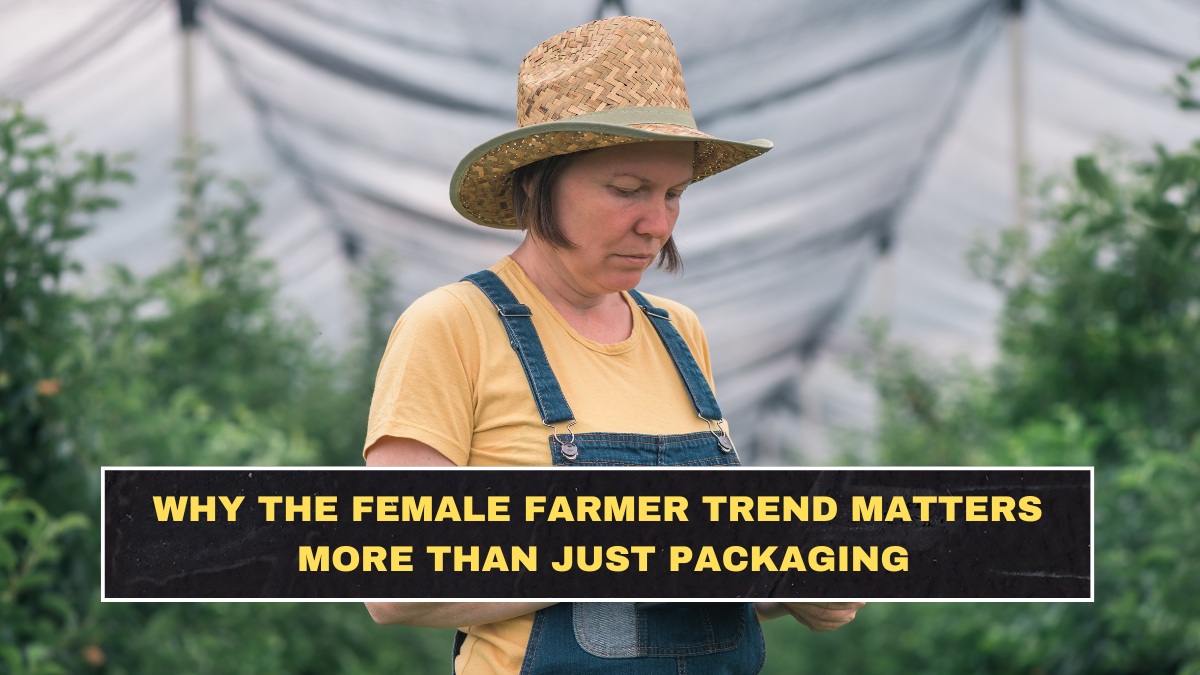
The female farmer trend is getting attention in 2026 because food shoppers are no longer looking only at flavor, price, and protein. They are also paying more attention to who grows the food, how it is sourced, and whether the story behind the product feels real. Whole Foods Market’s 2026 trend forecast explicitly highlighted greater recognition of female farmers, tying it to the UN’s designation of 2026 as the International Year of the Woman Farmer. That matters because once a major retailer starts naming a sourcing story as a trend, brands begin using it in packaging, positioning, and marketing.
But this trend matters for a bigger reason than branding. Women already play a major role in agrifood systems globally, yet they still face structural disadvantages in land access, pay, finance, and services. FAO says women in agriculture earn about 18% less than men on average, and its broader reporting shows women are deeply involved across production, processing, distribution, and food systems more widely. So when people talk about “female farmer” as a trend, the useful question is not whether the label sounds nice. The useful question is whether attention is translating into fairer value, stronger visibility, and better buying choices.
Why is the female farmer trend getting bigger in 2026?
Because 2026 gave the idea a global spotlight. The UN-backed International Year of the Woman Farmer was created to raise awareness of women’s role in agrifood systems and the barriers they still face, including limited land tenure, finance, technical support, and services. At the same time, retail and media trend reports began tying women-led agriculture to conscious sourcing, product storytelling, and values-led food buying. That combination made the topic more visible than it would have been from activism alone.
There is also a market reason. Consumers increasingly respond to food stories that feel transparent and human rather than generic and corporate. Food Manufacture reported in March 2026 that female founders in the UK are building brands around healthier ingredients, shorter supply chains, less waste, and more transparent sourcing. That does not mean every woman-led food brand is automatically better. It means the market is rewarding stories that connect sourcing with trust, ethics, and product identity.
What makes this trend about more than packaging?
Because the numbers behind women’s role in food systems are already significant. FAO reporting shows women are a major part of agrifood labor globally, and in some regions the share is even more striking. New Africa-focused reporting referencing FAO data says 76% of working women in sub-Saharan Africa are employed in agrifood systems, the highest share worldwide. In Latin America and the Caribbean, FAO says women represent 36% of the agrifood labor force, with especially strong participation in non-agricultural segments.
So the female farmer trend matters when it helps consumers understand where food comes from and who has historically been under-recognized in producing it. It matters less when brands use a woman’s face, a rural image, or a vague empowerment slogan with no proof behind it. That is the blunt truth. A real sourcing story should show something concrete, not just perform goodness.
How can shoppers tell whether the story is real?
They need to look for evidence, not mood. If a brand talks about female farmers, it should be able to explain what that means in practice. Does it source from women-led farms, women’s cooperatives, or women-owned processors? Does it mention geography, ingredients, supply-chain partnerships, or community outcomes? Is the product story traceable, or is it just emotional branding?
Here is a simple way to judge it:
| What to check | Strong sign | Weak sign | Why it matters |
|---|---|---|---|
| Sourcing detail | Names regions, farms, or co-ops | Uses vague “women-powered” language | Specificity usually signals authenticity |
| Economic value | Explains pricing, procurement, or support | Talks only about inspiration | Real impact is financial, not decorative |
| Transparency | Gives context on supply chain | Relies on pretty packaging only | Trust needs proof |
| Consistency | Story matches ingredient origin | Story feels disconnected from product | Fake storytelling is common |
| Broader impact | Mentions training, market access, or ownership | Only uses empowerment buzzwords | Better food systems need structural support |
That table exists because shoppers are too easily manipulated by nice branding. If the story cannot survive basic scrutiny, it is marketing, not substance.
Why does this connect with ethical and conscious food buying?
Because the food conversation has shifted from “what is in it?” to “what system produced it?” Consumers still care about nutrition and price, but many also care about resilience, waste, labor, and transparency. Food trends now regularly combine function with values. Whole Foods’ 2026 forecast grouped female farmers alongside fiber, premium frozen meals, vinegars, and smarter convenience, showing that grocery trends are no longer just about ingredients. They are about the identity and ethics wrapped around those ingredients too.
This matters even more as food systems face climate and labor pressure. A joint FAO-WMO report warned this week that extreme heat is threatening livelihoods across food systems and making farming unsafe for long stretches in already hot regions. In that environment, visibility for women in agriculture is not just symbolic. It is tied to adaptation, support, and who gets counted when food systems are under strain.
Are women-led food stories actually influencing the market?
Yes, but unevenly. Recent reporting in Australia highlighted women farmers taking more visible leadership roles in sustainability, innovation, and local agricultural businesses. UK coverage also points to women-led food brands building around purpose-led sourcing and more transparent value chains. In India, a March 2026 parliamentary committee document said women-owned micro food processing enterprises would continue receiving priority support through subsidy, seed capital, training, branding, and marketing components. That suggests the trend is influencing business language and policy attention, not just consumer packaging.
Still, attention alone solves nothing. If brands gain premium pricing from women-led sourcing stories while women producers remain underpaid or underrecognized, then the trend is hollow. That is the risk people should be honest about.
Conclusion
The female farmer trend matters more than packaging because it points to a real shift in how people think about food. Shoppers increasingly want products with origin, ethics, and a human story. But the honest value of this trend depends on whether brands can prove that women in agriculture are benefiting in real ways, not just appearing in marketing language. The smart response is not blind celebration. It is better scrutiny.
FAQs
What is the female farmer trend in food?
It refers to the growing visibility of women in agriculture as part of food branding, sourcing stories, and retail trend forecasting in 2026.
Why is 2026 important for this trend?
Because 2026 has been designated the International Year of the Woman Farmer, which has increased global attention on women’s role in agrifood systems.
Does women-led sourcing automatically mean better food?
No. It can signal stronger transparency or ethical sourcing, but shoppers still need evidence about quality, fairness, and supply-chain practices.
How can shoppers avoid fake empowerment branding?
Look for concrete sourcing details, named producer groups, region-specific information, and signs of real economic or supply-chain support rather than vague emotional language.
Click here to know more