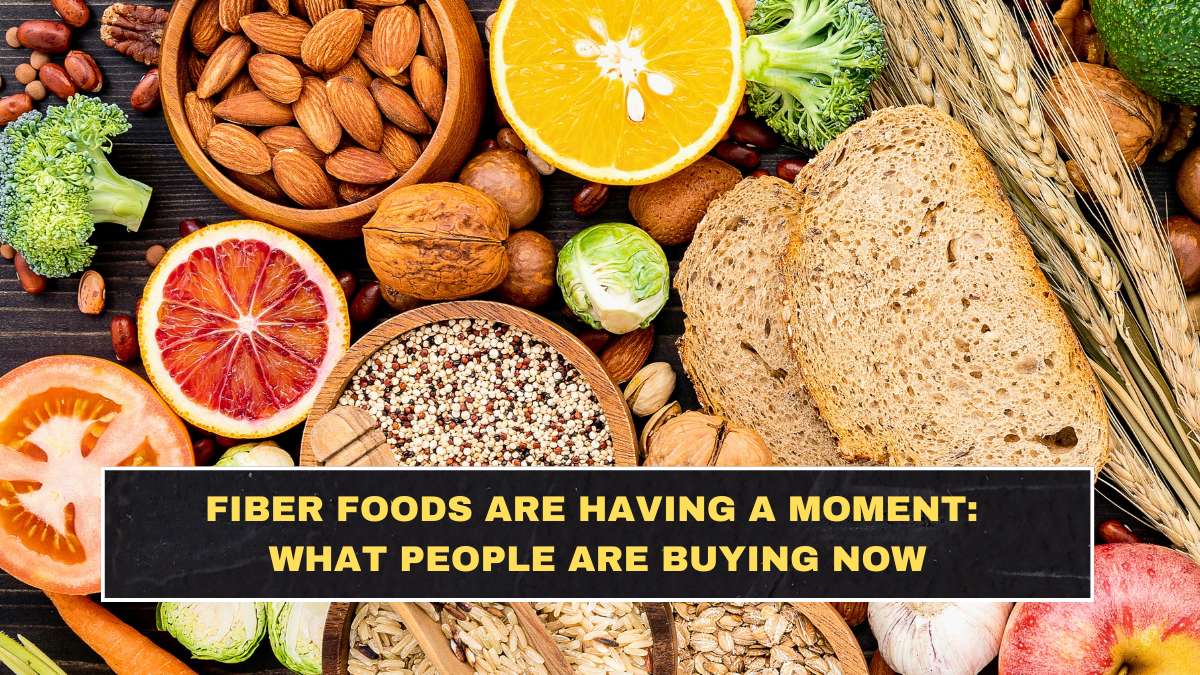
Fiber is getting more attention because people are finally realizing protein was never the whole story. A lot of shoppers spent years chasing “high protein” labels while ignoring digestion, fullness, blood sugar control, and overall diet quality. Now the market is correcting. Whole Foods Market’s 2026 trend forecast specifically highlighted “added fiber” as a major grocery direction, and Food & Wine’s 2026 food trend coverage went even further by calling the shift “fibermaxxing.”
This trend is not just hype. Most adults still do not get enough fiber. The NIH says the Daily Value for fiber is 28 grams per day, and CDC-linked nutrition material notes that average intake in the United States remains far below recommendations, with many adults getting only around half of what they need. That gap is exactly why fiber has turned from a boring nutrition word into a selling point on snacks, drinks, breads, cereals, and convenience foods.
Why are fiber foods suddenly getting so much attention?
Because people want practical health wins, not just aspirational labels. Fiber is now being tied to gut health, fullness, more stable eating habits, and better daily food choices. Food & Wine’s 2026 trend reporting says the shift is being driven by growing interest in gut health and in foods that support satiety, including prebiotic-rich packaged products, oats, and root vegetables. Whole Foods Market’s own 2026 forecast also points to more products adding fiber rather than only promoting protein.
Another reason is that brands can sell fiber without making people feel like they are dieting. A fiber claim sounds useful, preventative, and everyday-friendly. It fits bread, soda alternatives, snack bars, cereals, yogurt add-ins, and even frozen meals. That makes it easier to market than a stricter wellness message. The prebiotic soda category is a good example: Coca-Cola’s Simply Pop launched with 6 grams of prebiotic fiber per serving, showing how mainstream brands now see digestive-health positioning as commercially attractive.
What kinds of fiber foods are people actually buying now?
The trend is strongest in categories where convenience meets health messaging. Bread with added fiber, snack bars, cereals, oats, legumes, prebiotic sodas, and “better-for-you” packaged foods are getting the most attention. Food & Wine’s 2026 trend coverage specifically points to oats and root vegetables as gaining ground, while newer packaged products are leaning into both prebiotics and total fiber content.
Food industry coverage also shows brands adding fiber where people already shop habitually. FoodNavigator-USA reported that Equii expanded bread products to respond to demand for more fiber without sacrificing softness and taste. That is important because it shows the trend is not limited to niche health food. It is moving into familiar everyday staples where adoption is easier.
Which fiber foods make the most practical sense for everyday eating?
The smartest fiber choices are usually the least glamorous ones. Oats, beans, lentils, whole grains, fruit, vegetables, seeds, and higher-fiber breads do more for most people than fancy “gut health” products. Packaged foods can help, but they should not be the only plan. The real value comes when fiber is built into normal meals instead of treated like a supplement in disguise.
Here is a simple breakdown:
| Food category | Why people are buying it now | Practical benefit | Main risk |
|---|---|---|---|
| Oats and oat-based foods | Easy breakfast and snack use | Steady, familiar fiber source | Sugary versions weaken the benefit |
| High-fiber breads | Easy swap in daily meals | Simple way to increase intake | Marketing can exaggerate nutrition quality |
| Beans and lentils | Cheap, filling, versatile | Strong fiber and satiety value | Some people increase too fast and feel discomfort |
| Prebiotic sodas and drinks | Trendy, portable, easy to try | Convenient added fiber | Can create false “health halo” |
| Snack bars and cereals | Fast and label-friendly | Useful for busy schedules | Some are still ultra-processed or sugar-heavy |
That table is where most people need honesty. A product saying “fiber” does not automatically make it smart. Some companies are just slapping digestive language onto junk with better branding.
Are high-fiber snacks actually healthy, or just good marketing?
Both, depending on the product. Some high-fiber snacks are genuinely useful for filling a gap in a rushed routine. Others are just sugar, syrups, or processed ingredients wearing a “gut health” costume. The reason this trend is growing so fast is that fiber has become a convenient health signal, and brands know it. That makes label-reading more important, not less.
Food & Wine’s reporting on 2026 grocery trends makes this clear indirectly. The trend is not just “more fiber.” It is more added fiber across mainstream products, which means consumers will increasingly need to judge whether the rest of the food is still worth eating. The market opportunity is real, but so is the chance of overclaiming.
Why is fiber now competing with protein as a food trend?
Because protein got overused. It became the answer to everything, even when many people were already getting enough. Fiber is different because the intake gap is still large and more obvious at a population level. That makes it easier to build a new wave of grocery products around it. Whole Foods Market’s 2026 trend forecast and Food & Wine’s 2026 expert roundup both frame fiber as one of the clearest corrections to the long protein-heavy cycle.
Also, fiber fits current consumer behavior better than many niche wellness trends. It supports convenience, satiety, gut health, and budget-conscious eating all at once. Bread, oats, beans, cereal, and vegetables are not exotic products. They are ordinary foods with suddenly stronger marketing power.
What should shoppers look for before buying into the fiber trend?
They should ask three basic questions. First, how much fiber is actually in the product? Second, what else comes with it, especially sugar and overall processing? Third, could the same benefit come from a simpler food? Those questions kill a lot of bad purchases fast.
The biggest mistake is adding fiber too aggressively through a pile of fortified foods and then blaming fiber itself when digestion feels off. Increasing intake works better when it happens gradually and comes from a mix of whole foods and selected packaged products. That is less exciting than trend language, but it is more realistic.
Conclusion
Fiber foods are having a moment because the market finally found a health message that connects with an actual dietary gap. People want digestion support, better fullness, and more practical nutrition, and fiber speaks to all three. The smart version of this trend is adding oats, legumes, fruit, vegetables, and better staples to ordinary meals. The dumb version is buying every expensive “gut health” snack that learned how to use the word prebiotic. Know the difference, and the trend becomes useful instead of just profitable for brands.
FAQs
Why is fiber trending in 2026?
Because major grocery forecasters and food media are highlighting fiber as a response to growing interest in gut health, satiety, and more practical nutrition. Whole Foods Market and Food & Wine both identified fiber as a major 2026 direction.
Are most adults really low on fiber?
Yes. U.S. guidance recommends much more fiber than most adults currently eat, which is one reason products with added fiber are attracting attention.
What are the best fiber foods to start with?
Oats, beans, lentils, fruit, vegetables, whole grains, and higher-fiber breads are usually the most practical starting points because they fit normal meals and routines.
Are prebiotic sodas a good way to get more fiber?
They can help a little, but they are not a complete solution. They are best seen as one convenient option, not a replacement for fiber-rich whole foods.
Click here to know more