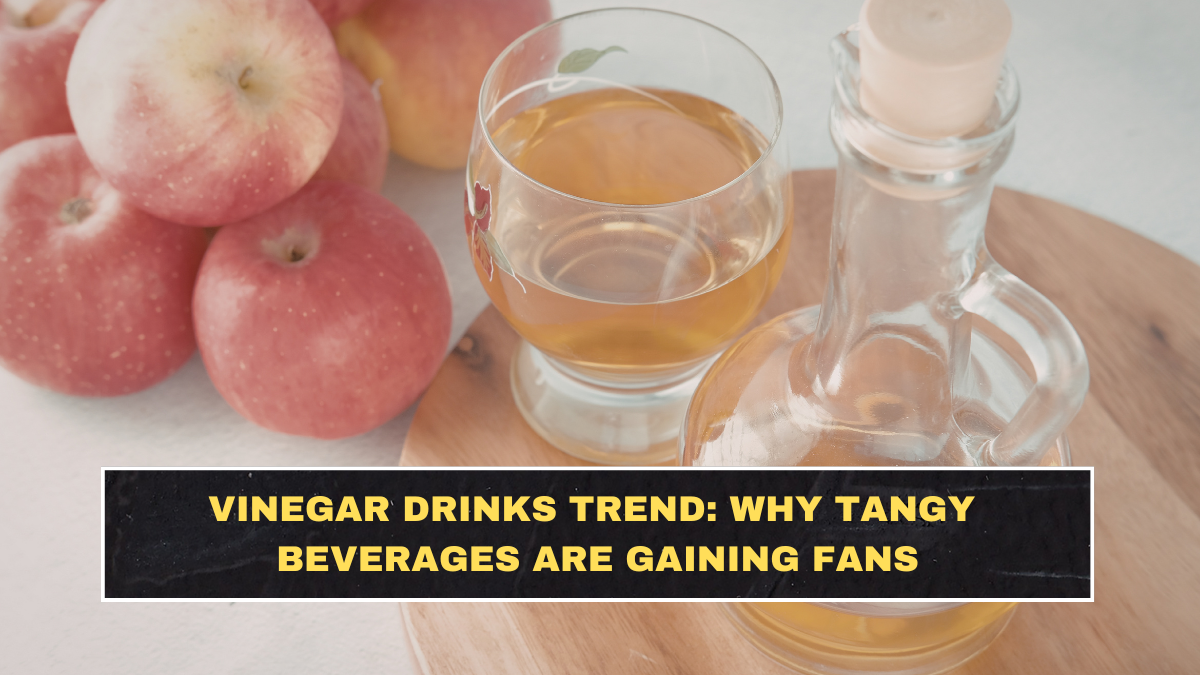
Vinegar drinks are gaining fans because many shoppers are tired of beverages that taste sweet, flat, and fake-healthy. A sharper, more acidic drink feels different. It can taste cleaner, more adult, and less syrupy than many soft drinks, juices, or wellness beverages pretending to be sophisticated. Food & Wine reported in January 2026 that apple cider vinegar has regained popularity in both wellness and mixology circles, with bartenders using it in shrubs and switchels while wellness-focused consumers keep linking it to digestive support.
This is not a brand-new category. Drinking vinegars, also called shrubs, have been around for years, but they keep resurfacing because they sit at the intersection of several trends that are still active: low-sugar drinking, functional beverage marketing, alcohol alternatives, and more adventurous flavors. FoodBusinessNews described drinking vinegars as a beverage category competing for space in the aisle because of their tangy taste and their positioning around wellness and digestive appeal.
Why are vinegar drinks suddenly getting more attention?
Because beverage buyers want stronger flavor without automatic sugar overload. The market is moving toward drinks that feel cleaner, more functional, and less childish. FoodNavigator-USA reported this week that clean eating is the number one diet trend of 2026 and is helping power demand for products that look simpler and more health-conscious. That broader shift helps explain why acidic, fruit-forward, lower-sugar beverage formats are easier to sell now than they were in a soda-dominated cycle.
There is also a style factor. Vinegar drinks feel more niche and intentional than ordinary soda. That matters in a market where people increasingly want drinks that signal taste, restraint, or wellness. Some consumers are not even buying them because they love vinegar. They are buying them because they want something that feels more interesting than sparkling water and less sugary than juice.
What do vinegar drinks actually taste like?
They do not taste like someone poured salad dressing into a glass. At least, the good ones do not. Most drinking vinegars are balanced with fruit, sweetener, sparkling water, herbs, or spices. Food & Wine explains that apple cider vinegar gives drinks tang, depth, and structure, and that bartenders often use it to support or even replace part of citrus acidity in shrubs, switchels, and modern cocktails.
That is why the flavor can be appealing even to people who think they hate vinegar. The best versions are tart, bright, and slightly savory or fruity, not harsh and punishing. But let’s be honest: this category is not for everyone. If someone only enjoys sweet, easy, soft flavors, they may find vinegar drinks too sharp, too weird, or too dry. The appeal is specific.
Which kinds of vinegar drinks are showing up most often?
Apple cider vinegar is still the most visible base because it already has wellness recognition and a familiar pantry identity. Food & Wine’s January 2026 explainer focuses on apple cider vinegar as the ingredient most often folded into drinks because of its tangy flavor and current crossover between home remedy culture and mixology.
At the same time, the category is expanding beyond plain apple cider vinegar shots. Recent product and media coverage shows more flavored shrubs, sangria-style drinking vinegars, and fruit-herb combinations designed for spritzes and nonalcoholic cocktails. Last month, Food & Wine highlighted José Andrés’ sangria drinking vinegar as a two-ingredient spritzer base, showing how the category is now being framed as both culinary and social rather than only “functional.”
Who actually enjoys vinegar drinks?
Usually three groups. First, people trying to reduce sugar without switching to boring drinks. Second, people interested in wellness culture, especially digestive-health language. Third, people who enjoy cocktail-style flavor but do not always want alcohol. Those are the real audiences. Everyone else is often just experimenting once because the bottle looked cool.
Here is the simple breakdown:
| Type of drinker | Why vinegar drinks appeal | Best entry point | Main drawback |
|---|---|---|---|
| Low-sugar shopper | Feels less sweet than soda or juice | Fruit-forward shrub with sparkling water | Can still contain added sweetener |
| Wellness-focused buyer | Linked to digestive support and ACV interest | Mild apple cider vinegar tonic | Health claims are often oversold |
| Nonalcoholic social drinker | Feels more grown-up than soda | Drinking vinegar spritzer | Sharp taste can be polarizing |
| Flavor-curious buyer | Wants something new and punchy | Berry or herb shrub | Easy to buy once and never again |
That table matters because this is not a universal beverage. It is a preference-driven category pretending to be a mass-market revolution.
Are vinegar drinks actually healthy, or is that mostly marketing?
Mostly, this is where people fool themselves. Vinegar drinks may be lower in sugar than some traditional soft drinks, and some consumers use apple cider vinegar drinks because they believe they support digestion. But that does not mean every bottled vinegar beverage is automatically healthy. Food & Wine notes that wellness enthusiasts praise apple cider vinegar for digestive support and probiotic potential, but the drink’s value still depends on formulation, sweetness, and how it fits into someone’s diet.
So the sensible view is this: vinegar drinks can be a smarter option than very sugary beverages for some people, but the category also benefits heavily from functional-drink marketing language. A trendy drink with vinegar, sugar, and buzzwords is still just a trendy drink if the rest of the formula is mediocre.
Why does the trend keep coming back instead of fully breaking out?
Because the taste is memorable but not universally lovable. That is the limit. Vinegar drinks keep returning because they fit changing wellness and flavor trends, but they remain too sharp for many casual buyers. FoodBusinessNews said the category was already accelerating in the wellness space years ago, which tells you something important: this is a recurring niche, not a sudden mass-market miracle.
The business side still looks attractive, though. Fortune Business Insights says the global apple cider vinegar market is projected to grow from about $706.3 million in 2026 to $1.15 billion by 2034, suggesting broader commercial confidence around vinegar-based products even if not every dollar comes from beverages alone.
Conclusion
Vinegar drinks are gaining fans because they offer something many beverages do not: sharpness, complexity, and a break from sugar-heavy sameness. They work best for people who want a more adult, tangy, and slightly functional-feeling drink. But this is not a category everyone will love, and a lot of the health halo around it is still marketing doing what marketing does. The smart way to approach the trend is simple: judge the flavor first, the sugar second, and the wellness claims last.
FAQs
What is a vinegar drink?
A vinegar drink is a beverage made with vinegar, often apple cider vinegar, usually balanced with fruit, sweetener, herbs, spices, or sparkling water. Shrubs and switchels are common examples.
Are vinegar drinks the same as apple cider vinegar shots?
Not always. Shots are usually stronger and more functional in positioning, while drinking vinegars or shrubs are often blended for taste and used more like refreshing beverages or cocktail mixers.
Do vinegar drinks usually have less sugar?
Some do, but not all. Many are marketed as lower-sugar alternatives, yet formulas vary a lot and some still rely on sweeteners to balance acidity.
Why are vinegar drinks trendy again in 2026?
They fit several active trends at once, including clean eating, low-sugar drinking, functional beverages, and nonalcoholic social drinks.
Click here to know more