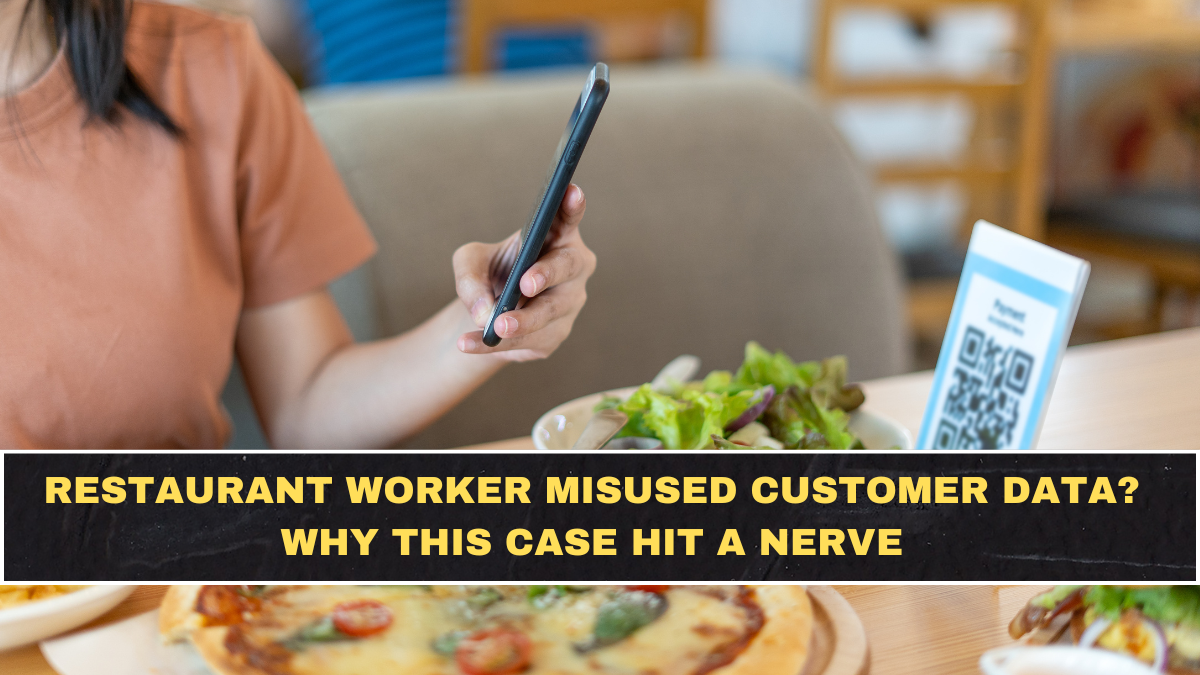
A Pune restaurant incident has gone viral after a woman alleged that a staff member accessed her phone number through a QR-code ordering system and later sent her personal messages. The woman, identified in reports as Rishika Dutta, said she had visited a restaurant on Pune’s FC Road and used the QR-based menu system like any regular customer. Later that night, she allegedly received messages from an unknown number, which she claimed belonged to someone working at the same restaurant.
The case became bigger than one restaurant because it exposed a fear many customers ignore. If businesses collect phone numbers through digital menus, booking systems or ordering platforms, who inside the business can actually see that data? Reports say the restaurant management later terminated the employee, but the public anger shows that one apology cannot solve a deeper customer privacy problem.
What Exactly Happened?
According to reports, the woman visited the restaurant on April 28 and scanned a QR code placed at the outlet to access the digital menu or ordering system. She later alleged that she had not personally shared her number with the staff member who contacted her. This is why she suspected that her contact details may have been accessed through the restaurant’s internal system linked to the QR order process.
Screenshots shared online reportedly showed the staff member trying to start a personal conversation, which triggered strong reactions from social media users. Many people called the incident disturbing because it connected two sensitive issues: women’s safety and customer data misuse. This is not just a “bad employee” story; it is a warning about weak data access controls inside everyday businesses.
| Issue | Why It Matters |
|---|---|
| Phone number access | Staff should not casually see customer personal data |
| QR ordering system | Digital convenience may collect more data than users realise |
| Women’s safety | Unwanted contact can feel threatening and invasive |
| Restaurant response | Action after damage is not enough without prevention |
| Customer trust | One incident can make people doubt digital menus everywhere |
Why Did This Case Go Viral?
The case hit a nerve because it felt realistic. Most people scan QR menus without thinking, and many restaurants now ask customers to enter a phone number before placing an order. The average customer does not know whether that number is visible to waiters, managers, third-party vendors or marketing teams.
For women, the concern becomes even sharper. A phone number is not just a contact detail; it can become a direct line for harassment. When a customer visits a restaurant, she should not have to worry that her data may follow her home through unwanted messages.
Is The QR Code The Real Problem?
No, the QR code itself is not the main villain. A basic QR code usually just opens a link, but the website or ordering platform behind it may ask for personal information. The real problem begins when restaurants collect customer data without explaining why, and then allow too many people inside the business to access it.
This is where many restaurants are careless. They digitise menus for speed, billing and marketing, but do not build proper privacy controls. If a staff member can casually view customer phone numbers, the system is already badly designed, no matter how modern it looks from the outside.
What Should Customers Do Now?
Customers should not behave like every QR menu is dangerous, but blind trust is foolish. If a menu page asks for a phone number just to show food items, that is unnecessary in many cases. Customers should question why personal data is being collected before casually entering it.
Follow these basic safety steps:
- Do not enter your phone number unless it is clearly needed for ordering or billing.
- Ask for a physical menu if the QR page asks for too much information.
- Avoid giving permissions like location, contacts, camera access or login details.
- Save screenshots if you receive unwanted messages after visiting a business.
- Report harassment to the business management and escalate if the response is weak.
What Should Restaurants Fix Immediately?
Restaurants need to stop treating customer phone numbers like harmless operational data. Access should be limited only to people who genuinely need it for billing, delivery or customer support. Every view, export or use of customer data should be logged so misuse can be traced quickly.
They also need clear privacy notices. If a customer’s phone number is being collected for order updates, say that. If it is being used for marketing, ask separately. The uncomfortable truth is that many small businesses want digital systems but do not want the responsibility that comes with handling personal data.
Conclusion?
The Pune restaurant case became viral because it exposed something customers already feared but rarely discussed. Digital menus are convenient, but convenience becomes dangerous when personal data is loosely handled. A restaurant visit should not turn into unwanted personal contact from someone who accessed customer details.
The lesson is simple: businesses must collect less data, restrict access and take privacy seriously before something goes wrong. Customers also need to stop giving out phone numbers casually. Data misuse is not a tech-only issue anymore; it is directly connected to safety, trust and basic dignity.
FAQs?
Can Restaurant Staff Access My Phone Number Through QR Menus?
They cannot get your number from a basic QR scan alone, but they may access it if the ordering system asks you to enter your phone number. If the restaurant software stores customer details and staff access is not restricted, misuse becomes possible.
What Should I Do If A Restaurant Worker Contacts Me Personally?
Save screenshots, note the number, record the restaurant details and contact management immediately. If the messages are threatening, repeated or sexually inappropriate, do not treat it casually. Escalate the matter to local police or cybercrime channels if needed.
Are QR Menus Unsafe For Women?
QR menus are not automatically unsafe, but systems that collect phone numbers without proper protection can create risks. Women may face greater safety concerns when personal data is misused for unwanted contact, which is why restaurants must restrict access.
Should Restaurants Stop Using QR Menus?
Restaurants do not need to stop using QR menus, but they must stop collecting unnecessary personal data. A simple menu should not require a phone number. If ordering software needs contact details, access must be limited, logged and protected properly.